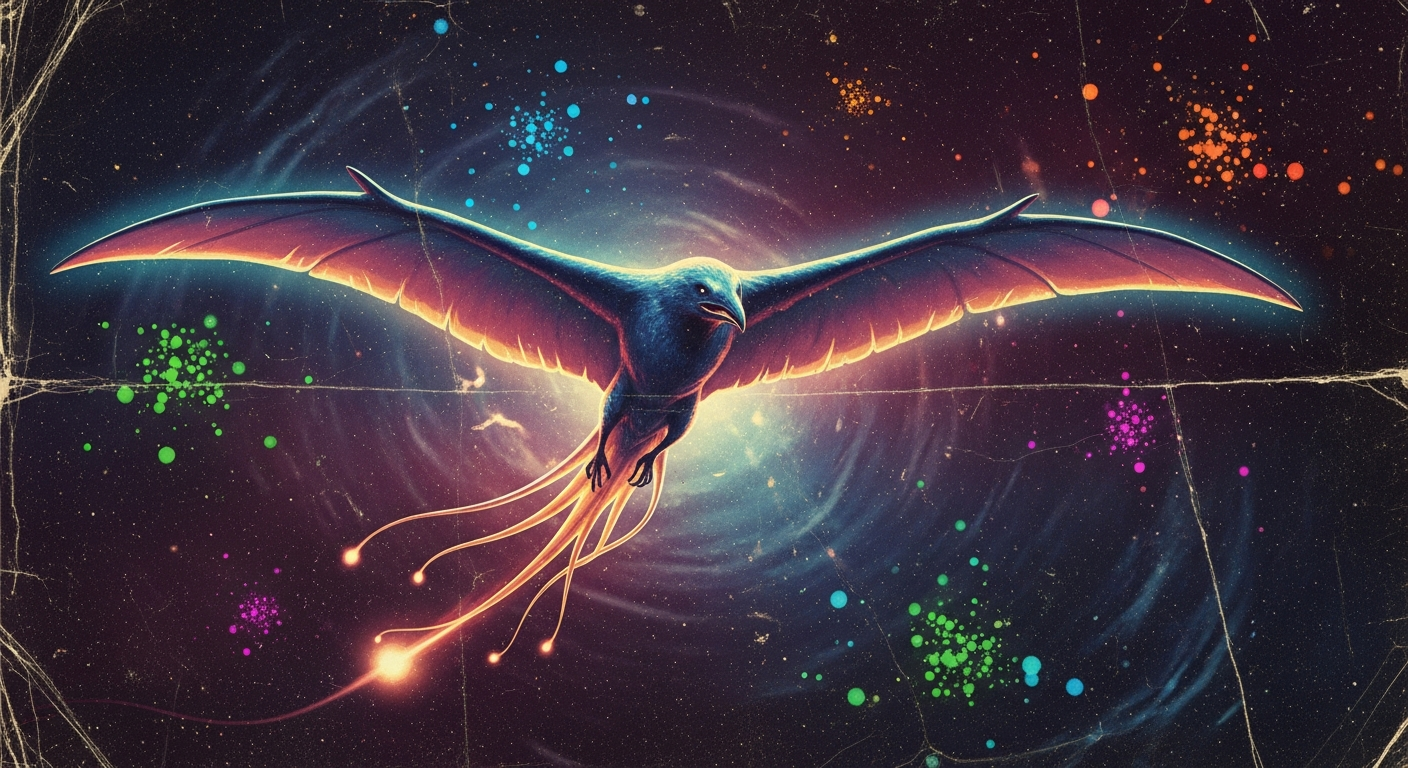
Can Birds Fly in Zero Gravity? The Ultimate Space Biology Mystery Explained for Kids

Can Birds Fly in Zero Gravity? The Ultimate Space Biology Mystery Explained for Kids Introduction: Imagine a Bird Aboard a Space Station! Have you ever looked up at the night sky, spotted the bright, fast-moving dot of the International Space Station (ISS), and wondered what it would be like to live there? We know that human astronauts float around, doing somersaults and eating floating blobs of water. But what if we brought an animal with us? More specifically, can birds fly in zero gravity? It sounds like a funny question, but it is actually one of the ultimate space biology mysteries! To an astronaut, floating in microgravity (the scientific term for zero gravity) feels like flying. But for a bird—a creature born to rule the skies on Earth—space presents a massive, confusing challenge. In this article, we are going to dive deep into the science of flight, the weirdness of zero gravity, and what actually happens when our feathered friends leave Earth's atmosphere. Detailed Scientific Explanation: The Physics of Flight vs. Space How Do Birds Fly on Earth? Before we can blast our bird into space, we need to understand how they fly here on Earth. Bird flight relies on four forces of physics: Weight (Gravity): The force pulling the bird down to the ground. Lift: The upward push created by the shape of the bird's wings moving through the air, which fights gravity. Thrust: The forward push created by the bird flapping its wings. Drag: The air resistance pushing back against the bird as it moves forward. On Earth, a bird flaps its wings to push the air down and behind it. Because of gravity, the bird knows exactly which way is "down." Their brains and inner ears act like a built-in GPS, constantly telling them how to balance, turn, and swoop. What Exactly is "Zero Gravity"? When astronauts are in space, they experience microgravity. They aren't actually free from Earth's gravity; instead, they are falling toward Earth at the exact same speed they are moving forward, which makes them feel totally weightless. Inside a spaceship, there is no "up" and no "down." If you let go of an apple, it just floats there. However, space stations do have air inside them! Astronauts need to breathe, so the ISS is filled with oxygen and nitrogen, just like the air we breathe on Earth. The Air Factor: Can Wings Work in Space? Because there is air inside a space station, a bird's wings would technically still work! If a pigeon flapped its wings in the ISS, it would create thrust and move forward. Air is fluid, and a flapping wing will push against that air, propelling the bird across the room. So, mechanically speaking, their wings are not broken. But the story doesn't end there. The Gravity Factor: Up, Down, and Tumbly! The real problem isn't the air; it's the missing feeling of gravity. Birds rely on gravity heavily to figure out their balance. Without gravity pulling on them, their built-in GPS completely breaks down. Scientists have actually tested this using special airplanes called "Vomit Comets" that fly in huge arcs to create temporary zero gravity. When pigeons were tested in these flights, things got incredibly messy! Without gravity to tell them which way was down, the birds got confused. Instead of flying gracefully, they started to do wild backflips, tumbling uncontrollably through the air. They couldn't stabilize themselves, and they ended up bumping into walls. Have Birds Ever Been to Space? (The Quail Experiment) You might be surprised to learn that birds have actually been to space! In 1990, Soviet scientists sent Japanese quail eggs to the Mir Space Station to see if they could hatch and survive in microgravity. The eggs successfully hatched, but the poor chicks had a very hard time. Because they had never experienced gravity, they didn't know how to orient themselves. They couldn't anchor themselves to eat, and they just spun around helplessly. Eventually, scientists learned that if they gave the chicks a little harness or a special wall to hold onto, they could survive better. But true, graceful bird flight? It was impossible. Conclusion: So, Can Birds Fly in Zero Gravity? The final answer to our ultimate space biology mystery is a bit of a trick! Technically, yes, a bird can propel itself forward in a space station because there is still air for its wings to push against. However, practically, no, a bird cannot "fly" the way it does on Earth. Without the constant pull of gravity to guide their inner ears and balance systems, birds become completely disoriented. Instead of soaring like majestic eagles, they tumble, do accidental backflips, and lose all sense of direction. It turns out that to be the masters of the sky, birds don't just need air and wings—they desperately need Earth's gravity, too! So, the next time you see a bird flying high above your head, remember: they are performing an amazing balancing act with gravity that simply wouldn't work in outer space. Science is truly out of this world! biological

Can Birds Fly in Zero Gravity? The Ultimate Space Biology Mystery Explained for Kids

Introduction: Imagine a Bird Aboard a Space Station!

Have you ever looked up at the night sky, spotted the bright, fast-moving dot of the International Space Station (ISS), and wondered what it would be like to live there? We know that human astronauts float around, doing somersaults and eating floating blobs of water. But what if we brought an animal with us? More specifically, can birds fly in zero gravity?

It sounds like a funny question, but it is actually one of the ultimate space biology mysteries! To an astronaut, floating in microgravity (the scientific term for zero gravity) feels like flying. But for a bird—a creature born to rule the skies on Earth—space presents a massive, confusing challenge. In this article, we are going to dive deep into the science of flight, the weirdness of zero gravity, and what actually happens when our feathered friends leave Earth’s atmosphere.

Detailed Scientific Explanation: The Physics of Flight vs. Space

How Do Birds Fly on Earth?

Before we can blast our bird into space, we need to understand how they fly here on Earth. Bird flight relies on four forces of physics:

  • Weight (Gravity): The force pulling the bird down to the ground.
  • Lift: The upward push created by the shape of the bird’s wings moving through the air, which fights gravity.
  • Thrust: The forward push created by the bird flapping its wings.
  • Drag: The air resistance pushing back against the bird as it moves forward.

On Earth, a bird flaps its wings to push the air down and behind it. Because of gravity, the bird knows exactly which way is “down.” Their brains and inner ears act like a built-in GPS, constantly telling them how to balance, turn, and swoop.

What Exactly is “Zero Gravity”?

When astronauts are in space, they experience microgravity. They aren’t actually free from Earth’s gravity; instead, they are falling toward Earth at the exact same speed they are moving forward, which makes them feel totally weightless. Inside a spaceship, there is no “up” and no “down.” If you let go of an apple, it just floats there.

However, space stations do have air inside them! Astronauts need to breathe, so the ISS is filled with oxygen and nitrogen, just like the air we breathe on Earth.

The Air Factor: Can Wings Work in Space?

Because there is air inside a space station, a bird’s wings would technically still work! If a pigeon flapped its wings in the ISS, it would create thrust and move forward. Air is fluid, and a flapping wing will push against that air, propelling the bird across the room. So, mechanically speaking, their wings are not broken. But the story doesn’t end there.

The Gravity Factor: Up, Down, and Tumbly!

The real problem isn’t the air; it’s the missing feeling of gravity. Birds rely on gravity heavily to figure out their balance. Without gravity pulling on them, their built-in GPS completely breaks down.

Scientists have actually tested this using special airplanes called “Vomit Comets” that fly in huge arcs to create temporary zero gravity. When pigeons were tested in these flights, things got incredibly messy! Without gravity to tell them which way was down, the birds got confused. Instead of flying gracefully, they started to do wild backflips, tumbling uncontrollably through the air. They couldn’t stabilize themselves, and they ended up bumping into walls.

Have Birds Ever Been to Space? (The Quail Experiment)

You might be surprised to learn that birds have actually been to space! In 1990, Soviet scientists sent Japanese quail eggs to the Mir Space Station to see if they could hatch and survive in microgravity.

The eggs successfully hatched, but the poor chicks had a very hard time. Because they had never experienced gravity, they didn’t know how to orient themselves. They couldn’t anchor themselves to eat, and they just spun around helplessly. Eventually, scientists learned that if they gave the chicks a little harness or a special wall to hold onto, they could survive better. But true, graceful bird flight? It was impossible.

Conclusion: So, Can Birds Fly in Zero Gravity?

The final answer to our ultimate space biology mystery is a bit of a trick! Technically, yes, a bird can propel itself forward in a space station because there is still air for its wings to push against. However, practically, no, a bird cannot “fly” the way it does on Earth.

Without the constant pull of gravity to guide their inner ears and balance systems, birds become completely disoriented. Instead of soaring like majestic eagles, they tumble, do accidental backflips, and lose all sense of direction. It turns out that to be the masters of the sky, birds don’t just need air and wings—they desperately need Earth’s gravity, too!

So, the next time you see a bird flying high above your head, remember: they are performing an amazing balancing act with gravity that simply wouldn’t work in outer space. Science is truly out of this world!

Reader Comments

Copied title and URL