Why Does the Barreleye Fish Have a Transparent Head? Unlocking the Mysteries of Deep-Sea Biology

Introduction: The Enigma of the Deep-Sea Barreleye Fish The deep ocean is one of the most unforgiving and alien environments on Earth, a realm where extreme pressure, freezing temperatures, and perpetual darkness drive the evolution of some of the planet's most extraordinary creatures. Among these marvels of deep-sea biology is the barreleye fish (Macropinna microstoma). First described by science in 1939, this deep-ocean dweller looks like a creature straight out of science fiction. Its most defining and baffling feature? A completely transparent, fluid-filled head that houses a pair of highly sensitive, glowing green eyes. For decades, marine biologists were puzzled by the barreleye fish. Early specimens brought to the surface in trawling nets were badly damaged, their fragile transparent shields destroyed by the sudden change in pressure. It wasn't until the early 2000s, utilizing advanced Remotely Operated Vehicles (ROVs), that researchers at the Monterey Bay Aquarium Research Institute (MBARI) finally observed the barreleye in its natural habitat. This breakthrough allowed scientists to answer a fundamental question: Why does the barreleye fish have a transparent head? Unlocking this mystery provides a fascinating glimpse into the evolutionary ingenuity required to survive in the ocean's twilight zone. Deep-Sea Biology: Decoding the Barreleye's Transparent Head The Illusion of the Face: Nares vs. Tubular Eyes To understand the purpose of the transparent head, one must first understand the anatomy of the barreleye fish. When looking directly at the fish, you might notice two small, dark indentations at the front of its face. These are frequently mistaken for eyes. In reality, these are nares—olfactory organs equivalent to human nostrils, used to sniff out chemical signatures in the water. The true eyes are the massive, bright green glowing orbs encased inside the transparent dome of its head. These are known as tubular eyes. The green pigment in the lenses acts as a specialized filter, allowing the barreleye to ignore the ambient blue sunlight filtering down from the surface and focus entirely on the bioluminescent glow of its prey. The Evolutionary Purpose of the Transparent Shield The transparent, fluid-filled dome serves a dual evolutionary purpose, perfectly adapting the barreleye to the harsh realities of the mesopelagic zone (roughly 600 to 800 meters deep). Maximum Light Capture and Vision: In the ocean's twilight zone, sunlight is almost non-existent. The barreleye's tubular eyes are pointed strictly upward most of the time, scanning the waters above for the faint silhouettes of tiny crustaceans and jellies. The transparent head acts like a cockpit canopy, allowing the fish to look straight up through its own skull to spot prey without exposing its delicate eye tissues to the open water. Armor Against Toxic Predators: The second, and perhaps most fascinating, reason for the transparent head is protection. Marine biologists hypothesize that barreleye fish frequently interact with siphonophores—massive, stinging, jellyfish-like colonial organisms that drift through the deep sea. The barreleye is known to boldly swim into the deadly tentacles of siphonophores to steal the small organisms trapped within. The tough, transparent shield protects the fish's highly sensitive tubular eyes from the siphonophore's paralyzing nematocysts (stinging cells), allowing it to secure a meal without being blinded or killed. A Marvel of Biomechanics: Rotating Eyes For years, scientists assumed that the barreleye fish's upward-facing tubular eyes meant it suffered from "tunnel vision" and could only look up. If a fish can only look up, how does it see the prey right in front of its mouth to eat it? This riddle was solved when MBARI researchers captured high-definition video of the Macropinna microstoma in action. They discovered a hidden biomechanical marvel: the barreleye fish can actually rotate its tubular eyes inside its transparent head. When the fish spots a silhouette above, it maneuvers its body vertically to swim toward the prey. As it prepares to strike, it pivots its eyes forward, looking through the front of its transparent shield to guide the food precisely into its tiny, toothless mouth. Conclusion: What the Barreleye Teaches Us About Deep-Sea Biology The barreleye fish and its bizarre transparent head stand as a testament to the power of natural selection. In an environment defined by scarcity and darkness, Macropinna microstoma has evolved an elegant, multi-functional adaptation that allows it to see the unseen and steal food from toxic predators. Its transparent cranial shield is not merely a biological oddity; it is a highly specialized piece of organic armor and an optical lens combined. Unlocking the mysteries of the barreleye fish reminds us of how much remains undiscovered in the deep sea. Every adaptation found in the ocean's twilight zone provides critical insights into the resilience and adaptability of life on Earth. As ocean exploration technology continues to advance, marine biologists will undoubtedly uncover more deep-sea creatures that challenge our understanding of biology, further emphasizing the urgent need to protect these fragile, alien ecosystems from human impacts. General

Introduction: The Enigma of the Deep-Sea Barreleye Fish

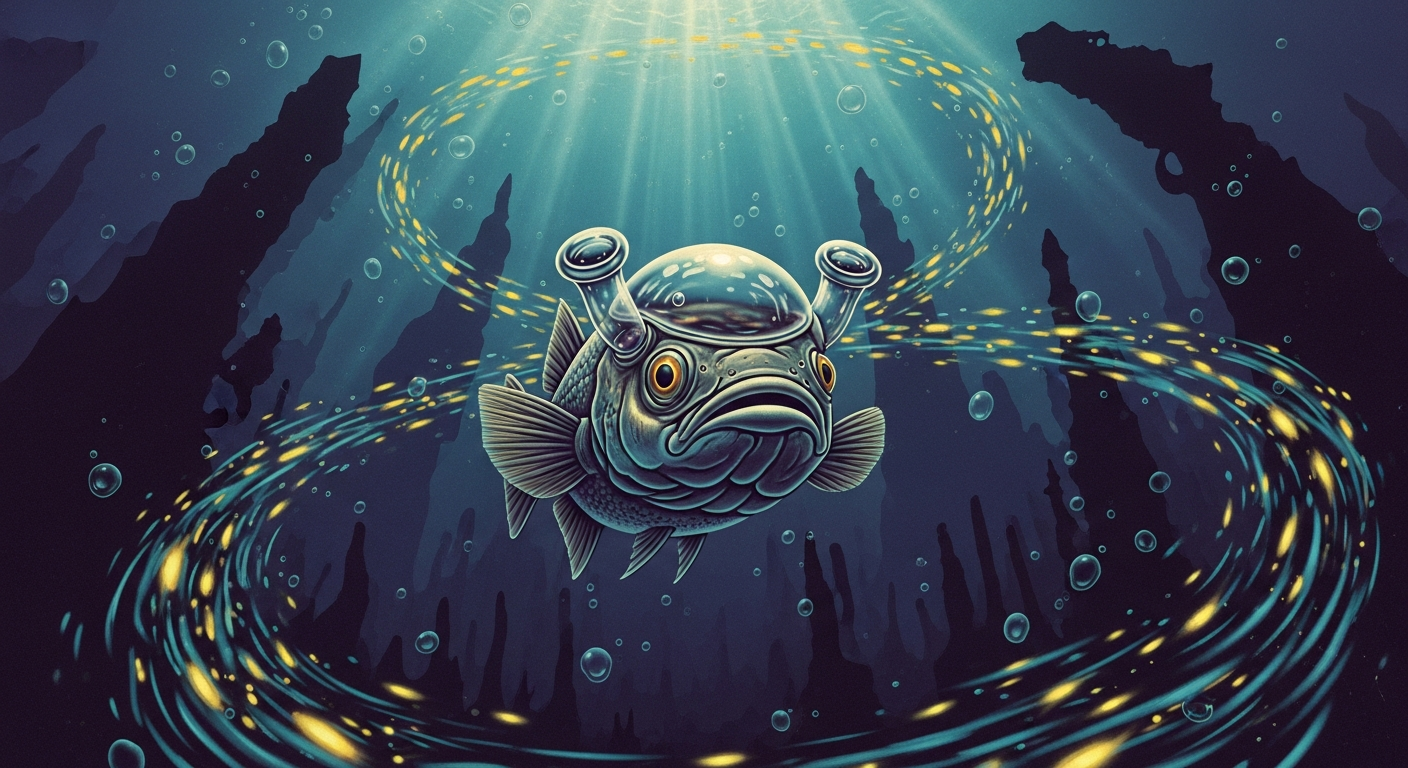
The deep ocean is one of the most unforgiving and alien environments on Earth, a realm where extreme pressure, freezing temperatures, and perpetual darkness drive the evolution of some of the planet’s most extraordinary creatures. Among these marvels of deep-sea biology is the barreleye fish (Macropinna microstoma). First described by science in 1939, this deep-ocean dweller looks like a creature straight out of science fiction. Its most defining and baffling feature? A completely transparent, fluid-filled head that houses a pair of highly sensitive, glowing green eyes.

For decades, marine biologists were puzzled by the barreleye fish. Early specimens brought to the surface in trawling nets were badly damaged, their fragile transparent shields destroyed by the sudden change in pressure. It wasn’t until the early 2000s, utilizing advanced Remotely Operated Vehicles (ROVs), that researchers at the Monterey Bay Aquarium Research Institute (MBARI) finally observed the barreleye in its natural habitat. This breakthrough allowed scientists to answer a fundamental question: Why does the barreleye fish have a transparent head? Unlocking this mystery provides a fascinating glimpse into the evolutionary ingenuity required to survive in the ocean’s twilight zone.

Deep-Sea Biology: Decoding the Barreleye’s Transparent Head

The Illusion of the Face: Nares vs. Tubular Eyes

To understand the purpose of the transparent head, one must first understand the anatomy of the barreleye fish. When looking directly at the fish, you might notice two small, dark indentations at the front of its face. These are frequently mistaken for eyes. In reality, these are nares—olfactory organs equivalent to human nostrils, used to sniff out chemical signatures in the water.

The true eyes are the massive, bright green glowing orbs encased inside the transparent dome of its head. These are known as tubular eyes. The green pigment in the lenses acts as a specialized filter, allowing the barreleye to ignore the ambient blue sunlight filtering down from the surface and focus entirely on the bioluminescent glow of its prey.

The Evolutionary Purpose of the Transparent Shield

The transparent, fluid-filled dome serves a dual evolutionary purpose, perfectly adapting the barreleye to the harsh realities of the mesopelagic zone (roughly 600 to 800 meters deep).

  • Maximum Light Capture and Vision: In the ocean’s twilight zone, sunlight is almost non-existent. The barreleye’s tubular eyes are pointed strictly upward most of the time, scanning the waters above for the faint silhouettes of tiny crustaceans and jellies. The transparent head acts like a cockpit canopy, allowing the fish to look straight up through its own skull to spot prey without exposing its delicate eye tissues to the open water.
  • Armor Against Toxic Predators: The second, and perhaps most fascinating, reason for the transparent head is protection. Marine biologists hypothesize that barreleye fish frequently interact with siphonophores—massive, stinging, jellyfish-like colonial organisms that drift through the deep sea. The barreleye is known to boldly swim into the deadly tentacles of siphonophores to steal the small organisms trapped within. The tough, transparent shield protects the fish’s highly sensitive tubular eyes from the siphonophore’s paralyzing nematocysts (stinging cells), allowing it to secure a meal without being blinded or killed.

A Marvel of Biomechanics: Rotating Eyes

For years, scientists assumed that the barreleye fish’s upward-facing tubular eyes meant it suffered from “tunnel vision” and could only look up. If a fish can only look up, how does it see the prey right in front of its mouth to eat it?

This riddle was solved when MBARI researchers captured high-definition video of the Macropinna microstoma in action. They discovered a hidden biomechanical marvel: the barreleye fish can actually rotate its tubular eyes inside its transparent head. When the fish spots a silhouette above, it maneuvers its body vertically to swim toward the prey. As it prepares to strike, it pivots its eyes forward, looking through the front of its transparent shield to guide the food precisely into its tiny, toothless mouth.

Conclusion: What the Barreleye Teaches Us About Deep-Sea Biology

The barreleye fish and its bizarre transparent head stand as a testament to the power of natural selection. In an environment defined by scarcity and darkness, Macropinna microstoma has evolved an elegant, multi-functional adaptation that allows it to see the unseen and steal food from toxic predators. Its transparent cranial shield is not merely a biological oddity; it is a highly specialized piece of organic armor and an optical lens combined.

Unlocking the mysteries of the barreleye fish reminds us of how much remains undiscovered in the deep sea. Every adaptation found in the ocean’s twilight zone provides critical insights into the resilience and adaptability of life on Earth. As ocean exploration technology continues to advance, marine biologists will undoubtedly uncover more deep-sea creatures that challenge our understanding of biology, further emphasizing the urgent need to protect these fragile, alien ecosystems from human impacts.


Reader Comments

Copied title and URL