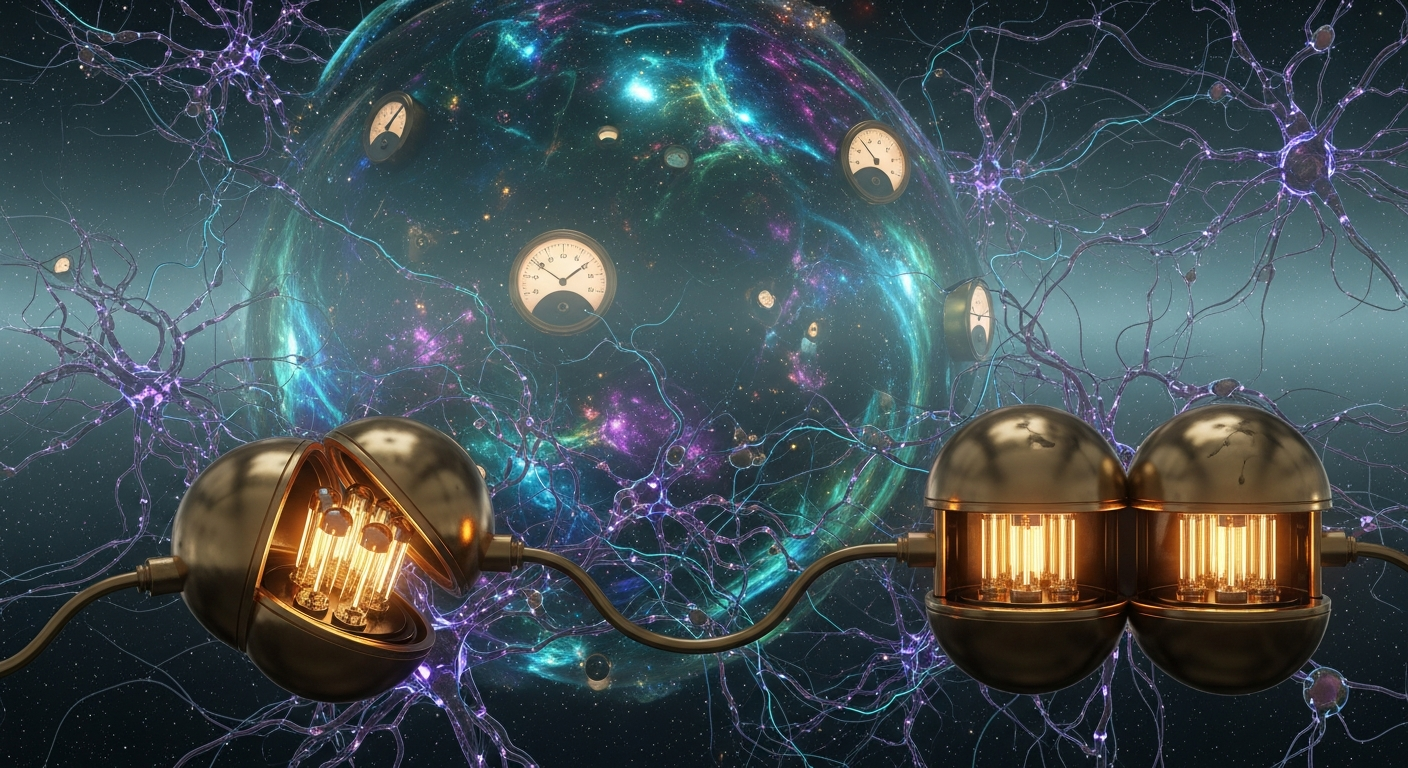
The Cosmic Origins of DNA: Did the Building Blocks of Life Come from Space?

The Cosmic Origins of DNA: Did the Building Blocks of Life Come from Space? Introduction: The Ultimate Question of Our Origins For centuries, humanity has pondered a profound question: How did life begin on Earth? Traditionally, science has focused on the "primordial soup" theory, suggesting that the initial spark of life ignited within Earth's early oceans, driven by lightning, geothermal energy, and terrestrial chemistry. However, a growing body of astronomical and chemical evidence is pointing toward a much more spectacular, extraterrestrial narrative. The cosmic origins of DNA and the building blocks of life may not be strictly earthly; rather, they might have been forged in the deep freeze of interstellar space and delivered to our nascent planet by cosmic messengers. Rethinking the Chemical Alphabet of Life Every living organism on Earth, from the simplest single-celled bacteria to complex human beings, shares a common molecular foundation: DNA (deoxyribonucleic acid) and RNA (ribonucleic acid). These genetic blueprints are constructed from a specific set of molecules known as nucleobases. For decades, scientists have debated whether these complex organic molecules could naturally and efficiently synthesize under the harsh, chaotic conditions of early Earth. Today, the interconnected fields of astrochemistry and planetary science are providing a compelling alternative: the critical ingredients for life were synthesized in the cosmos and seeded onto our planet, setting the essential stage for the biological evolution that followed. Unraveling the Extraterrestrial Delivery Hypothesis Meteorites: The Universe's Delivery Vehicles The concept that life's ingredients came from space relies heavily on the study of meteorites, specifically a rare class known as carbonaceous chondrites. These ancient space rocks are pristine relics from the formation of the solar system over 4.5 billion years ago. One of the most famous examples is the Murchison meteorite, which fell in Australia in 1969. Upon rigorous chemical analysis, researchers discovered that this extraterrestrial stone was teeming with organic compounds, including amino acids—the fundamental building blocks of proteins. But the true breakthrough in our understanding of the cosmic origins of DNA came as analytical techniques became exponentially more sensitive. Scientists began probing these ancient meteorites for nucleobases, the specific chemical "letters" that encode genetic information. Finding the Missing Nucleobases in Space Rocks DNA and RNA rely on a five-letter chemical alphabet categorized into purines (adenine and guanine) and pyrimidines (cytosine, thymine, and uracil). For many years, scientists had successfully identified purines and the RNA-specific pyrimidine, uracil, in meteorites. However, the DNA-specific pyrimidines, cytosine and thymine, remained frustratingly elusive. This absence led skeptics to question whether a complete set of genetic building blocks could truly originate in space. That paradigm shifted dramatically in recent years when a team of international researchers utilized state-of-the-art analytical techniques optimized for extracting and identifying fragile, small-scale compounds. They successfully detected the missing pyrimidines—cytosine and thymine—in several carbonaceous meteorites. This landmark discovery confirmed that all five primary nucleobases required for DNA and RNA exist in space. Isotopic analysis further verified their extraterrestrial origin, revealing a higher ratio of heavy carbon isotopes (Carbon-13) than what naturally occurs in terrestrial biology, proving these molecules were not the result of Earthly contamination. Direct Evidence from Asteroids Ryugu and Bennu While meteorites offer invaluable insights, they carry an inherent flaw: terrestrial contamination. The moment a space rock enters Earth's atmosphere and strikes the ground, it is exposed to our planet's pervasive biosphere. To definitively prove the cosmic origins of these prebiotic molecules, scientists needed pristine, untouched samples collected directly from the vacuum of space. Enter the revolutionary era of asteroid sample return missions. In 2020, Japan's Hayabusa2 spacecraft successfully returned uncontaminated material from the near-Earth asteroid Ryugu. Meticulous analysis of the Ryugu samples in 2023 yielded an astonishing result: the definitive presence of uracil alongside niacin (Vitamin B3). Similarly, NASA’s OSIRIS-REx mission returned precious samples from the asteroid Bennu in late 2023. Early analyses of the Bennu material have revealed a rich tapestry of organic molecules, organic carbon, and water-bearing minerals. These groundbreaking missions provide unequivocal proof that the chemical precursors to DNA are actively traversing our solar system on ancient, rocky bodies. The Interstellar Medium: A Cosmic Prebiotic Laboratory If asteroids and comets act as the delivery vehicles, where is the cosmic laboratory manufacturing these vital molecules? The answer lies in the interstellar medium (ISM)—the vast, incredibly cold expanses of gas and dust between the stars. Within dense molecular clouds, temperatures hover just a few degrees above absolute zero. Microscopic silicate and carbon dust grains in these regions become heavily coated in mantles of ice, composed of water, carbon monoxide, ammonia, and methanol. When these icy grains are bombarded by energetic galactic cosmic rays and ultraviolet (UV) radiation from nearby young stars, a highly complex chain of photochemical reactions is triggered. In this deep-freeze environment, simple molecules are broken apart into highly reactive radicals and recombined to form complex, prebiotic organic compounds, including the very nucleobases that form DNA. When a molecular cloud eventually collapses under its own gravity to form a new star system—just like our solar nebula did 4.6 billion years ago—these complex organics are incorporated into the swirling protoplanetary disk. They become trapped safely inside comets, asteroids, and planetesimals. During the Late Heavy Bombardment, a tumultuous period of intense impact activity early in Earth's history, a relentless rain of these icy bodies struck our planet. This cosmic bombardment likely delivered a massive payload of pre-synthesized organic molecules directly into Earth's primordial oceans, effectively fertilizing the planet and jumpstarting prebiotic chemistry. Conclusion: We Are Truly Made of Starstuff Redefining Our Place in the Universe The accumulating scientific evidence strongly supports the hypothesis that the cosmic origins of DNA are a factual reality. The building blocks of life did not have to be painstakingly synthesized from scratch on a desolate, volatile early Earth. Instead, they were forged in the crucible of deep space, preserved within ancient asteroids, and delivered to our world across billions of miles. Understanding that the fundamental ingredients for DNA and RNA are widespread throughout the cosmos carries profound implications for astrobiology. It suggests that the chemical prerequisites for life are not a statistical anomaly unique to Earth, but rather a standard feature of planetary systems across the Milky Way galaxy. As the renowned astrophysicist Carl Sagan eloquently stated, "We are made of starstuff." The scientific realization that the very letters of our genetic code were penned in interstellar clouds brings a profound new meaning to our connection with the universe. As we continue to launch probes to ocean moons like Europa and Enceladus, and peer into the atmospheres of distant exoplanets with the James Webb Space Telescope, we do so with a renewed sense of hope—knowing that the molecular seeds of life are drifting through the cosmos, waiting for the right conditions to take root. 一般

The Cosmic Origins of DNA: Did the Building Blocks of Life Come from Space?

Introduction: The Ultimate Question of Our Origins

For centuries, humanity has pondered a profound question: How did life begin on Earth? Traditionally, science has focused on the “primordial soup” theory, suggesting that the initial spark of life ignited within Earth’s early oceans, driven by lightning, geothermal energy, and terrestrial chemistry. However, a growing body of astronomical and chemical evidence is pointing toward a much more spectacular, extraterrestrial narrative. The cosmic origins of DNA and the building blocks of life may not be strictly earthly; rather, they might have been forged in the deep freeze of interstellar space and delivered to our nascent planet by cosmic messengers.

Rethinking the Chemical Alphabet of Life

Every living organism on Earth, from the simplest single-celled bacteria to complex human beings, shares a common molecular foundation: DNA (deoxyribonucleic acid) and RNA (ribonucleic acid). These genetic blueprints are constructed from a specific set of molecules known as nucleobases. For decades, scientists have debated whether these complex organic molecules could naturally and efficiently synthesize under the harsh, chaotic conditions of early Earth. Today, the interconnected fields of astrochemistry and planetary science are providing a compelling alternative: the critical ingredients for life were synthesized in the cosmos and seeded onto our planet, setting the essential stage for the biological evolution that followed.

Unraveling the Extraterrestrial Delivery Hypothesis

Meteorites: The Universe’s Delivery Vehicles

The concept that life’s ingredients came from space relies heavily on the study of meteorites, specifically a rare class known as carbonaceous chondrites. These ancient space rocks are pristine relics from the formation of the solar system over 4.5 billion years ago. One of the most famous examples is the Murchison meteorite, which fell in Australia in 1969. Upon rigorous chemical analysis, researchers discovered that this extraterrestrial stone was teeming with organic compounds, including amino acids—the fundamental building blocks of proteins.

But the true breakthrough in our understanding of the cosmic origins of DNA came as analytical techniques became exponentially more sensitive. Scientists began probing these ancient meteorites for nucleobases, the specific chemical “letters” that encode genetic information.

Finding the Missing Nucleobases in Space Rocks

DNA and RNA rely on a five-letter chemical alphabet categorized into purines (adenine and guanine) and pyrimidines (cytosine, thymine, and uracil). For many years, scientists had successfully identified purines and the RNA-specific pyrimidine, uracil, in meteorites. However, the DNA-specific pyrimidines, cytosine and thymine, remained frustratingly elusive. This absence led skeptics to question whether a complete set of genetic building blocks could truly originate in space.

That paradigm shifted dramatically in recent years when a team of international researchers utilized state-of-the-art analytical techniques optimized for extracting and identifying fragile, small-scale compounds. They successfully detected the missing pyrimidines—cytosine and thymine—in several carbonaceous meteorites. This landmark discovery confirmed that all five primary nucleobases required for DNA and RNA exist in space. Isotopic analysis further verified their extraterrestrial origin, revealing a higher ratio of heavy carbon isotopes (Carbon-13) than what naturally occurs in terrestrial biology, proving these molecules were not the result of Earthly contamination.

Direct Evidence from Asteroids Ryugu and Bennu

While meteorites offer invaluable insights, they carry an inherent flaw: terrestrial contamination. The moment a space rock enters Earth’s atmosphere and strikes the ground, it is exposed to our planet’s pervasive biosphere. To definitively prove the cosmic origins of these prebiotic molecules, scientists needed pristine, untouched samples collected directly from the vacuum of space.

Enter the revolutionary era of asteroid sample return missions. In 2020, Japan’s Hayabusa2 spacecraft successfully returned uncontaminated material from the near-Earth asteroid Ryugu. Meticulous analysis of the Ryugu samples in 2023 yielded an astonishing result: the definitive presence of uracil alongside niacin (Vitamin B3). Similarly, NASA’s OSIRIS-REx mission returned precious samples from the asteroid Bennu in late 2023. Early analyses of the Bennu material have revealed a rich tapestry of organic molecules, organic carbon, and water-bearing minerals. These groundbreaking missions provide unequivocal proof that the chemical precursors to DNA are actively traversing our solar system on ancient, rocky bodies.

The Interstellar Medium: A Cosmic Prebiotic Laboratory

If asteroids and comets act as the delivery vehicles, where is the cosmic laboratory manufacturing these vital molecules? The answer lies in the interstellar medium (ISM)—the vast, incredibly cold expanses of gas and dust between the stars.

Within dense molecular clouds, temperatures hover just a few degrees above absolute zero. Microscopic silicate and carbon dust grains in these regions become heavily coated in mantles of ice, composed of water, carbon monoxide, ammonia, and methanol. When these icy grains are bombarded by energetic galactic cosmic rays and ultraviolet (UV) radiation from nearby young stars, a highly complex chain of photochemical reactions is triggered. In this deep-freeze environment, simple molecules are broken apart into highly reactive radicals and recombined to form complex, prebiotic organic compounds, including the very nucleobases that form DNA.

When a molecular cloud eventually collapses under its own gravity to form a new star system—just like our solar nebula did 4.6 billion years ago—these complex organics are incorporated into the swirling protoplanetary disk. They become trapped safely inside comets, asteroids, and planetesimals. During the Late Heavy Bombardment, a tumultuous period of intense impact activity early in Earth’s history, a relentless rain of these icy bodies struck our planet. This cosmic bombardment likely delivered a massive payload of pre-synthesized organic molecules directly into Earth’s primordial oceans, effectively fertilizing the planet and jumpstarting prebiotic chemistry.

Conclusion: We Are Truly Made of Starstuff

Redefining Our Place in the Universe

The accumulating scientific evidence strongly supports the hypothesis that the cosmic origins of DNA are a factual reality. The building blocks of life did not have to be painstakingly synthesized from scratch on a desolate, volatile early Earth. Instead, they were forged in the crucible of deep space, preserved within ancient asteroids, and delivered to our world across billions of miles.

Understanding that the fundamental ingredients for DNA and RNA are widespread throughout the cosmos carries profound implications for astrobiology. It suggests that the chemical prerequisites for life are not a statistical anomaly unique to Earth, but rather a standard feature of planetary systems across the Milky Way galaxy. As the renowned astrophysicist Carl Sagan eloquently stated, “We are made of starstuff.” The scientific realization that the very letters of our genetic code were penned in interstellar clouds brings a profound new meaning to our connection with the universe. As we continue to launch probes to ocean moons like Europa and Enceladus, and peer into the atmospheres of distant exoplanets with the James Webb Space Telescope, we do so with a renewed sense of hope—knowing that the molecular seeds of life are drifting through the cosmos, waiting for the right conditions to take root.


Reader Comments

タイトルとURLをコピーしました