不老不死の生物学:ベニクラゲの秘密を解き明かす

The Biology of Immortality: Unlocking the Secrets of the Immortal Jellyfish Introduction: The Quest for Eternal Life For millennia, the concept of immortality has been confined to the realms of mythology, alchemy, and science fiction. Humanity has long chased the elusive fountain of youth, seeking to halt the inevitable march of biological aging. Yet, while human scientists have spent decades researching life extension, nature has quietly perfected the art of biological immortality in the depths of our oceans. Enter Turritopsis dohrnii, universally known as the immortal jellyfish. Measuring barely a fifth of an inch across, this unassuming, bell-shaped hydrozoan possesses an extraordinary evolutionary superpower: the ability to endlessly reset its biological clock. By reverting to its juvenile form in response to stress or old age, Turritopsis dohrnii defies the fundamental laws of a linear life cycle. Understanding the biology of this remarkable creature not only solves a fascinating marine mystery but also offers profound insights into cellular reprogramming, regenerative medicine, and the ultimate secrets of aging. Detailed Scientific Explanation: The Mechanics of Reverse Aging The Non-Linear Life Cycle of Turritopsis dohrnii To grasp the magnitude of the immortal jellyfish's abilities, one must first understand the standard life cycle of a scyphozoan or hydrozoan. Most jellyfish undergo a one-way developmental trajectory: starting as a fertilized egg, they become a free-swimming larva (planula), attach to the sea floor as a polyp, and eventually bud off into a juvenile medusa (ephyra) that matures into an adult, reproducing jellyfish. Once the adult medusa reproduces, senescence begins, inevitably leading to death. Turritopsis dohrnii, however, possesses a genetic "escape hatch." When an adult medusa is faced with life-threatening conditions—such as starvation, sudden temperature changes, physical injury, or the natural degradation of old age—it does not die. Instead, it absorbs its own tentacles, shrinks into a cyst-like sphere, and settles back onto the ocean floor. Within days, this cyst develops into a new polyp colony. The creature essentially undergoes a "Benjamin Button" effect, reverting entirely from adulthood back to infancy. Transdifferentiation: The Key to Cellular Reprogramming The secret to this biological immortality lies in a rare and highly complex cellular process called transdifferentiation. In most multicellular organisms, cellular development is a one-way street. A stem cell differentiates into a specialized cell—such as a muscle cell, a nerve cell, or a skin cell—and permanently locks into that identity. In Turritopsis dohrnii, the rules of cellular fate are flexible. During the reverse-aging process, the jellyfish's fully differentiated adult cells undergo a radical transformation. They lose their specialized traits, revert to an unspecialized state, and then reprogram themselves into entirely new types of cells required to form a polyp. For instance, a muscle cell from the adult medusa might transform into a nerve cell or an epithelial cell for the polyp. This cellular recycling ensures that the organism's genetic material survives continuously, bypassing the cellular senescence that drives aging in other animals. Genomic Marvels and Telomere Preservation Recent sequencing of the Turritopsis dohrnii genome has provided unprecedented molecular insights into its resilience. Scientists have identified unique variations and duplications in genes associated with DNA repair, telomere maintenance, and oxidative stress reduction. In human aging, telomeres (the protective caps at the ends of chromosomes) shorten with every cell division, eventually leading to cellular death. The immortal jellyfish appears to possess highly efficient mechanisms for preserving its telomeres and protecting its DNA from the wear and tear of metabolic processes. Furthermore, researchers have noted amplified activity in pluripotency-related genes during the reversion phase, mimicking the regenerative state of embryonic stem cells. Implications for Human Medicine and Anti-Aging Research While humans and jellyfish are separated by hundreds of millions of years of evolution, the fundamental building blocks of DNA and cellular biology are shared across the animal kingdom. The transdifferentiation observed in Turritopsis dohrnii holds massive implications for modern biomedicine. If researchers can decode the exact genetic triggers and signaling pathways that allow the jellyfish to reprogram its cells, the applications for regenerative medicine could be revolutionary. This research could pave the way for novel therapies aimed at repairing damaged tissue, treating neurodegenerative diseases like Parkinson's and Alzheimer's, and fighting cellular aging. Additionally, understanding how cells can change their identity without triggering uncontrolled replication offers critical insights into cancer research, as tumor growth is often a result of faulty cellular programming. Conclusion: What the Immortal Jellyfish Teaches Us The immortal jellyfish, Turritopsis dohrnii, stands as a testament to the boundless ingenuity of biological evolution. By mastering the art of transdifferentiation and cellular reprogramming, this tiny hydrozoan has shattered the paradigm of a finite, linear lifespan. While it is unlikely that humanity will develop an immortality serum derived directly from a jellyfish, the underlying mechanisms of its survival offer an invaluable blueprint for the future of science. As scientists continue to unlock the genetic and molecular secrets of biological immortality, we move closer to a deeper understanding of aging itself. Turritopsis dohrnii reminds us that the answers to some of humanity’s oldest and most profound questions may not be found in the stars, but hidden in the microscopic life of our oceans. 一般

不老不死の生物学:ベニクラゲの秘密を解き明かす

Introduction: The Quest for Eternal Life

For millennia, the concept of immortality has been confined to the realms of mythology, alchemy, and science fiction. Humanity has long chased the elusive fountain of youth, seeking to halt the inevitable march of biological aging. Yet, while human scientists have spent decades researching life extension, nature has quietly perfected the art of biological immortality in the depths of our oceans. Enter Turritopsis dohrnii, universally known as the immortal jellyfish.

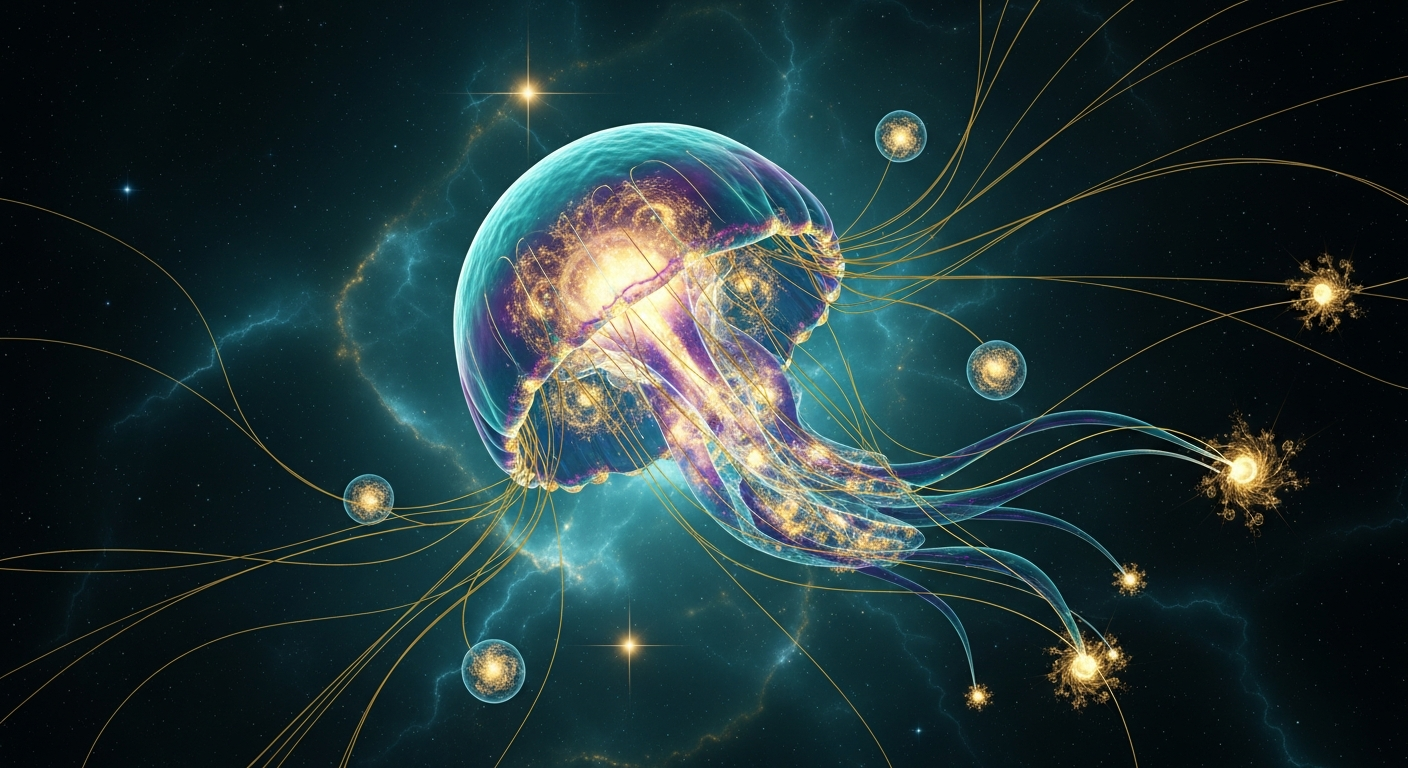
Measuring barely a fifth of an inch across, this unassuming, bell-shaped hydrozoan possesses an extraordinary evolutionary superpower: the ability to endlessly reset its biological clock. By reverting to its juvenile form in response to stress or old age, Turritopsis dohrnii defies the fundamental laws of a linear life cycle. Understanding the biology of this remarkable creature not only solves a fascinating marine mystery but also offers profound insights into cellular reprogramming, regenerative medicine, and the ultimate secrets of aging.

Detailed Scientific Explanation: The Mechanics of Reverse Aging

The Non-Linear Life Cycle of Turritopsis dohrnii

To grasp the magnitude of the immortal jellyfish’s abilities, one must first understand the standard life cycle of a scyphozoan or hydrozoan. Most jellyfish undergo a one-way developmental trajectory: starting as a fertilized egg, they become a free-swimming larva (planula), attach to the sea floor as a polyp, and eventually bud off into a juvenile medusa (ephyra) that matures into an adult, reproducing jellyfish. Once the adult medusa reproduces, senescence begins, inevitably leading to death.

Turritopsis dohrnii, however, possesses a genetic “escape hatch.” When an adult medusa is faced with life-threatening conditions—such as starvation, sudden temperature changes, physical injury, or the natural degradation of old age—it does not die. Instead, it absorbs its own tentacles, shrinks into a cyst-like sphere, and settles back onto the ocean floor. Within days, this cyst develops into a new polyp colony. The creature essentially undergoes a “Benjamin Button” effect, reverting entirely from adulthood back to infancy.

Transdifferentiation: The Key to Cellular Reprogramming

The secret to this biological immortality lies in a rare and highly complex cellular process called transdifferentiation. In most multicellular organisms, cellular development is a one-way street. A stem cell differentiates into a specialized cell—such as a muscle cell, a nerve cell, or a skin cell—and permanently locks into that identity.

In Turritopsis dohrnii, the rules of cellular fate are flexible. During the reverse-aging process, the jellyfish’s fully differentiated adult cells undergo a radical transformation. They lose their specialized traits, revert to an unspecialized state, and then reprogram themselves into entirely new types of cells required to form a polyp. For instance, a muscle cell from the adult medusa might transform into a nerve cell or an epithelial cell for the polyp. This cellular recycling ensures that the organism’s genetic material survives continuously, bypassing the cellular senescence that drives aging in other animals.

Genomic Marvels and Telomere Preservation

Recent sequencing of the Turritopsis dohrnii genome has provided unprecedented molecular insights into its resilience. Scientists have identified unique variations and duplications in genes associated with DNA repair, telomere maintenance, and oxidative stress reduction.

In human aging, telomeres (the protective caps at the ends of chromosomes) shorten with every cell division, eventually leading to cellular death. The immortal jellyfish appears to possess highly efficient mechanisms for preserving its telomeres and protecting its DNA from the wear and tear of metabolic processes. Furthermore, researchers have noted amplified activity in pluripotency-related genes during the reversion phase, mimicking the regenerative state of embryonic stem cells.

Implications for Human Medicine and Anti-Aging Research

While humans and jellyfish are separated by hundreds of millions of years of evolution, the fundamental building blocks of DNA and cellular biology are shared across the animal kingdom. The transdifferentiation observed in Turritopsis dohrnii holds massive implications for modern biomedicine.

If researchers can decode the exact genetic triggers and signaling pathways that allow the jellyfish to reprogram its cells, the applications for regenerative medicine could be revolutionary. This research could pave the way for novel therapies aimed at repairing damaged tissue, treating neurodegenerative diseases like Parkinson’s and Alzheimer’s, and fighting cellular aging. Additionally, understanding how cells can change their identity without triggering uncontrolled replication offers critical insights into cancer research, as tumor growth is often a result of faulty cellular programming.

Conclusion: What the Immortal Jellyfish Teaches Us

The immortal jellyfish, Turritopsis dohrnii, stands as a testament to the boundless ingenuity of biological evolution. By mastering the art of transdifferentiation and cellular reprogramming, this tiny hydrozoan has shattered the paradigm of a finite, linear lifespan. While it is unlikely that humanity will develop an immortality serum derived directly from a jellyfish, the underlying mechanisms of its survival offer an invaluable blueprint for the future of science.

As scientists continue to unlock the genetic and molecular secrets of biological immortality, we move closer to a deeper understanding of aging itself. Turritopsis dohrnii reminds us that the answers to some of humanity’s oldest and most profound questions may not be found in the stars, but hidden in the microscopic life of our oceans.
Reader Comments

タイトルとURLをコピーしました