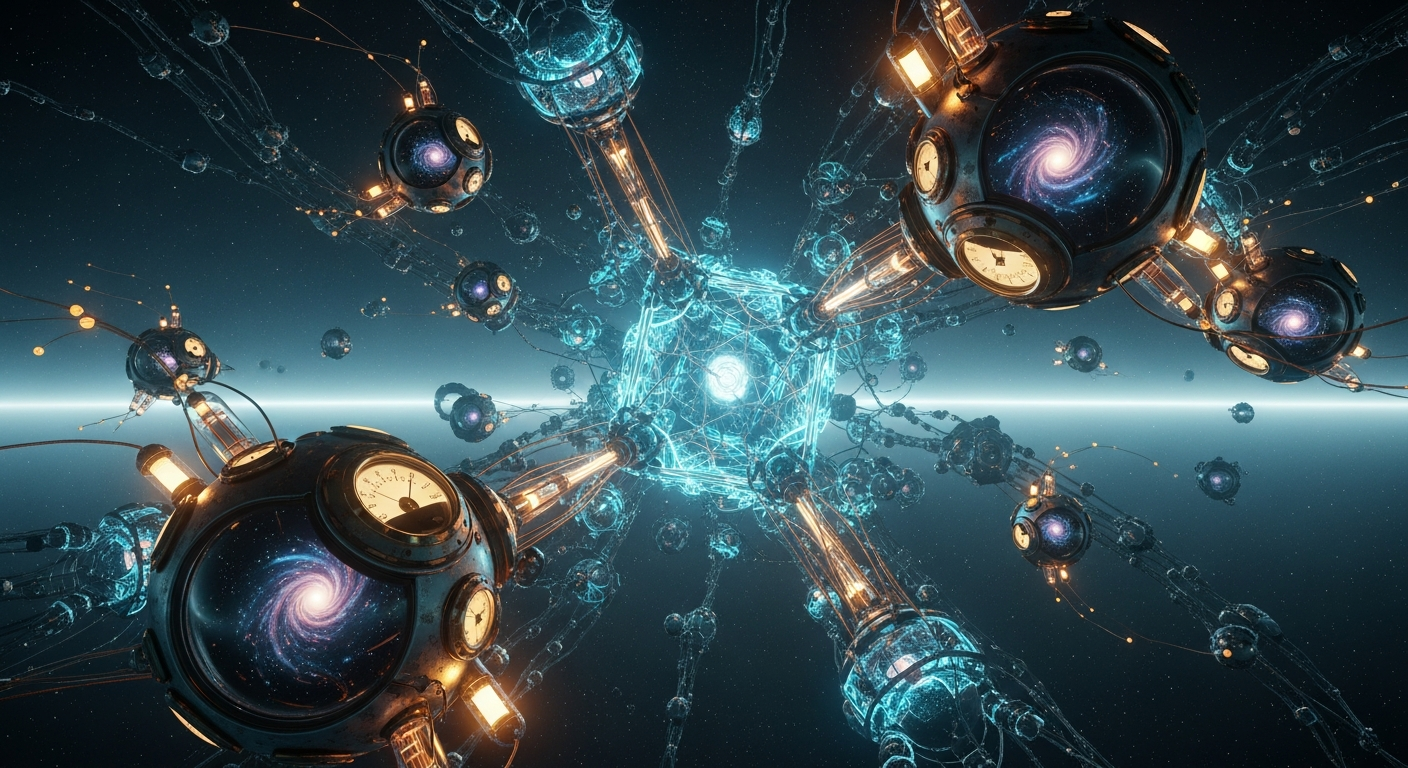
The Octopus Enigma: Unlocking the Biological Mysteries of Earth’s Most Alien Intelligence

The Octopus Enigma: Unlocking the Biological Mysteries of Earth's Most Alien Intelligence Introduction: Encountering an Extraterrestrial on Earth When astrobiologists ponder what extraterrestrial intelligence might look like, they often gaze toward the stars. Yet, nestled within the kelp forests and coral reefs of our own planet resides a creature so biologically distinct from humans that it might as well be from another world: the octopus. With its morphing physical form, decentralized brain, and uncanny problem-solving abilities, the octopus represents a parallel pathway of evolution. The last common ancestor between humans and cephalopods was a microscopic, tube-like flatworm that lived over 600 million years ago. Since then, vertebrate and cephalopod lineages have navigated completely separate evolutionary trajectories. Despite this massive evolutionary divide, the octopus has developed an advanced, complex intelligence, challenging our anthropocentric understanding of cognition. By unraveling the biological mysteries of Earth's most alien intelligence, scientists are not only redefining the boundaries of animal cognition but are also uncovering groundbreaking phenomena in neurobiology, genetics, and evolutionary biology. Detailed Scientific Explanation: The Architecture of an Alien Mind A Brain Without Boundaries: The Distributed Nervous System To understand the octopus enigma, one must first look at its fundamentally bizarre neurobiology. Unlike vertebrates, which rely on a centralized brain encased in a protective skull to process information and issue commands, the octopus features a highly distributed nervous system. Of the approximately 500 million neurons in a typical octopus (roughly equivalent to the neural count of a dog), only about a third are located in the central brain. The remaining two-thirds are distributed throughout its eight arms. This decentralized architecture means that each arm possesses its own semi-autonomous nervous system, capable of processing sensory information, making decisions, and executing complex movements without direct input from the central brain. If an octopus arm is severed, it can continue to react to stimuli, grasp food, and even attempt to deliver it to a nonexistent mouth. In the realm of neuroscience, this raises profound questions about the nature of consciousness. Rather than a singular "I" directing the body, the octopus mind may function more like a collaborative network—an eight-part jazz ensemble improvising in perfect harmony. Masters of Illusion: Chromatophores and "Seeing" Skin The visual processing and adaptive camouflage capabilities of the octopus are unparalleled in the animal kingdom, presenting a masterclass in adaptive biology. Within milliseconds, an octopus can alter its color, pattern, and skin texture to blend seamlessly with a coral reef or a rocky seabed. This dynamic camouflage is driven by thousands of specialized skin cells called chromatophores, tiny pigment-filled sacs attached to radial muscles that expand or contract under direct neural control. Complementing the chromatophores are iridophores (which reflect light to create iridescent blues and greens) and leucophores (which scatter ambient light). Furthermore, the octopus can physically change the texture of its skin by contracting dermal muscles called papillae, transforming a smooth surface into 3D spikes resembling algae or coral. The most astonishing scientific twist? Behavioral experiments suggest that octopuses are largely colorblind. How, then, do they perfectly match the colors of their environment? Recent biological studies have discovered that octopus skin contains opsins—the same light-sensitive proteins found in the retinas of eyes. This suggests that cephalopod skin can process ambient light directly, effectively allowing the octopus to "see" with its skin, bypassing the central visual cortex altogether. Rewriting the Code of Life: The RNA Editing Phenomenon Perhaps the most "alien" aspect of the octopus lies deeply hidden within its genome. The central dogma of molecular biology dictates that DNA is transcribed into RNA, which is then translated into proteins. For most organisms, genetic adaptation occurs slowly over millions of years through random DNA mutations. Coleoid cephalopods (octopuses, squid, and cuttlefish) play by different rules: they extensively edit their RNA on the fly. Research has revealed that octopuses use specialized enzymes to swap out specific molecular building blocks in their messenger RNA (mRNA). This allows them to diversify their protein output without altering their underlying DNA. In the octopus brain, over 60% of RNA transcripts are routinely recoded—compared to less than 1% in humans. This extraordinary ability allows octopuses to rapidly acclimatize to environmental shifts, such as altering the proteins in their nervous system to maintain neural function in freezing ocean temperatures. However, this biological superpower comes at an evolutionary cost: to preserve the delicate structures required for RNA editing, cephalopods have severely suppressed their rate of DNA mutation, effectively slowing their long-term genetic evolution. The Paradox of Time: High Intelligence, Short Lifespan From an evolutionary perspective, intelligence is an expensive biological trait. Complex brains require immense caloric energy to develop and maintain, an investment that evolutionary biology usually reserves for long-lived species like humans, elephants, and cetaceans. Yet, the octopus defies this logic entirely. Despite their advanced problem-solving skills, ability to use tools, and complex spatial memory, most octopus species live for only one to two years. They are semelparous creatures, meaning they reproduce only once before entering a rapid phase of cellular decline known as senescence, ultimately dying shortly after their eggs hatch. The biological rationale behind building such an extraordinarily complex neural network for such a fleeting existence remains one of marine biology's most debated paradoxes. It suggests that highly dynamic, predatory environments can drive the evolution of high-tier intelligence independently of long lifespans and social structures. Conclusion: What the Octopus Teaches Us About Consciousness The octopus enigma compels us to abandon our human-centric biases and recognize that the universe may harbor many different blueprints for intelligence. Through their distributed nervous systems, light-sensing skin, and unparalleled RNA editing capabilities, octopuses demonstrate that nature can solve the complex problems of perception, cognition, and survival in radically different ways. As scientists continue to unlock the biological mysteries of Earth's most alien intelligence, the implications extend far beyond marine biology. Insights gleaned from cephalopod neurobiology are inspiring advancements in soft robotics, artificial neural networks, and our fundamental understanding of genomic plasticity. Ultimately, by studying the octopus, we are exploring the very edges of biological possibility, proving that to encounter an alien mind, we need not traverse the cosmos—we simply need to look beneath the waves. 一般

The Octopus Enigma: Unlocking the Biological Mysteries of Earth’s Most Alien Intelligence

Introduction: Encountering an Extraterrestrial on Earth

When astrobiologists ponder what extraterrestrial intelligence might look like, they often gaze toward the stars. Yet, nestled within the kelp forests and coral reefs of our own planet resides a creature so biologically distinct from humans that it might as well be from another world: the octopus. With its morphing physical form, decentralized brain, and uncanny problem-solving abilities, the octopus represents a parallel pathway of evolution. The last common ancestor between humans and cephalopods was a microscopic, tube-like flatworm that lived over 600 million years ago. Since then, vertebrate and cephalopod lineages have navigated completely separate evolutionary trajectories.

Despite this massive evolutionary divide, the octopus has developed an advanced, complex intelligence, challenging our anthropocentric understanding of cognition. By unraveling the biological mysteries of Earth’s most alien intelligence, scientists are not only redefining the boundaries of animal cognition but are also uncovering groundbreaking phenomena in neurobiology, genetics, and evolutionary biology.

Detailed Scientific Explanation: The Architecture of an Alien Mind

A Brain Without Boundaries: The Distributed Nervous System

To understand the octopus enigma, one must first look at its fundamentally bizarre neurobiology. Unlike vertebrates, which rely on a centralized brain encased in a protective skull to process information and issue commands, the octopus features a highly distributed nervous system. Of the approximately 500 million neurons in a typical octopus (roughly equivalent to the neural count of a dog), only about a third are located in the central brain. The remaining two-thirds are distributed throughout its eight arms.

This decentralized architecture means that each arm possesses its own semi-autonomous nervous system, capable of processing sensory information, making decisions, and executing complex movements without direct input from the central brain. If an octopus arm is severed, it can continue to react to stimuli, grasp food, and even attempt to deliver it to a nonexistent mouth. In the realm of neuroscience, this raises profound questions about the nature of consciousness. Rather than a singular “I” directing the body, the octopus mind may function more like a collaborative network—an eight-part jazz ensemble improvising in perfect harmony.

Masters of Illusion: Chromatophores and “Seeing” Skin

The visual processing and adaptive camouflage capabilities of the octopus are unparalleled in the animal kingdom, presenting a masterclass in adaptive biology. Within milliseconds, an octopus can alter its color, pattern, and skin texture to blend seamlessly with a coral reef or a rocky seabed. This dynamic camouflage is driven by thousands of specialized skin cells called chromatophores, tiny pigment-filled sacs attached to radial muscles that expand or contract under direct neural control.

Complementing the chromatophores are iridophores (which reflect light to create iridescent blues and greens) and leucophores (which scatter ambient light). Furthermore, the octopus can physically change the texture of its skin by contracting dermal muscles called papillae, transforming a smooth surface into 3D spikes resembling algae or coral.

The most astonishing scientific twist? Behavioral experiments suggest that octopuses are largely colorblind. How, then, do they perfectly match the colors of their environment? Recent biological studies have discovered that octopus skin contains opsins—the same light-sensitive proteins found in the retinas of eyes. This suggests that cephalopod skin can process ambient light directly, effectively allowing the octopus to “see” with its skin, bypassing the central visual cortex altogether.

Rewriting the Code of Life: The RNA Editing Phenomenon

Perhaps the most “alien” aspect of the octopus lies deeply hidden within its genome. The central dogma of molecular biology dictates that DNA is transcribed into RNA, which is then translated into proteins. For most organisms, genetic adaptation occurs slowly over millions of years through random DNA mutations. Coleoid cephalopods (octopuses, squid, and cuttlefish) play by different rules: they extensively edit their RNA on the fly.

Research has revealed that octopuses use specialized enzymes to swap out specific molecular building blocks in their messenger RNA (mRNA). This allows them to diversify their protein output without altering their underlying DNA. In the octopus brain, over 60% of RNA transcripts are routinely recoded—compared to less than 1% in humans. This extraordinary ability allows octopuses to rapidly acclimatize to environmental shifts, such as altering the proteins in their nervous system to maintain neural function in freezing ocean temperatures. However, this biological superpower comes at an evolutionary cost: to preserve the delicate structures required for RNA editing, cephalopods have severely suppressed their rate of DNA mutation, effectively slowing their long-term genetic evolution.

The Paradox of Time: High Intelligence, Short Lifespan

From an evolutionary perspective, intelligence is an expensive biological trait. Complex brains require immense caloric energy to develop and maintain, an investment that evolutionary biology usually reserves for long-lived species like humans, elephants, and cetaceans. Yet, the octopus defies this logic entirely. Despite their advanced problem-solving skills, ability to use tools, and complex spatial memory, most octopus species live for only one to two years.

They are semelparous creatures, meaning they reproduce only once before entering a rapid phase of cellular decline known as senescence, ultimately dying shortly after their eggs hatch. The biological rationale behind building such an extraordinarily complex neural network for such a fleeting existence remains one of marine biology’s most debated paradoxes. It suggests that highly dynamic, predatory environments can drive the evolution of high-tier intelligence independently of long lifespans and social structures.

Conclusion: What the Octopus Teaches Us About Consciousness

The octopus enigma compels us to abandon our human-centric biases and recognize that the universe may harbor many different blueprints for intelligence. Through their distributed nervous systems, light-sensing skin, and unparalleled RNA editing capabilities, octopuses demonstrate that nature can solve the complex problems of perception, cognition, and survival in radically different ways.

As scientists continue to unlock the biological mysteries of Earth’s most alien intelligence, the implications extend far beyond marine biology. Insights gleaned from cephalopod neurobiology are inspiring advancements in soft robotics, artificial neural networks, and our fundamental understanding of genomic plasticity. Ultimately, by studying the octopus, we are exploring the very edges of biological possibility, proving that to encounter an alien mind, we need not traverse the cosmos—we simply need to look beneath the waves.

Reader Comments

タイトルとURLをコピーしました