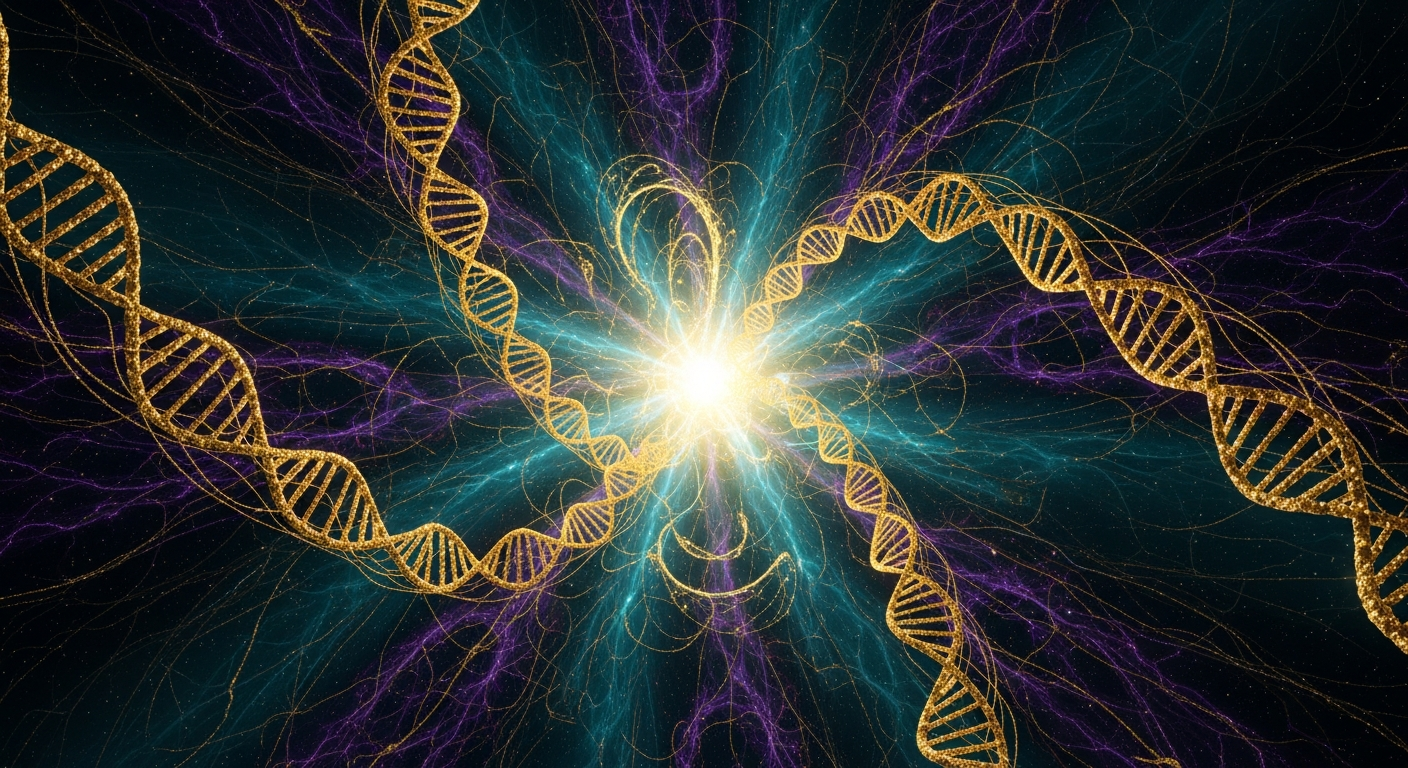
The Biology of Stardust: How Ancient Supernovas Shaped Human DNA

The Biology of Stardust: How Ancient Supernovas Shaped Human DNA The Cosmic Origins of Human Life When astrophysicist Carl Sagan famously declared, "We are made of star-stuff," it was not a mere poetic metaphor, but a profound literal truth. The intersection of astrophysics and evolutionary biology reveals a captivating narrative: the very blueprint of human life, our DNA, is inextricably linked to the violent deaths of ancient stars. Welcome to the biology of stardust. To understand the complex chemical architecture of the human genome, we must look beyond the confines of Earth and cast our gaze millions of light-years into the cosmos. This article explores the fascinating science of how ancient supernovas forged the essential elements of life, guided the structural formation of human DNA, and potentially accelerated our evolutionary trajectory. Stellar Nucleosynthesis: The Forging of Genetic Building Blocks In the immediate aftermath of the Big Bang, the universe was a sea of profound simplicity, consisting almost entirely of hydrogen and helium. These primordial elements alone were insufficient to create the biological complexity required for life. The creation of heavier elements—a process known as stellar nucleosynthesis—required the immense heat and pressure found only within the cores of dying stars and the catastrophic explosions of supernovas. The Architecture of the Double Helix At its core, deoxyribonucleic acid (DNA) is a masterpiece of cosmic chemistry. The iconic double helix is constructed from a remarkably specific set of elements: carbon, nitrogen, oxygen, phosphorus, and hydrogen. With the exception of hydrogen, every single atom in your DNA was synthesized in the nuclear furnace of an ancient star. Carbon and Oxygen: Forged in the cores of mid-sized stars through the triple-alpha process, carbon forms the structural framework of the DNA molecule. Oxygen, created in the later stages of stellar evolution, is crucial for the sugar (deoxyribose) that makes up the backbone of the helix. Nitrogen: Produced via the CNO (Carbon-Nitrogen-Oxygen) cycle in massive stars, nitrogen is the essential component of the nucleotide base pairs (Adenine, Thymine, Cytosine, Guanine) that encode our genetic information. Phosphorus: This vital element, which links the DNA sugars together to form the sturdy backbone of the molecule, is dispersed into the cosmos primarily through the explosive death throes of massive stars—Type II supernovas. Heavy Elements and Genetic Regulation: The Zinc Finger Connection While the primary structure of DNA relies on the lighter elements forged in standard stars, the regulation and expression of our genome depend heavily on trace metals created exclusively during violent cosmic events, such as supernovas and neutron star mergers. Consider zinc. In molecular biology, a "zinc finger" is a small protein structural motif that coordinates one or more zinc ions to help stabilize its folds. These zinc finger proteins are absolute biological necessities; they bind directly to DNA sequences to regulate gene expression, essentially turning genes on and off. Without the intense neutron capture processes (the r-process and s-process) occurring during supernovas, there would be no cosmic zinc. Without zinc, the sophisticated genetic regulation required for complex, multicellular human life would be impossible. Similarly, iron, the heaviest element a star can produce in its core before collapsing and triggering a supernova, is fundamental to human cellular respiration. It is iron that allows hemoglobin to transport oxygen to our cells, providing the ATP (energy) required for DNA replication and cellular division. Supernova Radiation: An Evolutionary Catalyst? The biology of stardust extends beyond the mere supply of atomic building blocks. Recent astrophysical and paleobiological research suggests that ancient supernovas played a direct role in driving evolutionary changes in human DNA through cosmic radiation. Geological evidence, specifically the discovery of radioactive Iron-60 isotopes in ancient ocean crusts, indicates that a series of near-Earth supernovas occurred approximately 2 to 3 million years ago. This timeline perfectly coincides with the critical Plio-Pleistocene transition, a period of rapid hominin evolution leading to the emergence of the genus Homo. When a nearby supernova explodes, it bathes the Earth in high-energy cosmic rays. This influx of atmospheric radiation, specifically penetrating muons, would have significantly increased the background radiation levels on Earth. Scientists hypothesize that this sudden spike in ionizing radiation led to an increased mutation rate in the DNA of terrestrial life. While many mutations are harmful, a higher mutation rate also accelerates the engine of evolution, potentially introducing advantageous genetic variations that helped our early ancestors adapt to changing climates, develop bipedalism, and expand their brain capacity. Conclusion: We Are the Universe Expressing Itself The biology of stardust is a testament to the incredible interconnectedness of the universe. From the explosive synthesis of carbon, nitrogen, and phosphorus in the hearts of dying stars, to the precise regulatory functions of supernova-forged heavy metals like zinc, human DNA is a microscopic mirror reflecting a macrocosmic history. Furthermore, the very radiation emitted by these ancient celestial catastrophes may have acted as the spark that accelerated our evolution, shaping the genetic destiny of humanity. Understanding how ancient supernovas shaped human DNA bridges the gap between astronomy and biology. It reminds us that looking deep into the human genome is, in a very real sense, looking deep into the history of the cosmos. We are not simply inhabitants of the universe; we are biological expressions of its most violent and beautiful cosmic processes. General

The Biology of Stardust: How Ancient Supernovas Shaped Human DNA

The Cosmic Origins of Human Life

When astrophysicist Carl Sagan famously declared, “We are made of star-stuff,” it was not a mere poetic metaphor, but a profound literal truth. The intersection of astrophysics and evolutionary biology reveals a captivating narrative: the very blueprint of human life, our DNA, is inextricably linked to the violent deaths of ancient stars. Welcome to the biology of stardust. To understand the complex chemical architecture of the human genome, we must look beyond the confines of Earth and cast our gaze millions of light-years into the cosmos. This article explores the fascinating science of how ancient supernovas forged the essential elements of life, guided the structural formation of human DNA, and potentially accelerated our evolutionary trajectory.

Stellar Nucleosynthesis: The Forging of Genetic Building Blocks

In the immediate aftermath of the Big Bang, the universe was a sea of profound simplicity, consisting almost entirely of hydrogen and helium. These primordial elements alone were insufficient to create the biological complexity required for life. The creation of heavier elements—a process known as stellar nucleosynthesis—required the immense heat and pressure found only within the cores of dying stars and the catastrophic explosions of supernovas.

The Architecture of the Double Helix

At its core, deoxyribonucleic acid (DNA) is a masterpiece of cosmic chemistry. The iconic double helix is constructed from a remarkably specific set of elements: carbon, nitrogen, oxygen, phosphorus, and hydrogen. With the exception of hydrogen, every single atom in your DNA was synthesized in the nuclear furnace of an ancient star.

  • Carbon and Oxygen: Forged in the cores of mid-sized stars through the triple-alpha process, carbon forms the structural framework of the DNA molecule. Oxygen, created in the later stages of stellar evolution, is crucial for the sugar (deoxyribose) that makes up the backbone of the helix.
  • Nitrogen: Produced via the CNO (Carbon-Nitrogen-Oxygen) cycle in massive stars, nitrogen is the essential component of the nucleotide base pairs (Adenine, Thymine, Cytosine, Guanine) that encode our genetic information.
  • Phosphorus: This vital element, which links the DNA sugars together to form the sturdy backbone of the molecule, is dispersed into the cosmos primarily through the explosive death throes of massive stars—Type II supernovas.

Heavy Elements and Genetic Regulation: The Zinc Finger Connection

While the primary structure of DNA relies on the lighter elements forged in standard stars, the regulation and expression of our genome depend heavily on trace metals created exclusively during violent cosmic events, such as supernovas and neutron star mergers.

Consider zinc. In molecular biology, a “zinc finger” is a small protein structural motif that coordinates one or more zinc ions to help stabilize its folds. These zinc finger proteins are absolute biological necessities; they bind directly to DNA sequences to regulate gene expression, essentially turning genes on and off. Without the intense neutron capture processes (the r-process and s-process) occurring during supernovas, there would be no cosmic zinc. Without zinc, the sophisticated genetic regulation required for complex, multicellular human life would be impossible.

Similarly, iron, the heaviest element a star can produce in its core before collapsing and triggering a supernova, is fundamental to human cellular respiration. It is iron that allows hemoglobin to transport oxygen to our cells, providing the ATP (energy) required for DNA replication and cellular division.

Supernova Radiation: An Evolutionary Catalyst?

The biology of stardust extends beyond the mere supply of atomic building blocks. Recent astrophysical and paleobiological research suggests that ancient supernovas played a direct role in driving evolutionary changes in human DNA through cosmic radiation.

Geological evidence, specifically the discovery of radioactive Iron-60 isotopes in ancient ocean crusts, indicates that a series of near-Earth supernovas occurred approximately 2 to 3 million years ago. This timeline perfectly coincides with the critical Plio-Pleistocene transition, a period of rapid hominin evolution leading to the emergence of the genus Homo.

When a nearby supernova explodes, it bathes the Earth in high-energy cosmic rays. This influx of atmospheric radiation, specifically penetrating muons, would have significantly increased the background radiation levels on Earth. Scientists hypothesize that this sudden spike in ionizing radiation led to an increased mutation rate in the DNA of terrestrial life. While many mutations are harmful, a higher mutation rate also accelerates the engine of evolution, potentially introducing advantageous genetic variations that helped our early ancestors adapt to changing climates, develop bipedalism, and expand their brain capacity.

Conclusion: We Are the Universe Expressing Itself

The biology of stardust is a testament to the incredible interconnectedness of the universe. From the explosive synthesis of carbon, nitrogen, and phosphorus in the hearts of dying stars, to the precise regulatory functions of supernova-forged heavy metals like zinc, human DNA is a microscopic mirror reflecting a macrocosmic history. Furthermore, the very radiation emitted by these ancient celestial catastrophes may have acted as the spark that accelerated our evolution, shaping the genetic destiny of humanity.

Understanding how ancient supernovas shaped human DNA bridges the gap between astronomy and biology. It reminds us that looking deep into the human genome is, in a very real sense, looking deep into the history of the cosmos. We are not simply inhabitants of the universe; we are biological expressions of its most violent and beautiful cosmic processes.

Reader Comments

Copied title and URL