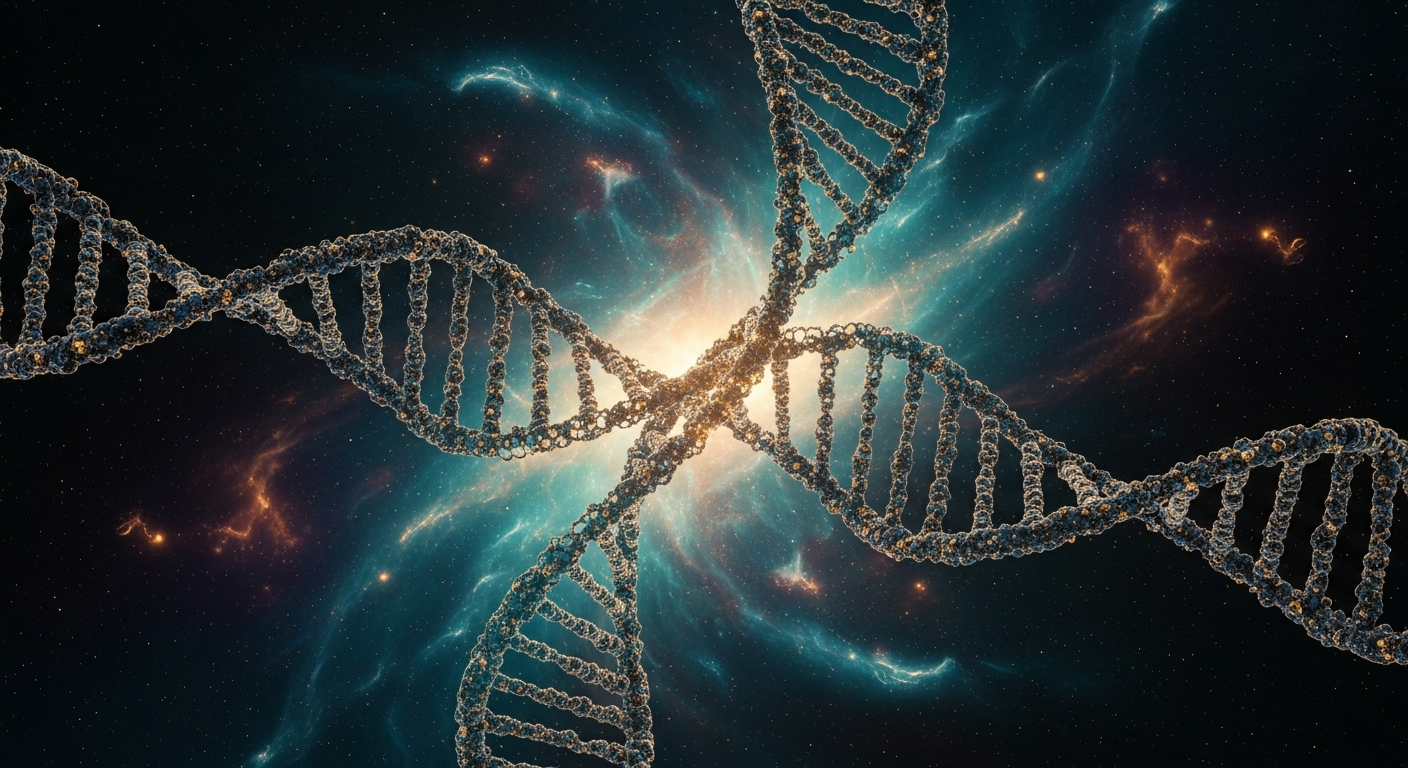
The Cosmic Origins of DNA: How Ancient Stardust Shaped Human Biology

The Cosmic Origins of DNA: How Ancient Stardust Shaped Human Biology Introduction: The Astronomical Blueprint of Life When the visionary astrophysicist Carl Sagan famously declared, "We are made of star-stuff," he was not merely indulging in poetic metaphor. He was summarizing one of the most profound scientific truths of our existence. The intricate biological machinery that defines human life—most notably Deoxyribonucleic Acid (DNA)—is inextricably linked to the violent, fiery deaths of ancient stars. The quest to understand the cosmic origins of DNA bridges the gap between astrophysics, chemistry, and evolutionary biology, revealing a narrative that begins billions of years before the formation of the Earth. For decades, the origin of life was treated strictly as a terrestrial phenomenon. Scientists hypothesized that the primordial soup of early Earth contained all the necessary ingredients to spark life. However, modern astrobiology paints a vastly different picture. We now know that the critical building blocks of human biology, from the iron in our blood to the complex nucleobases that form our genetic code, were forged in the deep cosmos. This article explores the fascinating journey of how ancient stardust underwent billions of years of chemical evolution to shape human biology and the very DNA that makes us who we are. Detailed Scientific Explanation: The Cosmic Journey to Human Biology 1. The Stellar Crucible: Forging the Elements of Life (CHNOPS) To understand the cosmic origins of DNA, we must first look to the elemental level. Human biology relies heavily on six primary elements: Carbon, Hydrogen, Nitrogen, Oxygen, Phosphorus, and Sulfur (acronymized as CHNOPS). With the exception of hydrogen, which was created during the Big Bang, every single one of these elements is a product of stellar nucleosynthesis. Carbon and Oxygen: Forged in the intense heat and pressure of massive star cores. When these stars exhaust their hydrogen and helium fuel, they begin fusing heavier elements, creating the carbon that acts as the structural backbone of all known organic chemistry. Nitrogen: Generated primarily through the CNO (Carbon-Nitrogen-Oxygen) cycle in main-sequence stars, this element is crucial for the formation of the amino acids and nitrogenous bases found in DNA. Phosphorus: Perhaps the most critical and elusive element in the DNA puzzle. The sugar-phosphate backbone of DNA provides the structural integrity of the double helix. Phosphorus is relatively rare in the universe and is primarily synthesized during the explosive deaths of massive stars, known as supernovae. 2. Interstellar Chemistry: Assembling the Molecular Precursors Once supernovae scatter these raw elements across the cosmos, they coalesce into giant interstellar molecular clouds—vast nebulae of gas and ancient stardust. For a long time, scientists believed the harsh environment of space (characterized by extreme cold and destructive ultraviolet radiation) would prevent complex chemistry. Instead, it turns out that cosmic dust grains act as microscopic chemical laboratories. Within these freezing interstellar clouds, dust grains accumulate mantles of ice (water, ammonia, methane, and carbon monoxide). When cosmic rays and UV photons bombard these icy mantles, they break molecular bonds, triggering free-radical reactions. This extraordinary cosmic chemistry produces highly complex organic molecules, including polycyclic aromatic hydrocarbons (PAHs), amino acids, and vital nucleobases—the very letters of the DNA alphabet (Adenine, Thymine, Cytosine, Guanine) and RNA (Uracil). 3. Ancient Messengers: Meteorites, Comets, and the Delivery to Earth How did these complex extraterrestrial organics bridge the gap between deep space and human biology? The answer lies in the violent early history of our solar system. During the Late Heavy Bombardment (approximately 3.8 to 4 billion years ago), the primordial Earth was continuously pummeled by comets and carbonaceous chondrite meteorites. Recent groundbreaking discoveries in cosmochemistry have provided undeniable proof of this delivery mechanism: The Murchison Meteorite: This famous meteorite, which fell in Australia in 1969, has been found to contain over 70 extraterrestrial amino acids, alongside critical DNA and RNA nucleobases like adenine, guanine, and uracil. Asteroid Sample Return Missions: In recent years, missions like Japan's Hayabusa2 (Asteroid Ryugu) and NASA's OSIRIS-REx (Asteroid Bennu) returned pristine stardust to Earth. Scientists successfully identified uracil and niacin (Vitamin B3) in the Ryugu samples. This proved beyond a doubt that the building blocks of genetics form naturally in space and were delivered intact to early Earth. 4. From Extraterrestrial Organics to the Double Helix The transition from a rocky, bombarded planet to a world teeming with DNA-based life is known as prebiotic chemical evolution. When meteorites delivered these stardust-forged organics to Earth's early oceans and hydrothermal vents, they effectively "seeded" the planet. This concept, known as pseudo-panspermia or molecular panspermia, suggests that while life itself did not fall from space, the complex biological blueprints absolutely did. In the warm, mineral-rich environments of early Earth, simple extraterrestrial nucleobases combined with ribose (sugars also found in meteorites) and stardust-derived phosphorus to form the first nucleotides. These assembled into RNA, establishing the RNA World Hypothesis—a crucial evolutionary stepping stone. Over millions of years, RNA evolved into the more stable, double-stranded DNA molecule, passing on the genetic baton that would eventually orchestrate the staggering complexity of human biology. Conclusion: Our Unbreakable Bond with the Cosmos The narrative of human evolution traditionally starts with early hominids, but the true story of our creation begins billions of years earlier, deep within the fiery hearts of dying stars. The cosmic origins of DNA reveal that we are the ultimate product of a universal recycling program. The carbon that constructs our cells, the nitrogen that forms our genetic code, and the phosphorus that holds our DNA strands together are all ancient stardust, forged in supernovae and delivered to Earth by traversing comets and meteorites. By studying astrobiology and the chemical makeup of deep space, we do not just learn about the universe; we learn about ourselves. Our human biology is a microscopic reflection of the macroscopic cosmos. The genetic code that governs our physical traits, our health, and our consciousness is essentially a cosmic legacy, proving that humanity is not separate from the universe, but rather, we are the universe experiencing itself. General

The Cosmic Origins of DNA: How Ancient Stardust Shaped Human Biology

Introduction: The Astronomical Blueprint of Life

When the visionary astrophysicist Carl Sagan famously declared, “We are made of star-stuff,” he was not merely indulging in poetic metaphor. He was summarizing one of the most profound scientific truths of our existence. The intricate biological machinery that defines human life—most notably Deoxyribonucleic Acid (DNA)—is inextricably linked to the violent, fiery deaths of ancient stars. The quest to understand the cosmic origins of DNA bridges the gap between astrophysics, chemistry, and evolutionary biology, revealing a narrative that begins billions of years before the formation of the Earth.

For decades, the origin of life was treated strictly as a terrestrial phenomenon. Scientists hypothesized that the primordial soup of early Earth contained all the necessary ingredients to spark life. However, modern astrobiology paints a vastly different picture. We now know that the critical building blocks of human biology, from the iron in our blood to the complex nucleobases that form our genetic code, were forged in the deep cosmos. This article explores the fascinating journey of how ancient stardust underwent billions of years of chemical evolution to shape human biology and the very DNA that makes us who we are.

Detailed Scientific Explanation: The Cosmic Journey to Human Biology

1. The Stellar Crucible: Forging the Elements of Life (CHNOPS)

To understand the cosmic origins of DNA, we must first look to the elemental level. Human biology relies heavily on six primary elements: Carbon, Hydrogen, Nitrogen, Oxygen, Phosphorus, and Sulfur (acronymized as CHNOPS). With the exception of hydrogen, which was created during the Big Bang, every single one of these elements is a product of stellar nucleosynthesis.

  • Carbon and Oxygen: Forged in the intense heat and pressure of massive star cores. When these stars exhaust their hydrogen and helium fuel, they begin fusing heavier elements, creating the carbon that acts as the structural backbone of all known organic chemistry.
  • Nitrogen: Generated primarily through the CNO (Carbon-Nitrogen-Oxygen) cycle in main-sequence stars, this element is crucial for the formation of the amino acids and nitrogenous bases found in DNA.
  • Phosphorus: Perhaps the most critical and elusive element in the DNA puzzle. The sugar-phosphate backbone of DNA provides the structural integrity of the double helix. Phosphorus is relatively rare in the universe and is primarily synthesized during the explosive deaths of massive stars, known as supernovae.

2. Interstellar Chemistry: Assembling the Molecular Precursors

Once supernovae scatter these raw elements across the cosmos, they coalesce into giant interstellar molecular clouds—vast nebulae of gas and ancient stardust. For a long time, scientists believed the harsh environment of space (characterized by extreme cold and destructive ultraviolet radiation) would prevent complex chemistry. Instead, it turns out that cosmic dust grains act as microscopic chemical laboratories.

Within these freezing interstellar clouds, dust grains accumulate mantles of ice (water, ammonia, methane, and carbon monoxide). When cosmic rays and UV photons bombard these icy mantles, they break molecular bonds, triggering free-radical reactions. This extraordinary cosmic chemistry produces highly complex organic molecules, including polycyclic aromatic hydrocarbons (PAHs), amino acids, and vital nucleobases—the very letters of the DNA alphabet (Adenine, Thymine, Cytosine, Guanine) and RNA (Uracil).

3. Ancient Messengers: Meteorites, Comets, and the Delivery to Earth

How did these complex extraterrestrial organics bridge the gap between deep space and human biology? The answer lies in the violent early history of our solar system. During the Late Heavy Bombardment (approximately 3.8 to 4 billion years ago), the primordial Earth was continuously pummeled by comets and carbonaceous chondrite meteorites.

Recent groundbreaking discoveries in cosmochemistry have provided undeniable proof of this delivery mechanism:

  • The Murchison Meteorite: This famous meteorite, which fell in Australia in 1969, has been found to contain over 70 extraterrestrial amino acids, alongside critical DNA and RNA nucleobases like adenine, guanine, and uracil.
  • Asteroid Sample Return Missions: In recent years, missions like Japan’s Hayabusa2 (Asteroid Ryugu) and NASA’s OSIRIS-REx (Asteroid Bennu) returned pristine stardust to Earth. Scientists successfully identified uracil and niacin (Vitamin B3) in the Ryugu samples. This proved beyond a doubt that the building blocks of genetics form naturally in space and were delivered intact to early Earth.

4. From Extraterrestrial Organics to the Double Helix

The transition from a rocky, bombarded planet to a world teeming with DNA-based life is known as prebiotic chemical evolution. When meteorites delivered these stardust-forged organics to Earth’s early oceans and hydrothermal vents, they effectively “seeded” the planet. This concept, known as pseudo-panspermia or molecular panspermia, suggests that while life itself did not fall from space, the complex biological blueprints absolutely did.

In the warm, mineral-rich environments of early Earth, simple extraterrestrial nucleobases combined with ribose (sugars also found in meteorites) and stardust-derived phosphorus to form the first nucleotides. These assembled into RNA, establishing the RNA World Hypothesis—a crucial evolutionary stepping stone. Over millions of years, RNA evolved into the more stable, double-stranded DNA molecule, passing on the genetic baton that would eventually orchestrate the staggering complexity of human biology.

Conclusion: Our Unbreakable Bond with the Cosmos

The narrative of human evolution traditionally starts with early hominids, but the true story of our creation begins billions of years earlier, deep within the fiery hearts of dying stars. The cosmic origins of DNA reveal that we are the ultimate product of a universal recycling program. The carbon that constructs our cells, the nitrogen that forms our genetic code, and the phosphorus that holds our DNA strands together are all ancient stardust, forged in supernovae and delivered to Earth by traversing comets and meteorites.

By studying astrobiology and the chemical makeup of deep space, we do not just learn about the universe; we learn about ourselves. Our human biology is a microscopic reflection of the macroscopic cosmos. The genetic code that governs our physical traits, our health, and our consciousness is essentially a cosmic legacy, proving that humanity is not separate from the universe, but rather, we are the universe experiencing itself.

Reader Comments

Copied title and URL