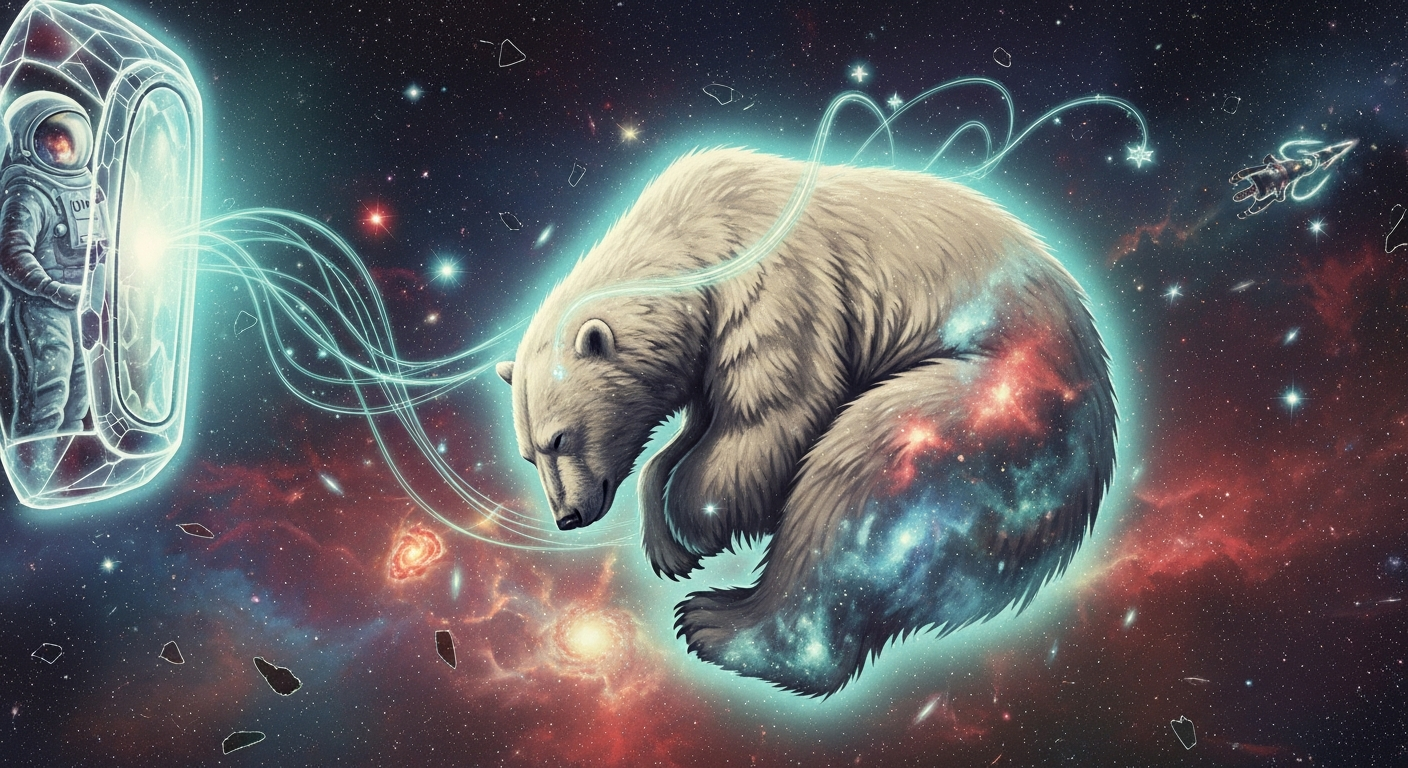
Can Hibernating Bears Help Astronauts Travel to Mars? The Amazing Secrets of Space Biology
Introduction: The Ultimate Space Adventure
Imagine you are packing for a giant family road trip. You need snacks, water, and plenty of games to keep from getting bored. Now, imagine that road trip takes at least seven whole months, and you are traveling millions of miles through the freezing, empty darkness of space. That is exactly what astronauts will face when they prepare to travel to Mars!
Sending humans to the Red Planet is one of the greatest dreams in space exploration. But it comes with massive challenges. How do we pack enough food for such a long journey? How do astronauts stay healthy in a tiny spaceship? Surprisingly, scientists are finding the answers not in advanced computers or robots, but deep in the middle of the forest. The secret to long-distance space travel might just come from hibernating bears. Let’s dive into the amazing secrets of space biology!
The Science of Space Biology: What Bears Can Teach Us
The Danger of Zero Gravity on the Human Body
To understand why we need bears, we first need to understand what happens to the human body in space. Here on Earth, gravity acts like an invisible gym. Every time you stand up or walk, your muscles and bones are working hard against gravity to keep you strong.
In the microgravity (weightlessness) of space, floating is effortless. Because astronauts aren’t fighting gravity, their bodies get lazy. Their muscles begin to shrink, and their bones get weaker. Scientists call this muscle atrophy and bone density loss. Even though astronauts on the International Space Station exercise for two hours every day, they still lose muscle and bone. On a deep space mission to Mars, this could make astronauts too weak to explore the planet once they finally arrive.
The Superpowers of Hibernating Bears
This is where our furry forest friends come to the rescue! Every winter, black bears and grizzly bears go into a long, deep sleep called hibernation. For up to six months, these bears do not eat a single piece of food, drink a drop of water, or even go to the bathroom!
If a human stayed in bed for six months, their bones would become incredibly fragile, and their muscles would become so weak that they couldn’t even stand up. But when a bear wakes up in the spring, it is just as strong as when it went to sleep! How do they do it?
Through the study of space biology, scientists have discovered that bears have real-life biological superpowers. When a bear hibernates, its body slows down its “engine,” which is scientifically called metabolism. Even more amazingly, the bear’s body has a built-in recycling system! Instead of getting rid of waste (like pee) which contains useful chemicals like nitrogen, the bear’s body recycles it to build brand-new muscle proteins. They also send special chemical signals to their bones to stop them from breaking down. They are nature’s ultimate survivors.
Human Hibernation: Turning Science Fiction into Reality
So, can humans hibernate just like bears? Space biologists are working hard to figure that out. They want to create a safe, sleeping state for astronauts called synthetic torpor—a kind of artificial hibernation.
If astronauts could sleep deeply through the long, dark journey to Mars, the benefits would be incredible:
- Saving Space and Resources: A sleeping body needs much less food, water, and oxygen. This means the spaceship could be smaller, lighter, and carry more scientific tools.
- Protecting the Body: By using special medicines inspired by bear DNA, scientists hope to trick the astronaut’s body into protecting its muscles and bones, just like a hibernating bear.
- Protecting Mental Health: Sleeping through the trip means astronauts won’t get bored, lonely, or stressed out from being stuck inside a tiny metal tube for months.
Best of all, studying bear hibernation doesn’t just help astronauts; it can help people on Earth, too! This same space biology research could lead to new medicines to heal sick people who have to stay in hospital beds for a long time without moving.
Conclusion: From the Forest to the Stars
Traveling to Mars is not just a test of rocket science; it is a giant test of human biology. The amazing idea that a sleeping bear in a snowy forest could hold the key to deep space exploration shows us how deeply connected our universe truly is.
By blending the study of wild animals with advanced space technology, scientists are opening up a whole new world of possibilities. So, the next time you think about astronauts rocketing to Mars, don’t just think about glowing buttons and spacesuits. Remember our amazing hibernating bears, and how the brilliant secrets of space biology are helping humanity safely reach the stars!
This is crucial information for us to live in space. If we could adapt our bodies like those of polar bears, we would undoubtedly be able to live in space for extended periods.

Reader Comments