Can We Grow Mushroom Houses on Mars? The Surprising Biology of Space Architecture

Can We Grow Mushroom Houses on Mars? The Surprising Biology of Space Architecture Introduction: Cosmic Camping and the Martian Housing Problem Imagine you are an astronaut who just landed on Mars. The sky is red, the ground is dusty, and it is freezing cold. You need a safe place to sleep, but there are no trees to build a cabin and no clay to make bricks. How do you build a house on another planet? For a long time, scientists thought we would have to pack heavy metal, glass, and concrete into rockets and fly them millions of miles through space. But rockets are like giant space backpacks—the heavier they are, the more expensive and difficult they are to launch. What if, instead of carrying a whole house with us, we could simply grow one when we get there? Welcome to the weird and wonderful world of space architecture. Thanks to groundbreaking research by space agencies like NASA, the future homes of astronauts might not be made of shiny steel or heavy concrete. They might actually be made of mushrooms! Detailed Scientific Explanation: The Magic of "Mycotecture" What is Mycelium? (Nature's Secret 3D Printer) When you think of a mushroom, you probably picture the umbrella-shaped part that pops up in the grass or sits on top of a pizza. But that is just the fruit of the fungus. The real science magic happens underground. Beneath the soil, mushrooms have a giant hidden network of tiny, white, thread-like roots called mycelium (my-SEE-lee-um). Think of mycelium as nature's very own 3D printer. These tiny threads can grow incredibly fast, eating organic waste and weaving together tightly to form structures that are as strong as wood or even concrete! When scientists use mycelium to build things, they call it mycotecture (mushroom architecture). Why Are Mushrooms Perfect for Mars? Building a mushroom house on Mars solves a lot of huge problems for space explorers: They are incredibly light: Instead of packing heavy bricks, astronauts only need to bring tiny mushroom spores (which are like seeds). They weigh almost nothing, saving millions of dollars in rocket fuel! Natural radiation shields: Mars doesn't have a thick atmosphere like Earth, so dangerous space rays (radiation) can hurt astronauts. Certain types of fungi contain a dark pigment called melanin—the same stuff that colors human skin and hair. This melanin acts like a super-powered natural shield against harmful space radiation. They keep you cozy: Mycelium acts like a thick, warm blanket. It provides excellent insulation to protect astronauts from the freezing Martian nights. How to Grow a House on Mars in 3 Simple Steps You might be wondering, "How do we actually grow a house on a planet that has no soil and barely any water?" Space biologists have designed a brilliant, multi-layered "growing bag" system. Step 1: The Balloon Frame Astronauts will land on Mars and unfold a giant, flexible plastic bag shaped like a dome. They will pump it full of Martian air so it puffs up like a giant balloon. Step 2: The Sun-Eaters Inside the outer layer of the dome, astronauts will add water and special microscopic plants called cyanobacteria (sy-AN-oh-bak-TEER-ee-uh). These tiny helpers use sunlight to make oxygen and sugary food. Step 3: The Mushroom Bricks Grow The mycelium is placed in the inner layer of the dome. It eats the sugary food made by the cyanobacteria. As it eats, the mycelium threads grow, branching out and wrapping around each other until they form a thick, solid wall. Once the house is fully grown, the astronauts gently bake the walls using heat so the mushrooms stop growing. Now, they have a rock-solid, super-safe mushroom dome to live in! Conclusion: The Future is Fungi Who would have guessed that the secret to exploring the stars was hiding right under our feet in the dirt? Growing mushroom houses on Mars is a perfect example of how space biology and architecture can work together to solve seemingly impossible problems. By using mycelium, we can save billions of dollars on space travel, protect our brave astronauts from harsh space weather, and build sustainable habitats on other planets. Best of all, this amazing science could even help us here on Earth by teaching us how to grow eco-friendly, biodegradable houses without cutting down a single forest. So, the next time you see a tiny mushroom sprouting in your backyard, give it a little salute. You might just be looking at the building blocks of humanity's very first Martian city! biological

Can We Grow Mushroom Houses on Mars? The Surprising Biology of Space Architecture

Introduction: Cosmic Camping and the Martian Housing Problem

Imagine you are an astronaut who just landed on Mars. The sky is red, the ground is dusty, and it is freezing cold. You need a safe place to sleep, but there are no trees to build a cabin and no clay to make bricks. How do you build a house on another planet?

For a long time, scientists thought we would have to pack heavy metal, glass, and concrete into rockets and fly them millions of miles through space. But rockets are like giant space backpacks—the heavier they are, the more expensive and difficult they are to launch. What if, instead of carrying a whole house with us, we could simply grow one when we get there?

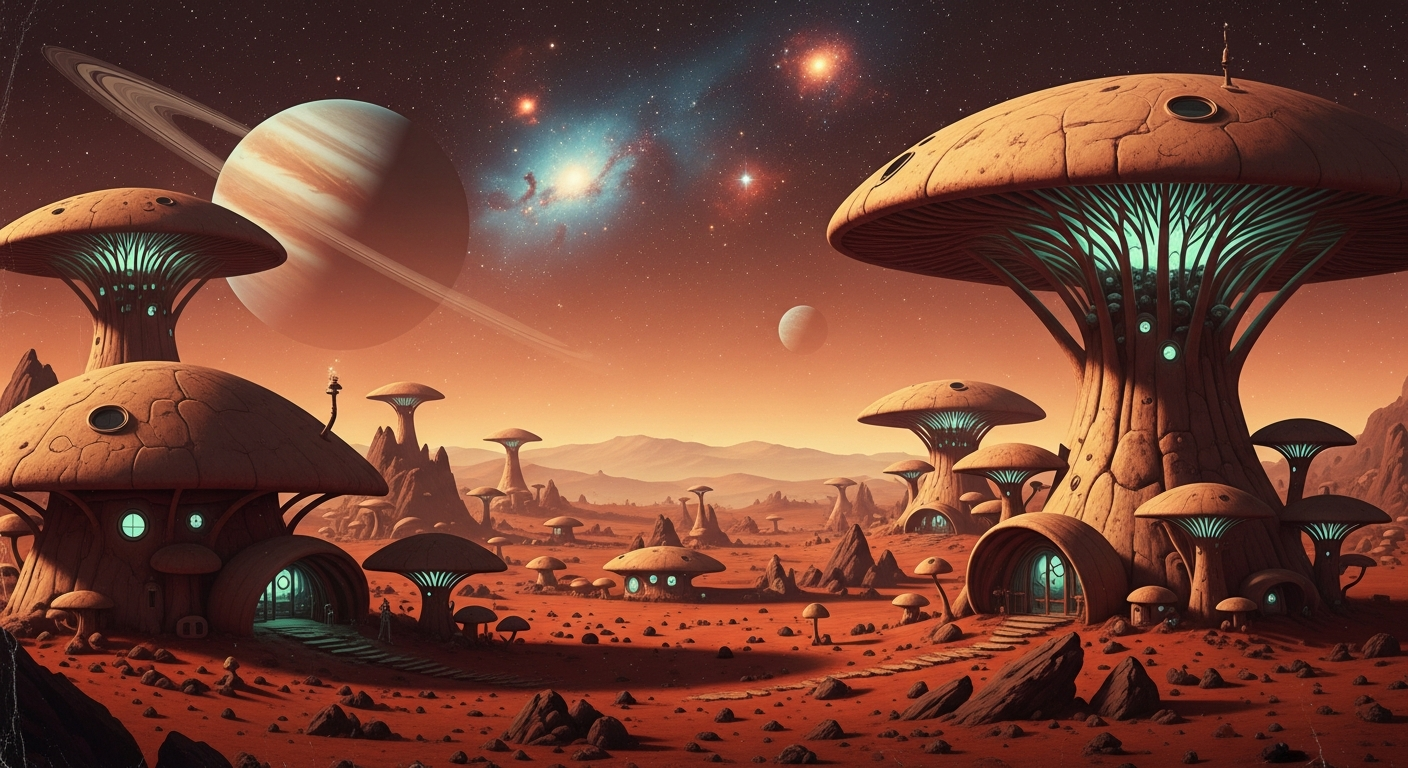
Welcome to the weird and wonderful world of space architecture. Thanks to groundbreaking research by space agencies like NASA, the future homes of astronauts might not be made of shiny steel or heavy concrete. They might actually be made of mushrooms!

Detailed Scientific Explanation: The Magic of “Mycotecture”

What is Mycelium? (Nature’s Secret 3D Printer)

When you think of a mushroom, you probably picture the umbrella-shaped part that pops up in the grass or sits on top of a pizza. But that is just the fruit of the fungus. The real science magic happens underground.

Beneath the soil, mushrooms have a giant hidden network of tiny, white, thread-like roots called mycelium (my-SEE-lee-um). Think of mycelium as nature’s very own 3D printer. These tiny threads can grow incredibly fast, eating organic waste and weaving together tightly to form structures that are as strong as wood or even concrete! When scientists use mycelium to build things, they call it mycotecture (mushroom architecture).

Why Are Mushrooms Perfect for Mars?

Building a mushroom house on Mars solves a lot of huge problems for space explorers:

  • They are incredibly light: Instead of packing heavy bricks, astronauts only need to bring tiny mushroom spores (which are like seeds). They weigh almost nothing, saving millions of dollars in rocket fuel!
  • Natural radiation shields: Mars doesn’t have a thick atmosphere like Earth, so dangerous space rays (radiation) can hurt astronauts. Certain types of fungi contain a dark pigment called melanin—the same stuff that colors human skin and hair. This melanin acts like a super-powered natural shield against harmful space radiation.
  • They keep you cozy: Mycelium acts like a thick, warm blanket. It provides excellent insulation to protect astronauts from the freezing Martian nights.

How to Grow a House on Mars in 3 Simple Steps

You might be wondering, “How do we actually grow a house on a planet that has no soil and barely any water?” Space biologists have designed a brilliant, multi-layered “growing bag” system.

Step 1: The Balloon Frame
Astronauts will land on Mars and unfold a giant, flexible plastic bag shaped like a dome. They will pump it full of Martian air so it puffs up like a giant balloon.

Step 2: The Sun-Eaters
Inside the outer layer of the dome, astronauts will add water and special microscopic plants called cyanobacteria (sy-AN-oh-bak-TEER-ee-uh). These tiny helpers use sunlight to make oxygen and sugary food.

Step 3: The Mushroom Bricks Grow
The mycelium is placed in the inner layer of the dome. It eats the sugary food made by the cyanobacteria. As it eats, the mycelium threads grow, branching out and wrapping around each other until they form a thick, solid wall. Once the house is fully grown, the astronauts gently bake the walls using heat so the mushrooms stop growing. Now, they have a rock-solid, super-safe mushroom dome to live in!

Conclusion: The Future is Fungi

Who would have guessed that the secret to exploring the stars was hiding right under our feet in the dirt? Growing mushroom houses on Mars is a perfect example of how space biology and architecture can work together to solve seemingly impossible problems.

By using mycelium, we can save billions of dollars on space travel, protect our brave astronauts from harsh space weather, and build sustainable habitats on other planets. Best of all, this amazing science could even help us here on Earth by teaching us how to grow eco-friendly, biodegradable houses without cutting down a single forest.

So, the next time you see a tiny mushroom sprouting in your backyard, give it a little salute. You might just be looking at the building blocks of humanity’s very first Martian city!


Reader Comments

Copied title and URL