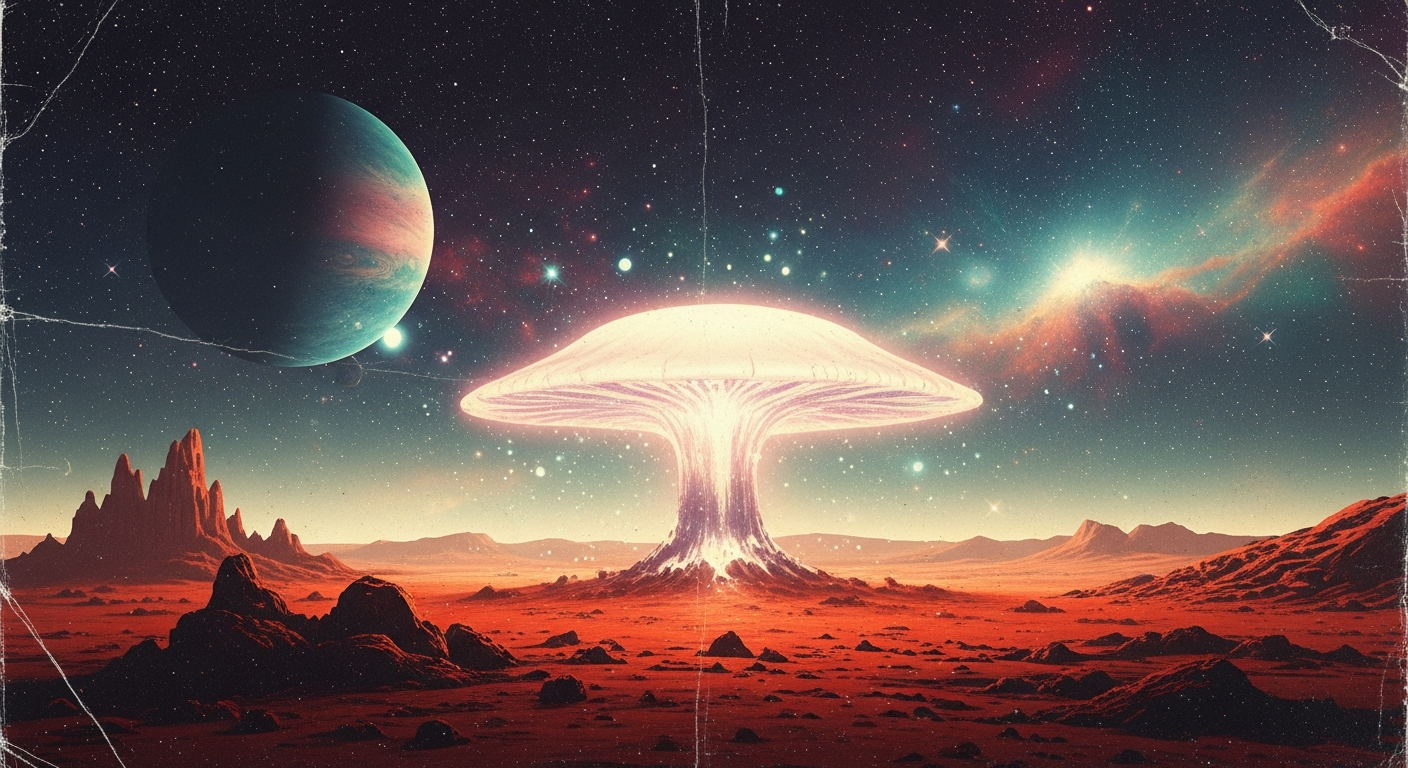
Can We Grow a Pizza on Mars? The Amazing Biology of Space Farming

Can We Grow a Pizza on Mars? The Amazing Biology of Space Farming Introduction: A Craving Millions of Miles from Home Imagine this: You have just traveled for seven months through the dark, freezing vacuum of space. You finally land your spaceship, step out in your high-tech spacesuit, and look across the rusty red landscape of Mars. Your stomach gives a loud rumble. It is time for dinner. But instead of eating dried paste from a plastic tube, what if you could sit down and enjoy a hot, cheesy, fresh slice of pizza? It sounds like science fiction, but scientists known as astrobiologists are working hard to make this a reality! Growing food in outer space, also called space farming or astroculture, is one of the most important challenges for future astronauts. If we want humans to live on the Moon or Mars, we cannot pack years' worth of groceries in a rocket. We have to learn how to grow our own meals. So, let us take a journey into the amazing science of space biology and find out exactly what it takes to grow a pizza on Mars! Detailed Scientific Explanation: The Anatomy of a Martian Pizza To make a pizza, you need three main things: wheat for the crust, tomatoes for the sauce, and cheese for the topping. But the environment on Mars is completely different from Earth. Mars is freezing cold, has deadly radiation from the sun, and has almost no oxygen. To grow a pizza, we need to solve some massive scientific puzzles. 1. The Crust: Dealing with Deadly Dirt On Earth, plants grow in rich soil full of nutrients, bugs, and water. On Mars, the ground is covered in crushed volcanic rock and dust called regolith. Martian regolith does not have the helpful bacteria that Earth soil has. Even worse, it contains toxic chemicals called perchlorates, which are harmful to humans. The Solution: Before we can plant wheat for our pizza crust, astronauts must "wash" the toxic perchlorates out of the Martian dirt. Then, they have to add fertilizer (like recycled astronaut waste and compost) to give the dirt nutrients. Alternatively, scientists might skip the dirt altogether! They can use a method called hydroponics. In a hydroponic system, plant roots do not grow in soil; they grow in nutrient-rich water. This saves space and keeps the plants perfectly healthy. 2. The Sauce: Let There Be Light (and Air!) Tomatoes are essential for a good pizza sauce, but they are very picky plants. They love warm sunlight and plenty of water. Mars is much further from the Sun than Earth, so it only gets about half as much sunlight. Plus, the Martian atmosphere is extremely thin and made mostly of carbon dioxide (CO2). The Solution: While plants actually breathe carbon dioxide, they would freeze to death on the surface of Mars. Therefore, tomatoes must be grown inside special, pressurized space greenhouses. To make up for the weak sunlight, astronauts will use highly efficient LED grow lights. Scientists have already figured out that plants grow best under red and blue LED lights, which makes space greenhouses glow in a beautiful, futuristic purple color! In fact, NASA has already successfully grown small cherry tomatoes aboard the International Space Station (ISS) using this exact technology in a project called Veggie. 3. The Cheese: Cows in Spacesuits? Here is the trickiest part of our Martian pizza: the cheese. Cheese comes from milk, and milk comes from cows. Can we launch a herd of cows to Mars? Absolutely not! Cows are too heavy, they drink way too much water, and they would need their own giant spacesuits. The Solution: We will have to rely on cellular agriculture. This is a brilliant type of biotechnology where scientists use tiny microbes, like yeast or bacteria, to "brew" milk proteins without needing a single cow! It works almost exactly like using yeast to bake bread. By feeding these microbes plant sugars, they produce the exact same dairy proteins found in milk. We can then mix these proteins with water and plant oils to make real, stretchy, gooey mozzarella cheese—completely cow-free and perfect for space travel! Conclusion: One Small Slice for Man, One Giant Pizza for Mankind So, can we grow a pizza on Mars? The answer is an exciting yes! It will not be easy, but the science is already being developed today. By mastering how to clean toxic regolith, building purple-glowing hydroponic greenhouses, and brewing cheese from microscopic yeast, astronauts of the future will not have to give up their favorite foods. The best part about space farming is that it helps us right here on Earth, too. The technology scientists are inventing to grow tomatoes on Mars—using less water, less space, and less energy—is helping farmers on Earth grow food in deserts and crowded cities. So, the next time you take a bite of a delicious pizza, look up at the stars. Somewhere out there, the recipe for the first Martian pizza is already being written! biological

Can We Grow a Pizza on Mars? The Amazing Biology of Space Farming

Introduction: A Craving Millions of Miles from Home

Imagine this: You have just traveled for seven months through the dark, freezing vacuum of space. You finally land your spaceship, step out in your high-tech spacesuit, and look across the rusty red landscape of Mars. Your stomach gives a loud rumble. It is time for dinner. But instead of eating dried paste from a plastic tube, what if you could sit down and enjoy a hot, cheesy, fresh slice of pizza?

It sounds like science fiction, but scientists known as astrobiologists are working hard to make this a reality! Growing food in outer space, also called space farming or astroculture, is one of the most important challenges for future astronauts. If we want humans to live on the Moon or Mars, we cannot pack years’ worth of groceries in a rocket. We have to learn how to grow our own meals. So, let us take a journey into the amazing science of space biology and find out exactly what it takes to grow a pizza on Mars!

Detailed Scientific Explanation: The Anatomy of a Martian Pizza

To make a pizza, you need three main things: wheat for the crust, tomatoes for the sauce, and cheese for the topping. But the environment on Mars is completely different from Earth. Mars is freezing cold, has deadly radiation from the sun, and has almost no oxygen. To grow a pizza, we need to solve some massive scientific puzzles.

1. The Crust: Dealing with Deadly Dirt

On Earth, plants grow in rich soil full of nutrients, bugs, and water. On Mars, the ground is covered in crushed volcanic rock and dust called regolith. Martian regolith does not have the helpful bacteria that Earth soil has. Even worse, it contains toxic chemicals called perchlorates, which are harmful to humans.

The Solution: Before we can plant wheat for our pizza crust, astronauts must “wash” the toxic perchlorates out of the Martian dirt. Then, they have to add fertilizer (like recycled astronaut waste and compost) to give the dirt nutrients. Alternatively, scientists might skip the dirt altogether! They can use a method called hydroponics. In a hydroponic system, plant roots do not grow in soil; they grow in nutrient-rich water. This saves space and keeps the plants perfectly healthy.

2. The Sauce: Let There Be Light (and Air!)

Tomatoes are essential for a good pizza sauce, but they are very picky plants. They love warm sunlight and plenty of water. Mars is much further from the Sun than Earth, so it only gets about half as much sunlight. Plus, the Martian atmosphere is extremely thin and made mostly of carbon dioxide (CO2).

The Solution: While plants actually breathe carbon dioxide, they would freeze to death on the surface of Mars. Therefore, tomatoes must be grown inside special, pressurized space greenhouses. To make up for the weak sunlight, astronauts will use highly efficient LED grow lights. Scientists have already figured out that plants grow best under red and blue LED lights, which makes space greenhouses glow in a beautiful, futuristic purple color! In fact, NASA has already successfully grown small cherry tomatoes aboard the International Space Station (ISS) using this exact technology in a project called Veggie.

3. The Cheese: Cows in Spacesuits?

Here is the trickiest part of our Martian pizza: the cheese. Cheese comes from milk, and milk comes from cows. Can we launch a herd of cows to Mars? Absolutely not! Cows are too heavy, they drink way too much water, and they would need their own giant spacesuits.

The Solution: We will have to rely on cellular agriculture. This is a brilliant type of biotechnology where scientists use tiny microbes, like yeast or bacteria, to “brew” milk proteins without needing a single cow! It works almost exactly like using yeast to bake bread. By feeding these microbes plant sugars, they produce the exact same dairy proteins found in milk. We can then mix these proteins with water and plant oils to make real, stretchy, gooey mozzarella cheese—completely cow-free and perfect for space travel!

Conclusion: One Small Slice for Man, One Giant Pizza for Mankind

So, can we grow a pizza on Mars? The answer is an exciting yes! It will not be easy, but the science is already being developed today. By mastering how to clean toxic regolith, building purple-glowing hydroponic greenhouses, and brewing cheese from microscopic yeast, astronauts of the future will not have to give up their favorite foods.

The best part about space farming is that it helps us right here on Earth, too. The technology scientists are inventing to grow tomatoes on Mars—using less water, less space, and less energy—is helping farmers on Earth grow food in deserts and crowded cities. So, the next time you take a bite of a delicious pizza, look up at the stars. Somewhere out there, the recipe for the first Martian pizza is already being written!


Reader Comments

タイトルとURLをコピーしました