Introduction: Meet the Toughest Animal on Earth (and in Space!)
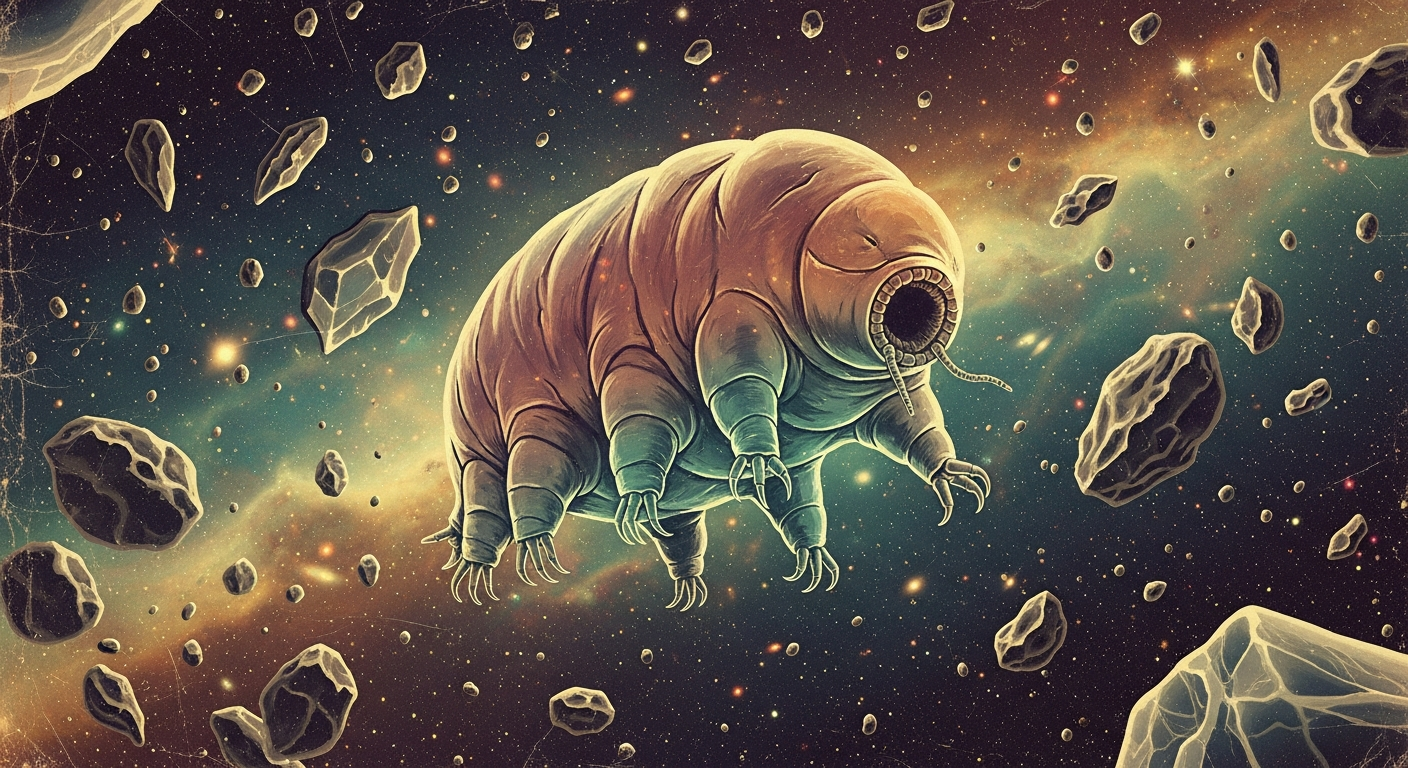
Have you ever wondered if superhero-like creatures exist in real life? You might be surprised to learn that the toughest animal on our planet doesn’t have giant muscles, sharp teeth, or thick armor. In fact, it is so tiny that you need a microscope just to see it! Say hello to the tardigrade, more affectionately known as the water bear or moss piglet.
These fascinating, eight-legged microscopic animals have captured the imagination of scientists and kids alike. Why? Because water bears can survive extreme environments that would instantly kill almost any other living thing on Earth. They can survive being boiled, being frozen to near absolute zero, being crushed under deep ocean pressure, and even being blasted with deadly radiation.
But the most mind-blowing fact of all is that water bears can survive in the harsh vacuum of outer space. In this article, we are going to dive deep into the amazing biology of tardigrades for kids, uncovering the scientific secrets that make them nature’s ultimate survivors.
The Amazing Biology of Tardigrades: How Do They Do It?
What Exactly is a Water Bear?
Before we learn how they survive in space, let’s look at what tardigrades actually are. Discovered in 1773, these tiny creatures usually measure only about 0.5 millimeters long—about the size of a single grain of sand. Under a microscope, they look a bit like plump, squishy gummy bears with eight legs, each ending in tiny, sharp claws.
Water bears love water. They live all over the world, mostly hanging out in the thin layers of water that coat damp moss, lichen, and leaves in your backyard. When their environment is wet and happy, they wander around eating algae, plant cells, and sometimes other microscopic animals.
The Ultimate Superpower: Cryptobiosis
So, what happens when a water bear’s home completely dries up, gets incredibly hot, or freezes solid? Most animals would not survive, but the tardigrade has a biological superpower called cryptobiosis (which means “hidden life”).
When conditions become too dangerous, the water bear performs an amazing disappearing act with its own body water. It squeezes out almost all the water inside of it, retracts its head and eight legs, and curls up into a tiny, dry ball called a tun.
In this “tun” state, the water bear’s metabolism—the internal chemical engine that keeps it alive, growing, and eating—slows down to less than 0.01% of its normal rate. For all practical purposes, the tardigrade pauses its life. It doesn’t eat, it doesn’t drink, and it doesn’t age. It can stay in this deep sleep for decades! The moment you add a single drop of water, the tun swells back up, uncurls its legs, and goes back to its normal life as if nothing ever happened.
Surviving the Vacuum of Space
Now, let’s talk about space! In 2007, scientists sent a group of dried-up tardigrades into low Earth orbit on a mission called TARDIS. For ten days, the water bears were placed on the outside of a rocket, completely exposed to the freezing, airless vacuum of space and the deadly, burning ultraviolet (UV) radiation from the sun.
Space is a nightmare for normal biology. The lack of air pressure causes the water inside living cells to boil and turn into gas, and space radiation tears DNA (the instruction manual of life) into pieces. But because the tardigrades were curled up in their dried-out tun state, they didn’t have water inside them to boil! When the spacecraft returned to Earth, scientists gave the tardigrades some water. Amazingly, many of them woke up, wiggled around, and even started having babies!
The Secret Shield: The Dsup Protein
How did the water bears protect their DNA from being shredded by the intense space radiation? Scientists recently discovered that tardigrades have a special protein in their bodies that no other animal has. They named it Dsup, which stands for Damage Suppressor.
Imagine your DNA is a fragile, important book. Radiation acts like a pair of scissors trying to cut the pages of your book. The Dsup protein acts like an invisible, magical shield that wraps around the DNA book, stopping the scissors from making cuts. This incredible biological armor allows the water bear to take a massive dose of radiation and survive without turning into a mutant or getting sick.
Furthermore, when tardigrades enter their tun state, their bodies produce special sugary gels (called trehalose) that replace the missing water. This gel coats their cells and stops their tiny internal organs from cracking and breaking like fragile glass.
Conclusion: What Can We Learn from Water Bears?
Water bears might be microscopic, but they are giants in the world of biology. By studying how water bears survive in space, scientists are learning incredible things that could one day help human beings. Understanding tardigrade biology and the Dsup protein could help us invent new crops that can survive harsh droughts, develop better ways to store life-saving medicines and vaccines without needing refrigerators, and maybe even find ways to protect astronauts from radiation during long journeys to Mars.
The next time you are outside playing near some damp moss or a puddle, remember that you might be standing right next to the toughest creatures in the universe. Tardigrades teach us a wonderful lesson: you don’t have to be big to be strong. Sometimes, nature’s most amazing superpowers are hidden inside the smallest of packages!
To think that such a remarkably resilient creature exists among Earth’s life forms—we really ought to look to the tardigrade’s vitality as a model so that we, too, can learn to live in space in the future.
Reader Comments