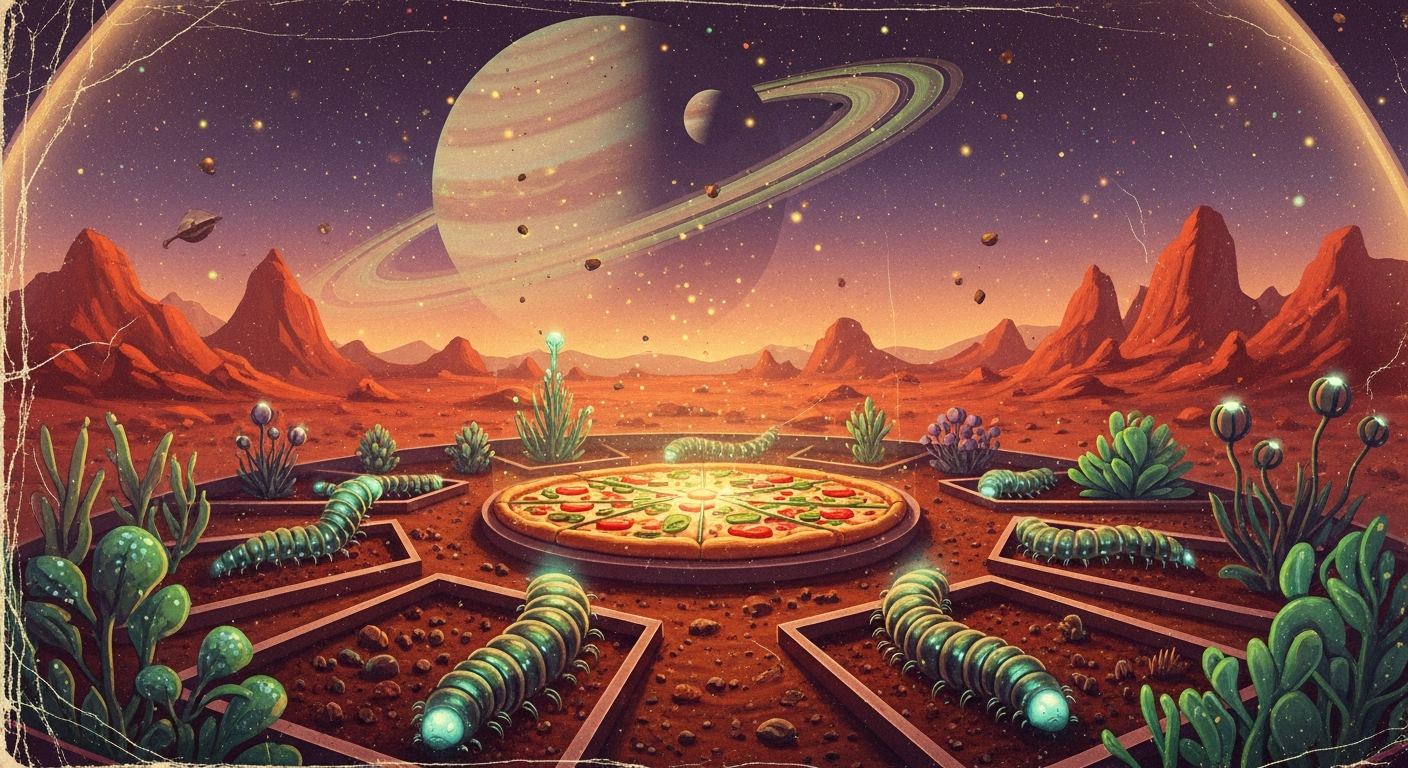
Space Farming: Can Earthworms Help Astronauts Grow Pizza on Mars?

Space Farming: Can Earthworms Help Astronauts Grow Pizza on Mars? Introduction: The Ultimate Martian Menu Imagine embarking on a thrilling journey to Mars. The trip takes several months, and during that time, you have to eat dried, packaged astronaut food. It keeps you healthy, but eventually, you start dreaming about your favorite meal back home: a hot, cheesy, delicious slice of pizza. But how can you get pizza millions of miles away from Earth? The answer is space farming! If humans are going to live on the Red Planet, we cannot bring all our food with us. The spaceships would be too heavy. Instead, astronauts will have to become space farmers. But growing food on a completely different planet is a huge challenge. Surprisingly, the secret to building a successful Martian farm might not be a multi-billion-dollar robot. It might be one of Earth's humblest, wriggliest creatures: the earthworm. The Science of Space Farming: How Do We Grow Food on Mars? The Challenge of Martian Dirt (Regolith) On Earth, planting a seed is pretty easy because our soil is alive. It is packed with moisture, nutrients, and tiny bugs that help plants grow. On Mars, the ground is completely dead. Scientists call the dirt on Mars regolith. Regolith is mostly made of crushed red rocks and dust. It has no nutrients, no organic matter (like dead leaves), and no bugs. Even worse, Martian regolith packs tightly together like dry cement when you add water. This means plant roots cannot breathe or easily search for water. If astronauts just drop a tomato seed into plain Martian dirt, it will not grow. To make space farming work, we have to turn dead Martian dirt into living, healthy Earth soil. Enter the Earthworms: Nature's Little Gardeners This is where our wiggly heroes come to the rescue! Scientists at Wageningen University in the Netherlands decided to run an experiment. They created a special "fake Mars dirt" based on what NASA rovers have discovered. Then, they planted seeds, added some leftover plant parts (compost), and introduced common earthworms. Earthworms are like tiny, natural recycling machines. When they crawl through the soil, they do two very important things for growing plants on Mars: Digging Tunnels: As worms wiggle around, they poke holes in the tightly packed dirt. These tunnels act like little roads that let oxygen and water flow deep down to the plant roots. Making Fertilizer: Earthworms eat dead plant parts and poop them out. This worm poop (called castings) is full of incredible nutrients like nitrogen and phosphorus, which act as the perfect natural fertilizer to help new plants grow strong. Growing the Pizza Ingredients: Wheat and Tomatoes So, can these worms actually help us make pizza? Absolutely! In the science experiments using the fake Martian soil and earthworms, scientists successfully grew crops, including wheat (which we can grind into flour for the pizza crust) and tomatoes (which we can mash into sweet, tangy pizza sauce). The most amazing part? The worms didn't just survive in the simulated Mars soil—they thrived! They even had baby worms. This proved that if we can create warm, pressurized greenhouses on Mars and clean the toxic chemicals out of the regolith, earthworms can easily do the hard work of keeping the soil healthy for our crops. Conclusion: One Small Step for Worms, One Giant Leap for Pizza To successfully colonize Mars, we have to bring a little piece of Earth's ecosystem with us. Space exploration isn't just about rockets, lasers, and shiny spacesuits. It is also about understanding nature and using biology to survive in extreme environments. While there are still big challenges to solve—like protecting the plants from freezing temperatures and dangerous space radiation—scientists are making incredible progress. Thanks to the hard work of researchers and the incredible biology of the common earthworm, sustainable agriculture on Mars is becoming a real possibility. So, the next time you see an earthworm crawling on the sidewalk after a rainy day, give it some respect. One day, its great-great-grandchildren might be the reason astronauts can enjoy a Friday night pizza party on the Red Planet! biological

Space Farming: Can Earthworms Help Astronauts Grow Pizza on Mars?

Introduction: The Ultimate Martian Menu

Imagine embarking on a thrilling journey to Mars. The trip takes several months, and during that time, you have to eat dried, packaged astronaut food. It keeps you healthy, but eventually, you start dreaming about your favorite meal back home: a hot, cheesy, delicious slice of pizza. But how can you get pizza millions of miles away from Earth?

The answer is space farming! If humans are going to live on the Red Planet, we cannot bring all our food with us. The spaceships would be too heavy. Instead, astronauts will have to become space farmers. But growing food on a completely different planet is a huge challenge. Surprisingly, the secret to building a successful Martian farm might not be a multi-billion-dollar robot. It might be one of Earth’s humblest, wriggliest creatures: the earthworm.

The Science of Space Farming: How Do We Grow Food on Mars?

The Challenge of Martian Dirt (Regolith)

On Earth, planting a seed is pretty easy because our soil is alive. It is packed with moisture, nutrients, and tiny bugs that help plants grow. On Mars, the ground is completely dead. Scientists call the dirt on Mars regolith. Regolith is mostly made of crushed red rocks and dust. It has no nutrients, no organic matter (like dead leaves), and no bugs.

Even worse, Martian regolith packs tightly together like dry cement when you add water. This means plant roots cannot breathe or easily search for water. If astronauts just drop a tomato seed into plain Martian dirt, it will not grow. To make space farming work, we have to turn dead Martian dirt into living, healthy Earth soil.

Enter the Earthworms: Nature’s Little Gardeners

This is where our wiggly heroes come to the rescue! Scientists at Wageningen University in the Netherlands decided to run an experiment. They created a special “fake Mars dirt” based on what NASA rovers have discovered. Then, they planted seeds, added some leftover plant parts (compost), and introduced common earthworms.

Earthworms are like tiny, natural recycling machines. When they crawl through the soil, they do two very important things for growing plants on Mars:

  • Digging Tunnels: As worms wiggle around, they poke holes in the tightly packed dirt. These tunnels act like little roads that let oxygen and water flow deep down to the plant roots.
  • Making Fertilizer: Earthworms eat dead plant parts and poop them out. This worm poop (called castings) is full of incredible nutrients like nitrogen and phosphorus, which act as the perfect natural fertilizer to help new plants grow strong.

Growing the Pizza Ingredients: Wheat and Tomatoes

So, can these worms actually help us make pizza? Absolutely! In the science experiments using the fake Martian soil and earthworms, scientists successfully grew crops, including wheat (which we can grind into flour for the pizza crust) and tomatoes (which we can mash into sweet, tangy pizza sauce).

The most amazing part? The worms didn’t just survive in the simulated Mars soil—they thrived! They even had baby worms. This proved that if we can create warm, pressurized greenhouses on Mars and clean the toxic chemicals out of the regolith, earthworms can easily do the hard work of keeping the soil healthy for our crops.

Conclusion: One Small Step for Worms, One Giant Leap for Pizza

To successfully colonize Mars, we have to bring a little piece of Earth’s ecosystem with us. Space exploration isn’t just about rockets, lasers, and shiny spacesuits. It is also about understanding nature and using biology to survive in extreme environments.

While there are still big challenges to solve—like protecting the plants from freezing temperatures and dangerous space radiation—scientists are making incredible progress. Thanks to the hard work of researchers and the incredible biology of the common earthworm, sustainable agriculture on Mars is becoming a real possibility. So, the next time you see an earthworm crawling on the sidewalk after a rainy day, give it some respect. One day, its great-great-grandchildren might be the reason astronauts can enjoy a Friday night pizza party on the Red Planet!


Reader Comments

タイトルとURLをコピーしました