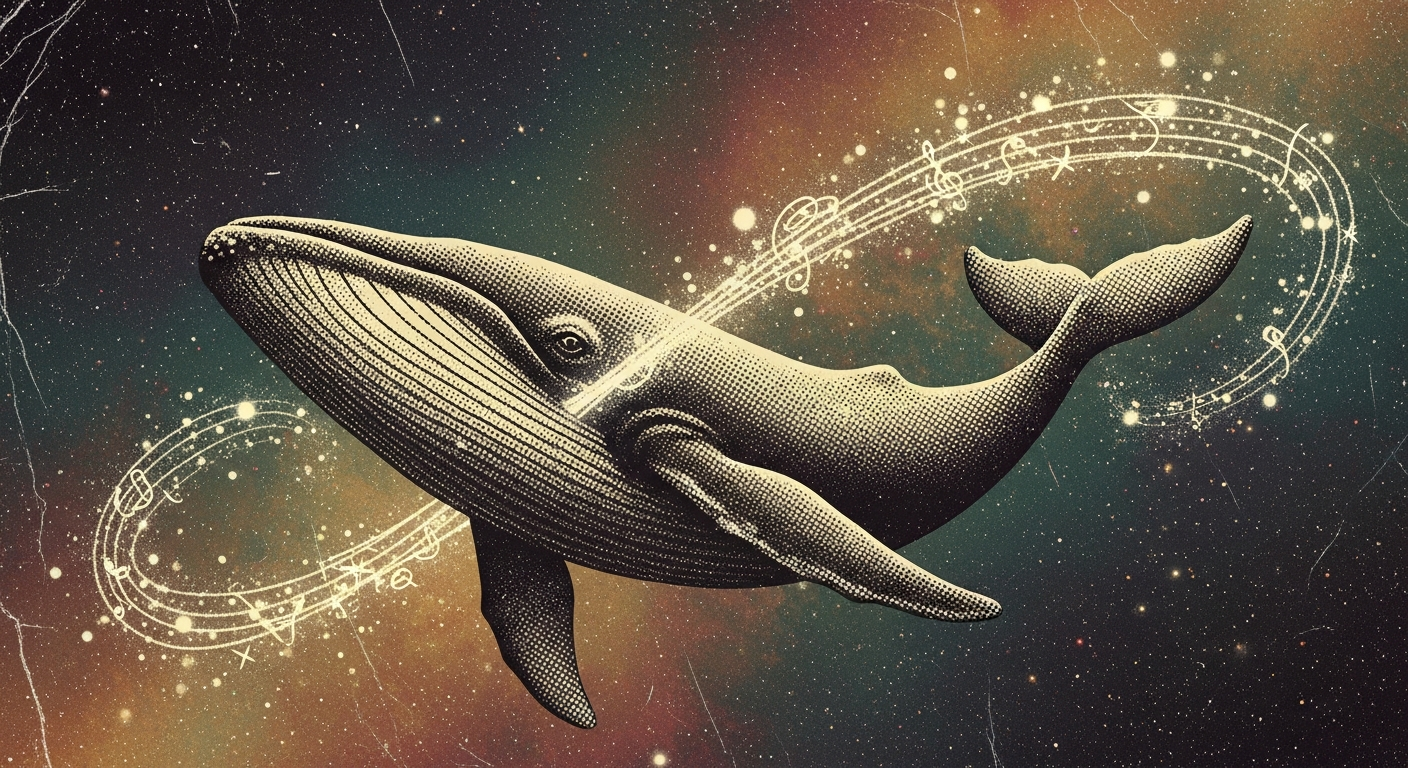
Ocean Pop Stars: How Whales Compose Songs That Go Viral Underwater
Introduction: The Billboard Hot 100 of the Sea
Imagine turning on the radio and hearing a catchy new summer hit. Within a few weeks, everyone at school is singing it, it is all over the internet, and people in other countries are dancing to it. Did you know that the exact same thing happens deep beneath the waves? Welcome to the underwater music industry, where humpback whales are the ultimate pop stars!
For decades, marine biologists have been listening to the ocean and making incredible discoveries about animal communication. They found that whales do not just make random noises; they compose complex, beautiful songs. Even more amazingly, when a whale comes up with a cool new tune, other whales learn it, copy it, and carry it across the globe. In this article, we will dive into the fascinating world of underwater acoustics to understand how whale songs are created, how they go “viral,” and what this tells us about the brilliant minds of these gentle giants.
The Detailed Science: Breaking Down the Underwater Hits
Who Are the Singers?
While many types of whales make sounds, the undisputed superstars of the ocean are the male humpback whales. During the breeding season, these massive males put on underwater concerts that can last for hours. Scientists believe they sing for two main reasons: to show off to the female whales (like a knight in shining armor) and to communicate with other males to establish their territory. It is their way of saying, “Look how big, strong, and talented I am!”
How Do Whales Sing Without Vocal Cords?
If you touch your throat and hum, you can feel your vocal cords vibrating. Humans use air from their lungs passing through these cords to speak and sing. But whales live underwater—if they opened their mouths to sing, they would swallow a bunch of seawater!
So, how do they do it? Whales have a special piece of tissue in their throats called a U-fold. Instead of letting air out, they recycle it. They push the air back and forth between large balloons inside their bodies (called laryngeal sacs) and their lungs. As the air rushes past the U-fold, it vibrates and creates massive sound waves. It is a lot like pinching the neck of a balloon and letting the air squeak out, but on a giant, ocean-shaking scale!
The Anatomy of a Whale Song: Verses and Choruses
Whale songs are not just random groans and squeaks. They are highly structured, just like a pop song you would hear on Spotify. Scientists break down whale songs into a specific hierarchy:
- Units: The single notes (a grunt, a whoop, or a squeak).
- Phrases: A few units put together (like a line in a song).
- Themes: A collection of phrases repeated over and over (like the chorus of a song).
- Song: A collection of themes sung in a specific order.
Just like human songs use rhyming to make words easier to remember, whales use repeating patterns. This helps their huge brains remember songs that can last up to 30 minutes long!
How Do Songs Go “Viral” Across the Ocean?
This is where the science gets truly mind-blowing. Scientists call this phenomenon cultural transmission. It means that animals learn behaviors from each other, rather than just being born knowing them.
Let’s look at the South Pacific Ocean. Researchers discovered that a new whale song almost always starts off the eastern coast of Australia. When the Australian whales travel to their feeding grounds in Antarctica, they bump into whales from other places, like New Zealand or French Polynesia. The other whales hear the new, catchy song and think, “Wow, that’s a great tune!”
They drop their old song, learn the new one, and take it back to their own homes. Year after year, the song travels like a wave from west to east across the ocean. Sometimes, whales even “remix” the song! If a tune is getting old, a whale might change the ending or add an extra squeak to make it fresh again.
Conclusion: Protecting Our Ocean’s Musicians
The discovery of viral whale songs has completely changed how scientists think about marine biology and animal intelligence. It proves that humans are not the only animals on Earth with a sense of culture, art, and changing trends. Humpback whales are brilliant composers, sharing their musical masterpieces across thousands of miles of dark, blue ocean.
However, our ocean pop stars are facing a big problem: noise pollution. Giant cargo ships, underwater construction, and plastic motors make the ocean very loud. Imagine trying to sing a gentle song to your friend while standing next to a roaring airplane engine! This noise makes it hard for whales to hear each other, disrupting their communication and their concerts.
By learning about these incredible creatures and working to quiet our oceans, we can ensure that the beautiful, viral songs of the humpback whale continue to echo through the deep sea for generations to come. The next time you listen to your favorite song, take a moment to think of the whales—the original pop stars of the sea, composing their own global hits.


Reader Comments