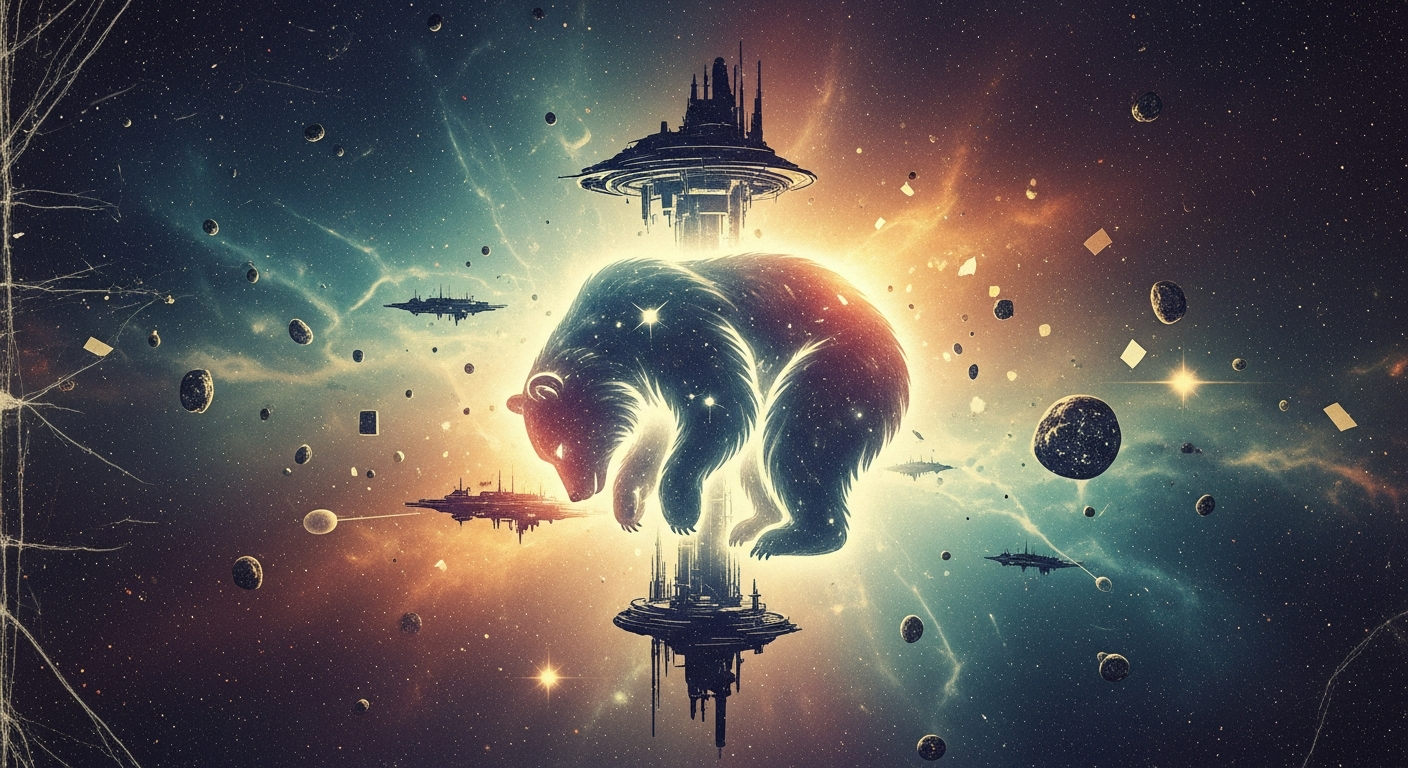
Can Sleeping Bears Help Astronauts Travel to Mars? The Amazing Space Biology of Hibernation

Can Sleeping Bears Help Astronauts Travel to Mars? The Amazing Space Biology of Hibernation Introduction: A Long Journey to the Red Planet Imagine packing for a road trip that takes seven whole months. You would need a massive amount of food, water, and plenty of games to keep you from getting bored. Now, imagine that this road trip isn't taking place on Earth, but in the freezing, dark vacuum of outer space. This is the exact challenge scientists face when planning to send astronauts to Mars. Space travel is incredibly difficult, and the journey to the Red Planet is long and dangerous. But what if there was a way to make the trip safer, cheaper, and much easier on the human body? What if astronauts could simply go to sleep on Earth and wake up when they arrive at Mars? To solve this futuristic problem, space biologists are looking at an unexpected hero in the animal kingdom: the sleeping bear. Detailed Scientific Explanation: How Bears Can Teach Us to Survive in Space The Magic of Bear Hibernation When winter arrives and food becomes scarce, brown and black bears do something amazing. They crawl into a cozy den and go to sleep for up to six months. In the scientific world, this deep sleep is called hibernation or torpor. If a human stayed in bed for six months, their muscles would shrink, their bones would become weak, and they would become very sick. But bears are biological marvels! Think of a bear's body like a smartphone in "low power mode." During hibernation, a bear's heart rate drops from 55 beats per minute to just 9 beats per minute. Their body temperature cools down slightly. Most amazingly, their bodies act like super-recycling plants. Instead of getting rid of waste (like urine), the bear's body recycles it into special proteins that keep their muscles and bones perfectly strong. When spring comes, the bear wakes up healthy and ready to go. Why Space is Hard on the Human Body To understand why the bear's trick is so important for space exploration, we have to look at what happens to astronauts in space. When humans float in microgravity (zero gravity), they don't have to use their muscles to stand up or carry things. Because the body isn't working hard, astronauts start to lose their muscle and bone strength very quickly. They have to exercise for two hours every single day on the International Space Station just to stay healthy! In addition to bone and muscle loss, space is full of dangerous cosmic radiation. Plus, carrying enough food, water, and oxygen for a multi-year Mars mission makes the spaceship incredibly heavy and extremely expensive to launch. Putting Humans in "Sleep Mode" Space agencies like NASA and the European Space Agency (ESA) are studying how to put humans into a state of synthetic torpor—an artificial hibernation. By safely lowering an astronaut's body temperature by just a few degrees, scientists believe they can slow down the human metabolism (how fast the body uses energy) by up to 25% or more. Scientists are currently studying the exact genes and chemicals that tell a bear's body to start recycling proteins. If we can create a medicine that perfectly mimics a bear's hibernation biology, we can protect astronauts from the harsh environment of deep space. The Big Benefits of Space Hibernation If we can successfully copy the biology of sleeping bears, the benefits for a Mars mission would be massive. Here is why space hibernation is the ultimate game-changer: Saving Space and Money: Sleeping astronauts use much less oxygen and need almost zero food or water. This means the spaceship can be much smaller, lighter, and cheaper to launch. Radiation Protection: Astronauts in hibernation could sleep in small, heavily shielded pods. This "water-shielded bed" would protect them from dangerous space radiation. Preserving Muscles and Bones: By unlocking the bear's biological secrets, astronauts could arrive on Mars with their bones and muscles as strong as the day they left Earth. Mental Health: A seven-month journey in a tiny metal tube can cause serious stress and boredom. Hibernation completely removes the psychological stress of the long trip. Conclusion: Dreaming Our Way to the Stars So, can sleeping bears help astronauts travel to Mars? The answer is a resounding yes! While we might think of space exploration as purely about rockets, computers, and engineering, the true key to deep space travel might just be hidden inside the incredible biology of Earth's animals. Scientists still have a lot of work to do before human hibernation becomes a reality. However, by studying how bears survive their long winter naps, we are moving one step closer to making a mission to Mars possible. The next time you see a sleeping bear—whether in a zoo, on television, or in a nature book—you aren't just looking at a lazy animal. You are looking at the furry pioneer that might one day help humanity dream its way to the stars! biological

Can Sleeping Bears Help Astronauts Travel to Mars? The Amazing Space Biology of Hibernation

Introduction: A Long Journey to the Red Planet

Imagine packing for a road trip that takes seven whole months. You would need a massive amount of food, water, and plenty of games to keep you from getting bored. Now, imagine that this road trip isn’t taking place on Earth, but in the freezing, dark vacuum of outer space. This is the exact challenge scientists face when planning to send astronauts to Mars.

Space travel is incredibly difficult, and the journey to the Red Planet is long and dangerous. But what if there was a way to make the trip safer, cheaper, and much easier on the human body? What if astronauts could simply go to sleep on Earth and wake up when they arrive at Mars? To solve this futuristic problem, space biologists are looking at an unexpected hero in the animal kingdom: the sleeping bear.

Detailed Scientific Explanation: How Bears Can Teach Us to Survive in Space

The Magic of Bear Hibernation

When winter arrives and food becomes scarce, brown and black bears do something amazing. They crawl into a cozy den and go to sleep for up to six months. In the scientific world, this deep sleep is called hibernation or torpor.

If a human stayed in bed for six months, their muscles would shrink, their bones would become weak, and they would become very sick. But bears are biological marvels! Think of a bear’s body like a smartphone in “low power mode.” During hibernation, a bear’s heart rate drops from 55 beats per minute to just 9 beats per minute. Their body temperature cools down slightly. Most amazingly, their bodies act like super-recycling plants. Instead of getting rid of waste (like urine), the bear’s body recycles it into special proteins that keep their muscles and bones perfectly strong. When spring comes, the bear wakes up healthy and ready to go.

Why Space is Hard on the Human Body

To understand why the bear’s trick is so important for space exploration, we have to look at what happens to astronauts in space. When humans float in microgravity (zero gravity), they don’t have to use their muscles to stand up or carry things. Because the body isn’t working hard, astronauts start to lose their muscle and bone strength very quickly. They have to exercise for two hours every single day on the International Space Station just to stay healthy!

In addition to bone and muscle loss, space is full of dangerous cosmic radiation. Plus, carrying enough food, water, and oxygen for a multi-year Mars mission makes the spaceship incredibly heavy and extremely expensive to launch.

Putting Humans in “Sleep Mode”

Space agencies like NASA and the European Space Agency (ESA) are studying how to put humans into a state of synthetic torpor—an artificial hibernation. By safely lowering an astronaut’s body temperature by just a few degrees, scientists believe they can slow down the human metabolism (how fast the body uses energy) by up to 25% or more.

Scientists are currently studying the exact genes and chemicals that tell a bear’s body to start recycling proteins. If we can create a medicine that perfectly mimics a bear’s hibernation biology, we can protect astronauts from the harsh environment of deep space.

The Big Benefits of Space Hibernation

If we can successfully copy the biology of sleeping bears, the benefits for a Mars mission would be massive. Here is why space hibernation is the ultimate game-changer:

  • Saving Space and Money: Sleeping astronauts use much less oxygen and need almost zero food or water. This means the spaceship can be much smaller, lighter, and cheaper to launch.
  • Radiation Protection: Astronauts in hibernation could sleep in small, heavily shielded pods. This “water-shielded bed” would protect them from dangerous space radiation.
  • Preserving Muscles and Bones: By unlocking the bear’s biological secrets, astronauts could arrive on Mars with their bones and muscles as strong as the day they left Earth.
  • Mental Health: A seven-month journey in a tiny metal tube can cause serious stress and boredom. Hibernation completely removes the psychological stress of the long trip.

Conclusion: Dreaming Our Way to the Stars

So, can sleeping bears help astronauts travel to Mars? The answer is a resounding yes! While we might think of space exploration as purely about rockets, computers, and engineering, the true key to deep space travel might just be hidden inside the incredible biology of Earth’s animals.

Scientists still have a lot of work to do before human hibernation becomes a reality. However, by studying how bears survive their long winter naps, we are moving one step closer to making a mission to Mars possible. The next time you see a sleeping bear—whether in a zoo, on television, or in a nature book—you aren’t just looking at a lazy animal. You are looking at the furry pioneer that might one day help humanity dream its way to the stars!


Reader Comments

Copied title and URL