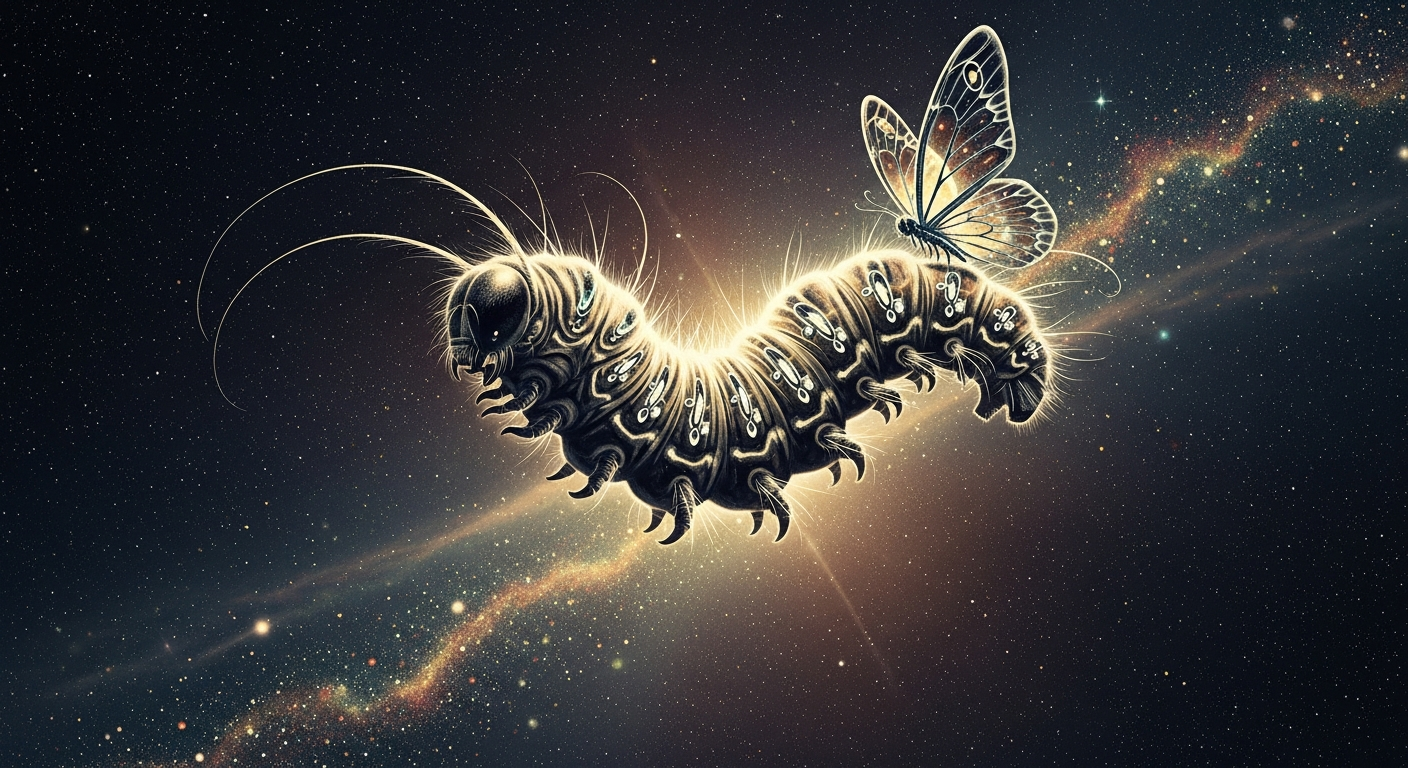
Can Caterpillars Turn Into Butterflies in Space? The Surprising Secrets of Zero-Gravity Biology

Introduction: A Magical Question About Space Nature Have you ever watched a caterpillar turn into a butterfly? It is one of nature's most amazing magic tricks. On Earth, a caterpillar climbs a tree, hangs upside down, builds a protective casing called a chrysalis (or pupa), and slowly transforms. But what happens if you take gravity away? Can caterpillars turn into butterflies in space? In November 2009, scientists and students teamed up with NASA to answer this exact question. They launched a special biological experiment to the International Space Station (ISS) to see how zero-gravity (microgravity) affects the butterfly life cycle. The results were surprising, a little bit funny, and deeply fascinating for space biology! Detailed Scientific Explanation: The Microgravity Metamorphosis The 2009 "Butterflies in Space" Experiment This famous experiment, known as "Butterflies in Space," was designed to study zero-gravity biology. Researchers sent young Monarch and Painted Lady caterpillars into orbit aboard the Space Shuttle Atlantis. Down on Earth, thousands of school children kept identical caterpillars in their classrooms. By comparing the Earth bugs with the space bugs, scientists could see exactly what happens when gravity goes missing. Spinning a Chrysalis Without "Up" or "Down" On Earth, a caterpillar uses gravity as its compass. When it is ready to pupate, it knows where "down" is and hangs from a branch in a familiar "J" shape. But in the microgravity of space, there is no true up or down. Without gravity to guide them, the space caterpillars had to improvise: The "C" Shape: Instead of hanging in a straight "J" shape, the confused caterpillars curled up into tight "C" shapes to form their chrysalises. Floating Pupas: One caterpillar had trouble attaching its sticky silk pad to the wall. Instead of anchoring itself, it safely transformed into a completely floating pupa that drifted around the chamber! Despite these zero-gravity challenges, the caterpillars successfully completed the first stage of their metamorphosis. Emerging and Learning to Fly in Microgravity After weeks of waiting, the grand finale arrived: the butterflies hatched! However, the lack of gravity created two major scientific hurdles. First, when a butterfly hatches on Earth, gravity helps pull fluid from its body down into its crumpled wings, a process taking about three minutes. In space, without gravity pulling the fluid down, the insects had to work much harder. Pumping fluid into their wings took up to 15 minutes of constant wiggling! Second, they had to learn how to fly. Because they were floating, flapping their wings normally sent them tumbling and bouncing off the walls. But insects are incredibly smart and adaptable. Soon, the butterflies figured out how to glide safely and cling to the walls of their habitat, mastering their strange, weightless world. Conclusion: What Space Bugs Teach Us About Life The "Butterflies in Space" experiment was a massive success. It proved once and for all that, yes, caterpillars can absolutely turn into butterflies in space! More importantly, it taught scientists a powerful lesson about the resilience of biology. Even when taken completely out of their natural Earth environment, these tiny creatures figured out how to survive, adapt, and literally spread their wings. As humanity looks forward to long space journeys, knowing that Earth's beautiful life cycles can continue among the stars is a profoundly inspiring scientific discovery. biological

Introduction: A Magical Question About Space Nature

Have you ever watched a caterpillar turn into a butterfly? It is one of nature’s most amazing magic tricks. On Earth, a caterpillar climbs a tree, hangs upside down, builds a protective casing called a chrysalis (or pupa), and slowly transforms. But what happens if you take gravity away? Can caterpillars turn into butterflies in space?

In November 2009, scientists and students teamed up with NASA to answer this exact question. They launched a special biological experiment to the International Space Station (ISS) to see how zero-gravity (microgravity) affects the butterfly life cycle. The results were surprising, a little bit funny, and deeply fascinating for space biology!

Detailed Scientific Explanation: The Microgravity Metamorphosis

The 2009 “Butterflies in Space” Experiment

This famous experiment, known as “Butterflies in Space,” was designed to study zero-gravity biology. Researchers sent young Monarch and Painted Lady caterpillars into orbit aboard the Space Shuttle Atlantis. Down on Earth, thousands of school children kept identical caterpillars in their classrooms. By comparing the Earth bugs with the space bugs, scientists could see exactly what happens when gravity goes missing.

Spinning a Chrysalis Without “Up” or “Down”

On Earth, a caterpillar uses gravity as its compass. When it is ready to pupate, it knows where “down” is and hangs from a branch in a familiar “J” shape. But in the microgravity of space, there is no true up or down.

Without gravity to guide them, the space caterpillars had to improvise:

  • The “C” Shape: Instead of hanging in a straight “J” shape, the confused caterpillars curled up into tight “C” shapes to form their chrysalises.
  • Floating Pupas: One caterpillar had trouble attaching its sticky silk pad to the wall. Instead of anchoring itself, it safely transformed into a completely floating pupa that drifted around the chamber!

Despite these zero-gravity challenges, the caterpillars successfully completed the first stage of their metamorphosis.

Emerging and Learning to Fly in Microgravity

After weeks of waiting, the grand finale arrived: the butterflies hatched! However, the lack of gravity created two major scientific hurdles.

First, when a butterfly hatches on Earth, gravity helps pull fluid from its body down into its crumpled wings, a process taking about three minutes. In space, without gravity pulling the fluid down, the insects had to work much harder. Pumping fluid into their wings took up to 15 minutes of constant wiggling!

Second, they had to learn how to fly. Because they were floating, flapping their wings normally sent them tumbling and bouncing off the walls. But insects are incredibly smart and adaptable. Soon, the butterflies figured out how to glide safely and cling to the walls of their habitat, mastering their strange, weightless world.

Conclusion: What Space Bugs Teach Us About Life

The “Butterflies in Space” experiment was a massive success. It proved once and for all that, yes, caterpillars can absolutely turn into butterflies in space!

More importantly, it taught scientists a powerful lesson about the resilience of biology. Even when taken completely out of their natural Earth environment, these tiny creatures figured out how to survive, adapt, and literally spread their wings. As humanity looks forward to long space journeys, knowing that Earth’s beautiful life cycles can continue among the stars is a profoundly inspiring scientific discovery.


Reader Comments

Copied title and URL