The Pistol Shrimp: How a Tiny Crustacean Creates Underwater Bubbles Hotter Than the Sun

The Pistol Shrimp: How a Tiny Crustacean Creates Underwater Bubbles Hotter Than the Sun Introduction: Meet the Ocean's Tiniest Superhero Imagine an animal the size of your thumb that carries a built-in super-weapon. It doesn't have sharp teeth, and it doesn't swim very fast. Yet, this incredible little creature, known as the Pistol Shrimp (or snapping shrimp), is one of the loudest and most powerful animals in the entire ocean! As a marvel of marine biology, the pistol shrimp holds a secret superpower. By simply snapping its specially designed claw, it shoots out an underwater bubble bullet. But this isn't an ordinary soap bubble. It is a super-charged bubble that travels at highway speeds, creates a flash of light, and for a tiny fraction of a second, reaches temperatures that can rival the surface of the sun! Let's dive deep into the ocean and uncover the amazing science behind this tiny crustacean. The Science Explained: How Does the Pistol Shrimp Do It? To understand how a creature that is only about 1.5 inches (4 cm) long can perform such incredible feats, we have to look closely at physics. Don't worry—we will break down these big scientific words so they are super easy to understand! 1. The Super Snapper Claw The secret to the pistol shrimp’s power is its giant, asymmetrical claw. Unlike regular crabs or shrimp that have two claws of the same size, the pistol shrimp has one normal claw and one massive "snapping" claw. This giant claw acts just like a loaded water gun. When the shrimp opens its claw, water fills the gap. When it spots a tasty snack, special muscles snap the claw shut incredibly fast. 2. Ripping the Water Apart (Cavitation) Here is where the amazing physics happens. The shrimp's claw snaps shut so fast—up to 60 miles per hour (97 km/h)—that it forcefully pushes the water away. In fact, the water moves so fast that it leaves an empty, totally hollow space behind it. In science, this empty space is called a cavitation bubble. Imagine trying to run through a swimming pool; the water slows you down. But the shrimp's claw moves so quickly that the water actually rips apart, creating a bubble of extremely low pressure. 3. Sonoluminescence: Sound Turning into Light! The ocean around the bubble doesn't like empty spaces. So, in less than a millisecond, the surrounding water violently crashes back in to crush the cavitation bubble. When the bubble collapses, it creates a massive shockwave. As the bubble is crushed, the gas trapped inside gets squeezed so tightly that it generates incredible heat. The temperature inside the collapsing bubble reaches over 4,400 to 5,000 degrees Celsius (around 8,000 to 9,000 degrees Fahrenheit)! That is nearly as hot as the surface of our actual sun. This intense heat and pressure cause the bubble to emit a tiny, split-second flash of light. Scientists call this magical event sonoluminescence. "Sono" means sound, and "luminescence" means light. Simply put, the shrimp creates a sound so loud and a crash so powerful that it creates a spark of light! 4. Why Do They Shoot These Bubbles? You might be wondering: does this super-hot bubble hurt the ocean or the shrimp? Thankfully, no! The bubble is so tiny and the heat lasts for such a short time (a fraction of a millisecond) that it doesn't boil the ocean water around it. The pistol shrimp uses this incredible trick to hunt. The loud "POP!"—which can reach 210 decibels (louder than a jet engine taking off!)—creates a shockwave. This shockwave easily stuns small fish, crabs, and worms swimming nearby. Once the prey is stunned, the pistol shrimp can easily grab its dinner. Conclusion: Small Size, Massive Power The pistol shrimp proves that you don't have to be a giant shark or a massive whale to be a powerful predator in the ocean. Through the amazing scientific processes of cavitation and sonoluminescence, this tiny crustacean literally uses the forces of physics to shoot bubbles that are almost as hot as the sun. Next time you think about the ocean, remember the little snapping shrimp hiding in the coral reefs. Nature is full of incredible, mind-blowing surprises, and the pistol shrimp is the perfect example of how science makes the real world just as exciting as any superhero movie! biological

The Pistol Shrimp: How a Tiny Crustacean Creates Underwater Bubbles Hotter Than the Sun

Introduction: Meet the Ocean’s Tiniest Superhero

Imagine an animal the size of your thumb that carries a built-in super-weapon. It doesn’t have sharp teeth, and it doesn’t swim very fast. Yet, this incredible little creature, known as the Pistol Shrimp (or snapping shrimp), is one of the loudest and most powerful animals in the entire ocean!

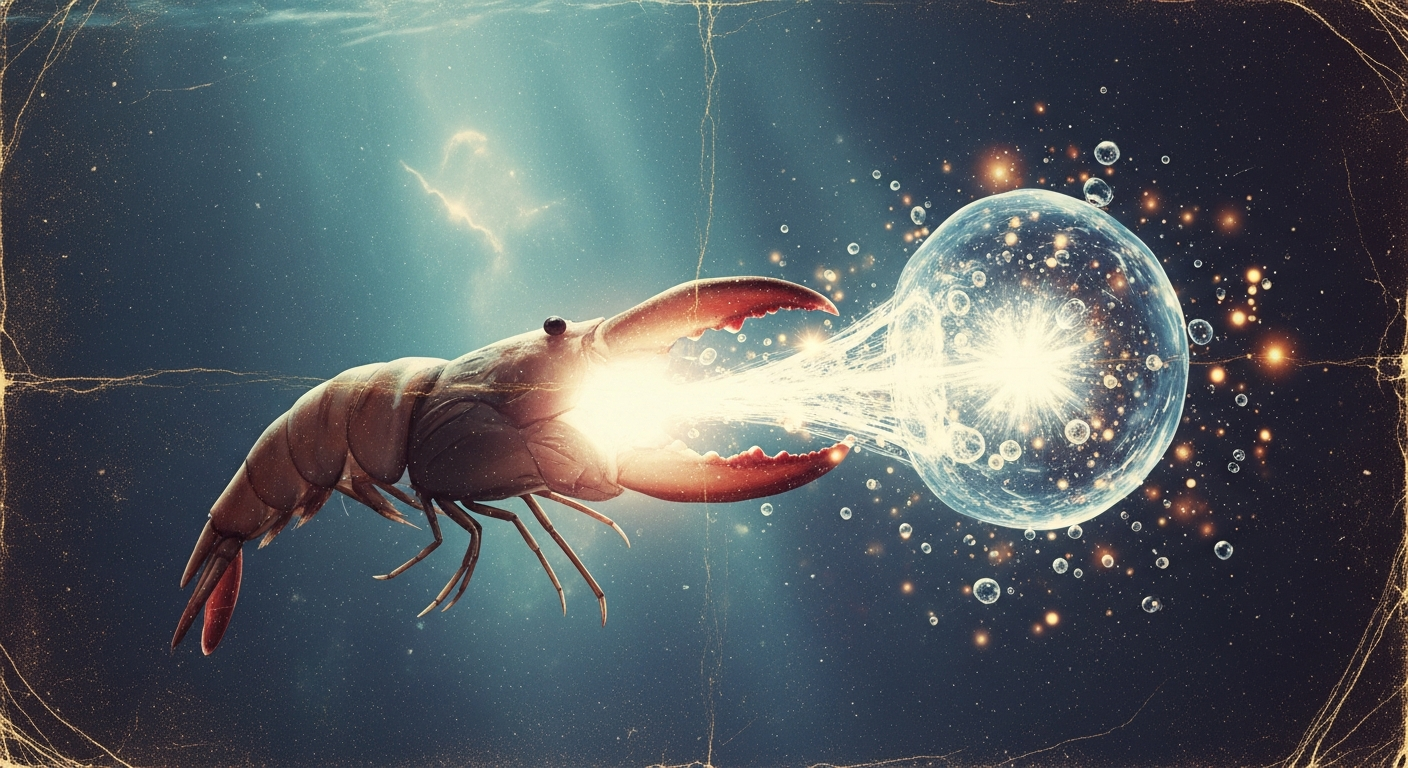
As a marvel of marine biology, the pistol shrimp holds a secret superpower. By simply snapping its specially designed claw, it shoots out an underwater bubble bullet. But this isn’t an ordinary soap bubble. It is a super-charged bubble that travels at highway speeds, creates a flash of light, and for a tiny fraction of a second, reaches temperatures that can rival the surface of the sun! Let’s dive deep into the ocean and uncover the amazing science behind this tiny crustacean.

The Science Explained: How Does the Pistol Shrimp Do It?

To understand how a creature that is only about 1.5 inches (4 cm) long can perform such incredible feats, we have to look closely at physics. Don’t worry—we will break down these big scientific words so they are super easy to understand!

1. The Super Snapper Claw

The secret to the pistol shrimp’s power is its giant, asymmetrical claw. Unlike regular crabs or shrimp that have two claws of the same size, the pistol shrimp has one normal claw and one massive “snapping” claw. This giant claw acts just like a loaded water gun. When the shrimp opens its claw, water fills the gap. When it spots a tasty snack, special muscles snap the claw shut incredibly fast.

2. Ripping the Water Apart (Cavitation)

Here is where the amazing physics happens. The shrimp’s claw snaps shut so fast—up to 60 miles per hour (97 km/h)—that it forcefully pushes the water away. In fact, the water moves so fast that it leaves an empty, totally hollow space behind it.

In science, this empty space is called a cavitation bubble. Imagine trying to run through a swimming pool; the water slows you down. But the shrimp’s claw moves so quickly that the water actually rips apart, creating a bubble of extremely low pressure.

3. Sonoluminescence: Sound Turning into Light!

The ocean around the bubble doesn’t like empty spaces. So, in less than a millisecond, the surrounding water violently crashes back in to crush the cavitation bubble. When the bubble collapses, it creates a massive shockwave.

As the bubble is crushed, the gas trapped inside gets squeezed so tightly that it generates incredible heat. The temperature inside the collapsing bubble reaches over 4,400 to 5,000 degrees Celsius (around 8,000 to 9,000 degrees Fahrenheit)! That is nearly as hot as the surface of our actual sun.

This intense heat and pressure cause the bubble to emit a tiny, split-second flash of light. Scientists call this magical event sonoluminescence. “Sono” means sound, and “luminescence” means light. Simply put, the shrimp creates a sound so loud and a crash so powerful that it creates a spark of light!

4. Why Do They Shoot These Bubbles?

You might be wondering: does this super-hot bubble hurt the ocean or the shrimp? Thankfully, no! The bubble is so tiny and the heat lasts for such a short time (a fraction of a millisecond) that it doesn’t boil the ocean water around it.

The pistol shrimp uses this incredible trick to hunt. The loud “POP!”—which can reach 210 decibels (louder than a jet engine taking off!)—creates a shockwave. This shockwave easily stuns small fish, crabs, and worms swimming nearby. Once the prey is stunned, the pistol shrimp can easily grab its dinner.

Conclusion: Small Size, Massive Power

The pistol shrimp proves that you don’t have to be a giant shark or a massive whale to be a powerful predator in the ocean. Through the amazing scientific processes of cavitation and sonoluminescence, this tiny crustacean literally uses the forces of physics to shoot bubbles that are almost as hot as the sun.

Next time you think about the ocean, remember the little snapping shrimp hiding in the coral reefs. Nature is full of incredible, mind-blowing surprises, and the pistol shrimp is the perfect example of how science makes the real world just as exciting as any superhero movie!


Reader Comments

Copied title and URL