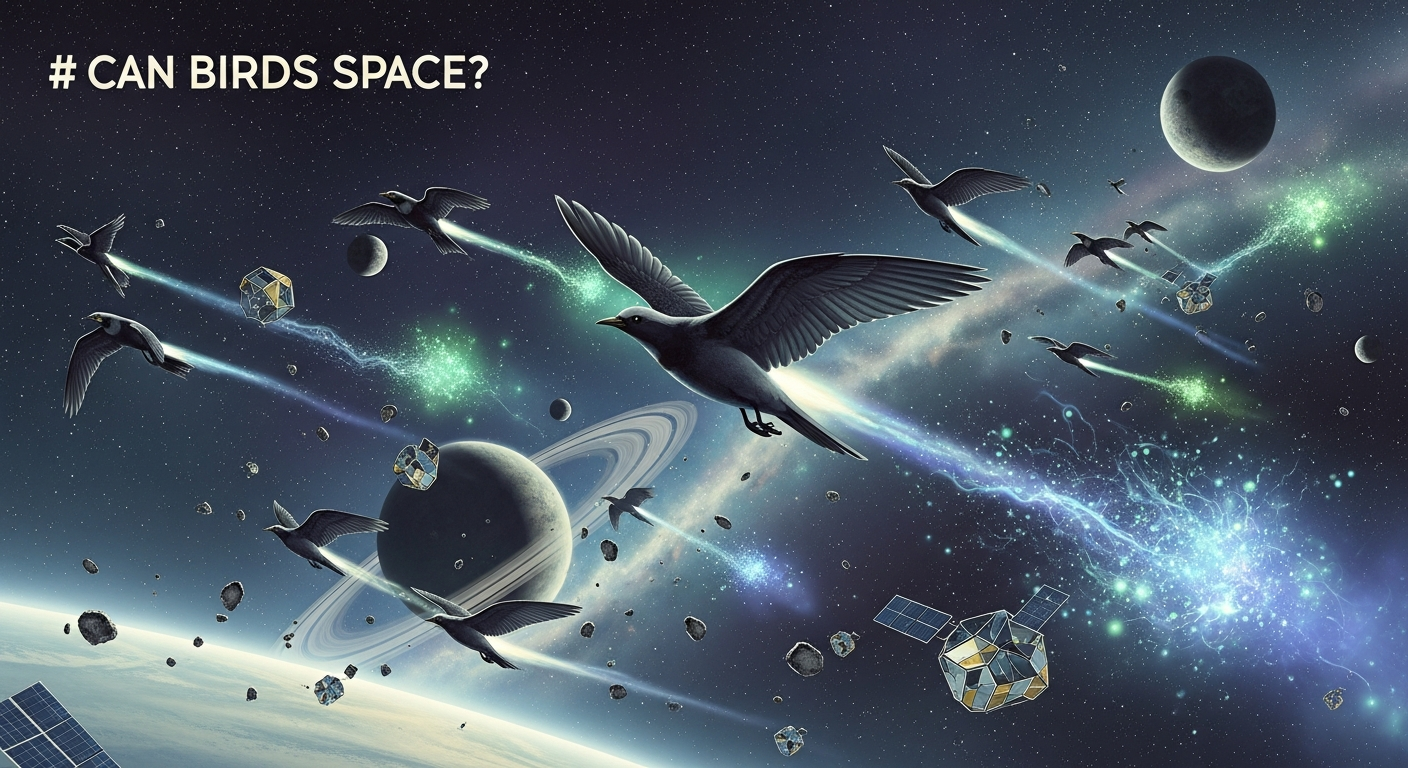
Can Birds Fly in Space? The Secret Physics and Biology of Zero-Gravity Animals
Introduction: Imagine a Bird in Space
Have you ever watched a bird soaring high in the sky and wondered, “Can birds fly in space?” It is a fascinating question that combines the magic of space exploration with the wonders of nature. When human astronauts go to the International Space Station (ISS), they float effortlessly in zero-gravity (also known as microgravity). But what would happen if we brought a pigeon, a sparrow, or a canary along for the ride?
To answer this question, we have to act like space detectives! We need to look closely at the physics of flight—how air and gravity work together—and the biology of animals—how their brains and bodies understand where they are. Let’s blast off and discover the secret life of zero-gravity animals, explained so simply that even a young scientist can understand!
The Science of Space Flight: Physics and Biology Explained
The Physics of Flight: How Do Birds Fly on Earth?
Before we take our bird to space, we need to understand how they fly here on Earth. Bird flight depends on four invisible forces of physics:
- Weight (Gravity): This is the Earth pulling the bird down.
- Lift: When a bird flaps its wings, air rushes under them, pushing the bird up against gravity.
- Thrust: The flapping motion also pushes the bird forward.
- Drag: This is air resistance (like when you stick your hand out of a moving car window) trying to slow the bird down.
For a bird to fly perfectly, these four forces must be perfectly balanced. Gravity is like the invisible anchor that birds use to push off against using the air.
Zero-Gravity Physics: What Happens Inside a Spaceship?
Now, let’s transport our bird inside a spaceship. Remember, space has no air, so if a bird were floating outside the spaceship, it could not breathe or fly. But inside the spaceship, there is plenty of air! However, there is almost zero gravity.
Because there is no gravity pulling the bird down, the bird no longer needs Lift to stay in the air. If the bird simply lets go of a branch, it will float! If the bird flaps its wings, the Thrust will push it forward. But without gravity to balance the movement, the bird will shoot forward much faster than it expects, likely bumping into the ceiling or walls. In short, a bird can physically propel itself through the air in space, but it is not “flying” the way it does on Earth—it is more like chaotic floating.
The Secret Biology: How Do Birds Know Which Way is Up?
Here is where the space biology gets really interesting. The biggest problem for a bird in space isn’t physics; it’s biology! Inside a bird’s head (and inside your head, too!) is a special biological tool called the vestibular system. It acts like a tiny sensor filled with fluid in the inner ear, telling the brain which way is “up” and which way is “down” by feeling the pull of gravity.
In zero-gravity, this system goes completely crazy. Without gravity, the bird’s brain has no idea where “up” is. If you have ever been dizzy after spinning on a merry-go-round, or tried swimming underwater with your eyes closed, you know the feeling. Because birds cannot figure out their orientation, they get very confused and scared.
Real Space Experiments: Did We Actually Try This?
Scientists have actually tested this! During special airplane flights called “Vomit Comets” that simulate zero-gravity, scientists observed pigeons. Instead of flying gracefully, the pigeons did wild backflips, tumbled around, and flapped their wings in a panic. They simply could not control their bodies.
In another famous experiment in the 1990s, scientists sent quail eggs to the Mir Space Station. When the chicks hatched in space, they couldn’t balance. Because they didn’t know how to hold onto the cage wires in zero-gravity, they just floated around helplessly. They simply didn’t have the Earth’s gravity to teach them how to move properly.
Conclusion: Earth is the Perfect Home for Birds
So, can birds fly in space? The answer is both yes and no. Physically, their wings still work to push air and move them forward inside a breathable spaceship. But biologically, they cannot control their flight. Without gravity, their brains get confused, they lose their sense of direction, and they end up tumbling instead of soaring.
While humans can learn to do flips and float like superheroes in microgravity, zero-gravity animals like birds are perfectly adapted to their home planet. This fun space question teaches us a wonderful lesson: Earth’s gravity isn’t just something that holds birds down; it is the secret ingredient that allows them to fly so beautifully. The next time you see a bird flying outside, you will know that you are watching a master of Earth’s physics and biology at work!


Reader Comments