Could Bees Build a Hive on Mars? What Nature’s Tiny Architects Teach Us About Living in Outer Space

Could Bees Build a Hive on Mars? What Nature's Tiny Architects Teach Us About Living in Outer Space Introduction: A Buzzy Idea for the Red Planet Imagine astronauts finally landing on Mars. They step out of their rocket, look at the endless red dirt, and suddenly hear a tiny sound: Bzzzzzz. Could bees live on Mars? It sounds like a crazy science fiction movie, but asking this question helps scientists solve some of the biggest problems in space exploration. As humans plan to build the first Mars habitat, we are looking for inspiration. And who better to learn from than bees? These fuzzy little bugs are nature's most amazing architects. For millions of years, they have been building strong, perfect homes using very few materials. In this article, we will explore the harsh science of Mars, discover why bees are master builders, and learn how their honeycomb secrets might just help us survive in outer space! Detailed Scientific Explanation: The Science of Mars and Honeycombs 1. The Martian Challenge: Why Bees Need Spacesuits (and Biodomes) First, let us look at the science of the Red Planet. Could a bee simply fly around on Mars and build a hive on a red rock? The short answer is no. Mars is incredibly harsh for Earthlings. Very Little Air: The atmosphere on Mars is about 100 times thinner than on Earth, and it is mostly made of carbon dioxide. For a bee, trying to fly on Mars would be like a human trying to swim in a pool with no water! There is simply not enough air to push their tiny wings against. Freezing Cold: Mars is a freezing desert. The average temperature is about minus 81 degrees Fahrenheit (minus 60 degrees Celsius). A bee would turn into an ice cube instantly. No Flowers, No Food: Bees need nectar and pollen from plants to survive. Since Mars is a barren rock, there is no natural food for them. Because of these tough conditions, bees could never survive outside on Mars. However, if humans build large, warm, air-filled greenhouses (called biodomes) to grow space crops, bees could absolutely live inside them! In fact, we would need them to pollinate our space-tomatoes and space-strawberries. 2. The Magic of the Hexagon: Nature's Space-Saving Shape Even if bees stay safely inside a biodome, the way they build their homes teaches human engineers a massive lesson for outer space. When you look at a beehive, you see a grid of perfect six-sided shapes called hexagons. Why do bees use hexagons instead of circles or squares? A long time ago, mathematicians discovered that hexagons fit together perfectly like puzzle pieces, leaving zero empty space. More importantly, they use the least amount of wax to hold the most amount of honey. In science, we call this being "highly efficient." When astronauts go to Mars, they cannot pack heavy building materials like bricks or concrete; rockets can only carry so much weight. By copying the bees, space engineers use honeycomb structures made of lightweight metals and plastics. These structures are incredibly light, yet strong enough to protect spaceships from the dangerous pressure of outer space. The bees figured out this perfect math millions of years before humans even invented rockets! 3. Heating and Cooling: The Bees' Secret Climate Control Mars gets super cold at night and warmer during the day. Humans will need giant heaters and air conditioners to stay alive. Believe it or not, bees have their own natural climate control system! When a beehive gets too cold in the winter, the worker bees huddle together and shiver their flying muscles to generate heat, warming up the hive. When it gets too hot in the summer, they bring in water drops and flap their wings to create a cooling breeze. Scientists are studying this natural behavior to design "smart" space habitats. Instead of using lots of electricity to heat an entire Mars base, future space homes might use systems inspired by bees—moving heat exactly where it is needed, just like a living organism. 4. Swarm Intelligence: The Ultimate Space Survival Skill Finally, bees teach us about teamwork. A single bee is not very smart, but a whole hive thinks together like one big brain. This is called swarm intelligence. Every bee has a specific job: some are nurses, some are guards, and some are builders. When building a base on Mars, human astronauts—and the robots helping them—will have to work just like a bee colony. Space agencies like NASA are actually programming tiny robotic rovers to work together like a swarm of bees. If one robot breaks down, the others instantly know how to share its work, ensuring the mission does not fail. Conclusion: Taking Nature to the Stars So, could bees build a hive on Mars? While you will never see a wild bee buzzing around the dusty red canyons of Mars, they might one day build their wax honeycombs inside our warm, protected space greenhouses. But their real journey to outer space has already begun through human imagination. By studying how these tiny architects use space-saving hexagons, control their temperature, and work together in perfect harmony, we are learning the secrets to surviving on other planets. As we look to the stars to build our next home, it turns out our best teachers are the little bugs buzzing right here in our own backyards. Nature's design is the ultimate blueprint for the future of space exploration! biological

Could Bees Build a Hive on Mars? What Nature’s Tiny Architects Teach Us About Living in Outer Space

Introduction: A Buzzy Idea for the Red Planet

Imagine astronauts finally landing on Mars. They step out of their rocket, look at the endless red dirt, and suddenly hear a tiny sound: Bzzzzzz. Could bees live on Mars? It sounds like a crazy science fiction movie, but asking this question helps scientists solve some of the biggest problems in space exploration.

As humans plan to build the first Mars habitat, we are looking for inspiration. And who better to learn from than bees? These fuzzy little bugs are nature’s most amazing architects. For millions of years, they have been building strong, perfect homes using very few materials. In this article, we will explore the harsh science of Mars, discover why bees are master builders, and learn how their honeycomb secrets might just help us survive in outer space!

Detailed Scientific Explanation: The Science of Mars and Honeycombs

1. The Martian Challenge: Why Bees Need Spacesuits (and Biodomes)

First, let us look at the science of the Red Planet. Could a bee simply fly around on Mars and build a hive on a red rock? The short answer is no. Mars is incredibly harsh for Earthlings.

  • Very Little Air: The atmosphere on Mars is about 100 times thinner than on Earth, and it is mostly made of carbon dioxide. For a bee, trying to fly on Mars would be like a human trying to swim in a pool with no water! There is simply not enough air to push their tiny wings against.
  • Freezing Cold: Mars is a freezing desert. The average temperature is about minus 81 degrees Fahrenheit (minus 60 degrees Celsius). A bee would turn into an ice cube instantly.
  • No Flowers, No Food: Bees need nectar and pollen from plants to survive. Since Mars is a barren rock, there is no natural food for them.

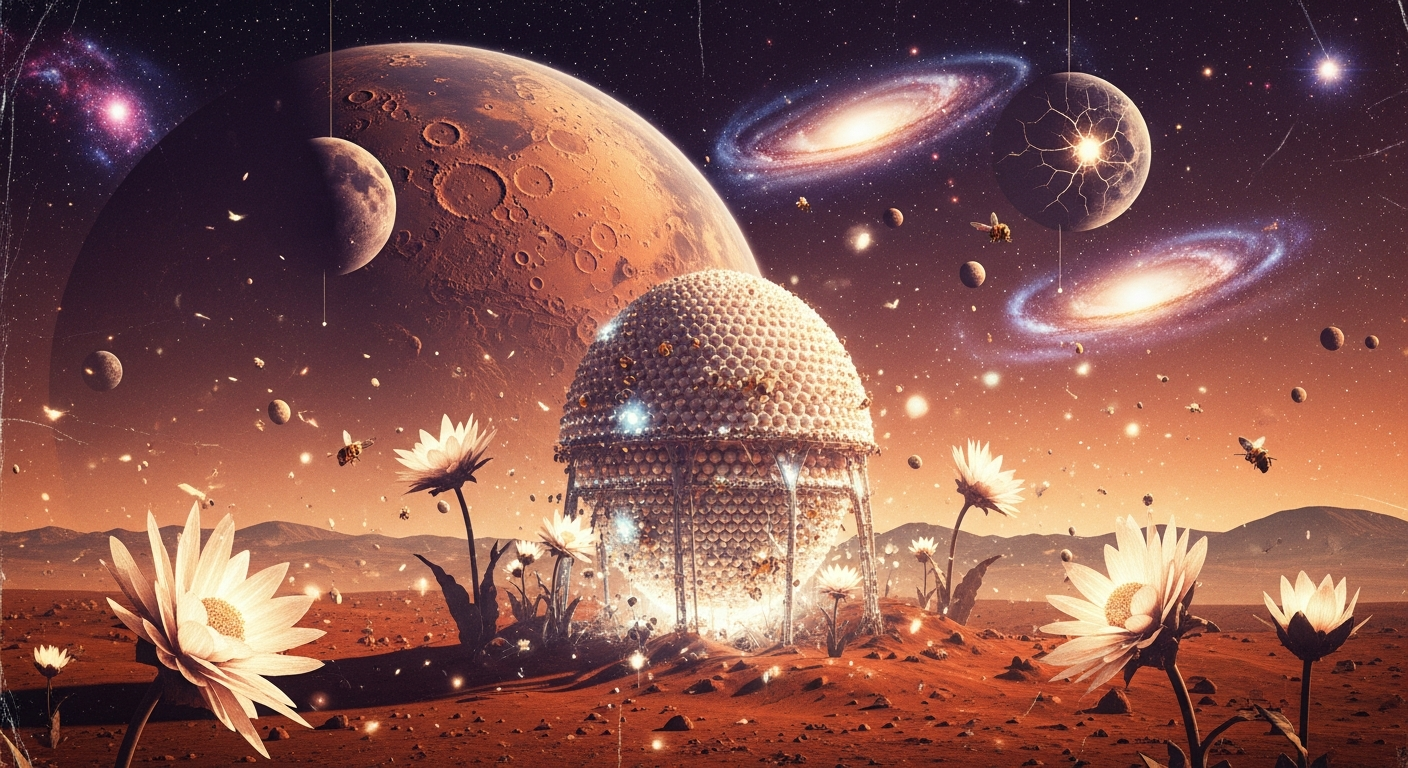
Because of these tough conditions, bees could never survive outside on Mars. However, if humans build large, warm, air-filled greenhouses (called biodomes) to grow space crops, bees could absolutely live inside them! In fact, we would need them to pollinate our space-tomatoes and space-strawberries.

2. The Magic of the Hexagon: Nature’s Space-Saving Shape

Even if bees stay safely inside a biodome, the way they build their homes teaches human engineers a massive lesson for outer space. When you look at a beehive, you see a grid of perfect six-sided shapes called hexagons. Why do bees use hexagons instead of circles or squares?

A long time ago, mathematicians discovered that hexagons fit together perfectly like puzzle pieces, leaving zero empty space. More importantly, they use the least amount of wax to hold the most amount of honey. In science, we call this being “highly efficient.”

When astronauts go to Mars, they cannot pack heavy building materials like bricks or concrete; rockets can only carry so much weight. By copying the bees, space engineers use honeycomb structures made of lightweight metals and plastics. These structures are incredibly light, yet strong enough to protect spaceships from the dangerous pressure of outer space. The bees figured out this perfect math millions of years before humans even invented rockets!

3. Heating and Cooling: The Bees’ Secret Climate Control

Mars gets super cold at night and warmer during the day. Humans will need giant heaters and air conditioners to stay alive. Believe it or not, bees have their own natural climate control system!

When a beehive gets too cold in the winter, the worker bees huddle together and shiver their flying muscles to generate heat, warming up the hive. When it gets too hot in the summer, they bring in water drops and flap their wings to create a cooling breeze. Scientists are studying this natural behavior to design “smart” space habitats. Instead of using lots of electricity to heat an entire Mars base, future space homes might use systems inspired by bees—moving heat exactly where it is needed, just like a living organism.

4. Swarm Intelligence: The Ultimate Space Survival Skill

Finally, bees teach us about teamwork. A single bee is not very smart, but a whole hive thinks together like one big brain. This is called swarm intelligence.

Every bee has a specific job: some are nurses, some are guards, and some are builders. When building a base on Mars, human astronauts—and the robots helping them—will have to work just like a bee colony. Space agencies like NASA are actually programming tiny robotic rovers to work together like a swarm of bees. If one robot breaks down, the others instantly know how to share its work, ensuring the mission does not fail.

Conclusion: Taking Nature to the Stars

So, could bees build a hive on Mars? While you will never see a wild bee buzzing around the dusty red canyons of Mars, they might one day build their wax honeycombs inside our warm, protected space greenhouses. But their real journey to outer space has already begun through human imagination.

By studying how these tiny architects use space-saving hexagons, control their temperature, and work together in perfect harmony, we are learning the secrets to surviving on other planets. As we look to the stars to build our next home, it turns out our best teachers are the little bugs buzzing right here in our own backyards. Nature’s design is the ultimate blueprint for the future of space exploration!


Reader Comments

タイトルとURLをコピーしました