Can Spider Webs Build Houses on Mars? The Amazing Biology of Space Architecture

Can Spider Webs Build Houses on Mars? The Amazing Biology of Space Architecture Introduction: A Sticky Solution for the Red Planet Imagine you are an astronaut who just landed on Mars. You step out of your spaceship, look around at the dusty, red landscape, and get ready to go inside your new home. But what is your Martian house made of? It isn't made of heavy bricks, steel, or wood. Instead, it might be made of something much more amazing: spider webs! When we think of building houses on Mars, we face a giant problem. Sending heavy building materials into space costs millions of dollars. To solve this, scientists are creating a new field called Space Architecture, which mixes space exploration with biology. By looking at how nature builds things on Earth, scientists have discovered that spider silk could be the ultimate building material for our future homes on the Red Planet. Let's dive into the amazing science of how tiny bugs might help us conquer space! Detailed Scientific Explanation: How Biology Meets Space Architecture The Superpower of Spider Silk You might think of spider webs as those annoying, sticky threads you accidentally walk into in your backyard. But to a scientist, spider silk is a superpower material. It has an incredible property called tensile strength. This means you can pull and stretch it really hard before it breaks. In fact, spider silk is stronger than steel of the same weight, but it is as flexible as a rubber band! It is also incredibly lightweight. If you had a strand of spider silk long enough to wrap completely around the Earth, it would weigh less than a bar of soap. This combination of being super strong and super light makes it the perfect material for space architecture. The Heavy Problem with Space Travel Why can't we just bring normal houses to Mars? The answer is gravity. To shoot a rocket into space, it has to be as light as possible. Every single pound you put on a rocket requires tons of expensive rocket fuel to lift it. If we tried to send concrete and steel beams to Mars, it would be too heavy and too expensive. Space scientists need materials that are light enough to carry, but strong enough to protect astronauts from harsh Martian winds, freezing cold temperatures, and dangerous space radiation. Microbes: Our Tiny Astronaut Builders Now, you might be wondering: "Are we going to send millions of giant spiders to Mars to spin webs for us?" Definitely not! Spiders are hard to keep in space, and they tend to eat each other when they get crowded. Instead, scientists use a brilliant science called synthetic biology. Scientists have taken the special "recipe" (or DNA) that spiders use to make silk and put it inside tiny microscopic organisms, like yeast or bacteria. Think of it like giving a tiny, living factory a new instruction manual. We can send a small test tube of these special microbes to Mars. Once they arrive, astronauts can feed them simple food—like sugar or even chemicals made from the Martian air—and these tiny bacteria will "brew" spider silk proteins, almost like how a baker uses yeast to bake bread! Constructing the Martian Web Once the tiny microbes produce the spider silk proteins, how do we turn it into a house? Astronauts can use huge 3D printers to spin the proteins into thick, strong ropes or weave them into huge, durable fabrics. These fabrics can be used to make inflatable, tent-like dome houses. To make the houses even stronger, the spider silk can be mixed with Martian regolith (the red dirt and rocks found all over Mars). By mixing spider silk with Mars dirt, we can create a super-strong, lightweight biological concrete. This means astronauts can literally grow their building materials right there on Mars, creating safe, warm, and unbreakable habitats. Conclusion: Nature's Blueprint for the Stars Building a home on another planet is one of the biggest challenges humans have ever faced. But the answer to our space architecture problems isn't just about building bigger rockets or stronger machines; sometimes, the best technology has already been invented by nature. By blending biology and space science, we can use the secrets of the humble spider web to design the future of Mars colonization. Spider silk produced by tiny microbes is strong, lightweight, and can be grown anywhere. As we look up at the stars and dream of living on Mars, it is truly amazing to think that the blueprint for our space houses is crawling right here on Earth. Nature is the ultimate engineer, and it is helping us build the future, one tiny thread at a time. biological

Can Spider Webs Build Houses on Mars? The Amazing Biology of Space Architecture

Introduction: A Sticky Solution for the Red Planet

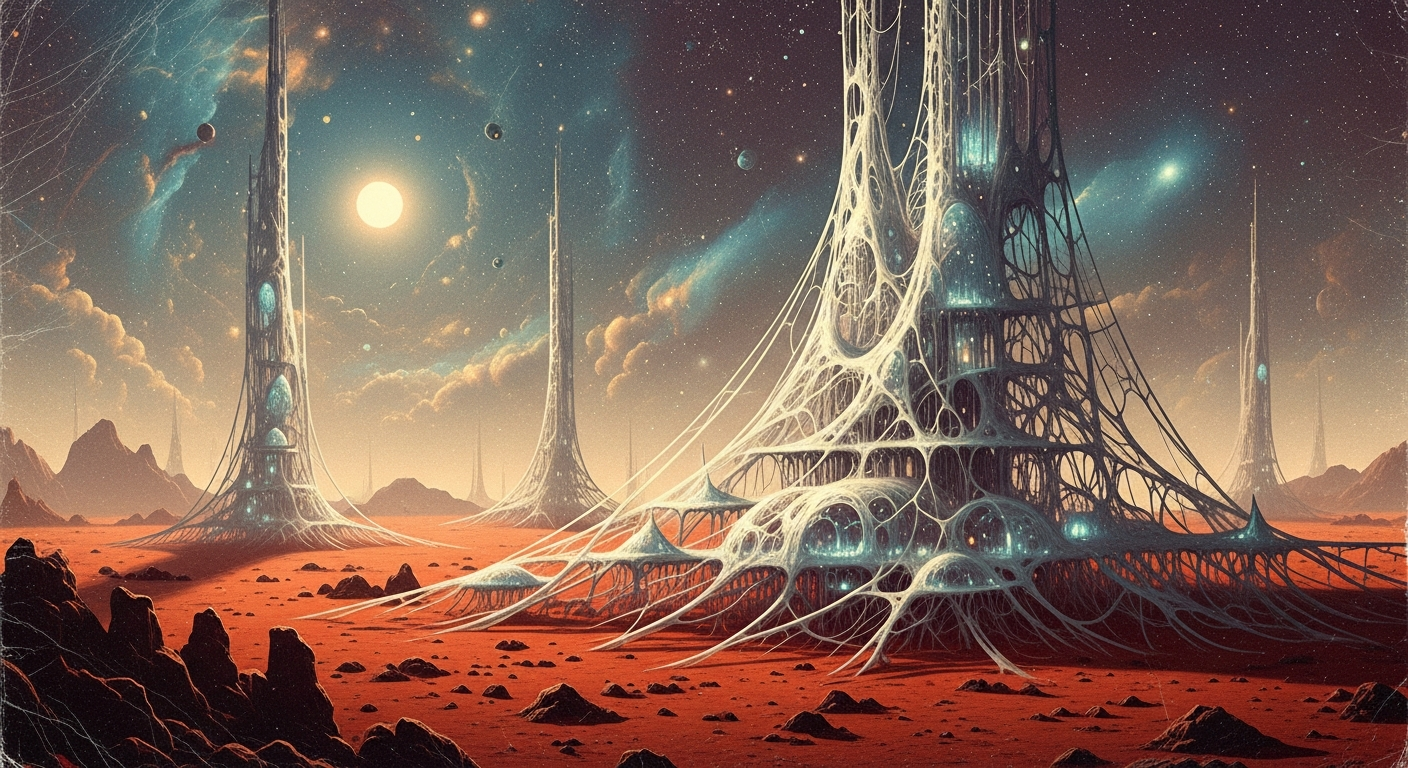
Imagine you are an astronaut who just landed on Mars. You step out of your spaceship, look around at the dusty, red landscape, and get ready to go inside your new home. But what is your Martian house made of? It isn’t made of heavy bricks, steel, or wood. Instead, it might be made of something much more amazing: spider webs!

When we think of building houses on Mars, we face a giant problem. Sending heavy building materials into space costs millions of dollars. To solve this, scientists are creating a new field called Space Architecture, which mixes space exploration with biology. By looking at how nature builds things on Earth, scientists have discovered that spider silk could be the ultimate building material for our future homes on the Red Planet. Let’s dive into the amazing science of how tiny bugs might help us conquer space!

Detailed Scientific Explanation: How Biology Meets Space Architecture

The Superpower of Spider Silk

You might think of spider webs as those annoying, sticky threads you accidentally walk into in your backyard. But to a scientist, spider silk is a superpower material. It has an incredible property called tensile strength. This means you can pull and stretch it really hard before it breaks. In fact, spider silk is stronger than steel of the same weight, but it is as flexible as a rubber band! It is also incredibly lightweight. If you had a strand of spider silk long enough to wrap completely around the Earth, it would weigh less than a bar of soap. This combination of being super strong and super light makes it the perfect material for space architecture.

The Heavy Problem with Space Travel

Why can’t we just bring normal houses to Mars? The answer is gravity. To shoot a rocket into space, it has to be as light as possible. Every single pound you put on a rocket requires tons of expensive rocket fuel to lift it. If we tried to send concrete and steel beams to Mars, it would be too heavy and too expensive. Space scientists need materials that are light enough to carry, but strong enough to protect astronauts from harsh Martian winds, freezing cold temperatures, and dangerous space radiation.

Microbes: Our Tiny Astronaut Builders

Now, you might be wondering: “Are we going to send millions of giant spiders to Mars to spin webs for us?” Definitely not! Spiders are hard to keep in space, and they tend to eat each other when they get crowded. Instead, scientists use a brilliant science called synthetic biology.

Scientists have taken the special “recipe” (or DNA) that spiders use to make silk and put it inside tiny microscopic organisms, like yeast or bacteria. Think of it like giving a tiny, living factory a new instruction manual. We can send a small test tube of these special microbes to Mars. Once they arrive, astronauts can feed them simple food—like sugar or even chemicals made from the Martian air—and these tiny bacteria will “brew” spider silk proteins, almost like how a baker uses yeast to bake bread!

Constructing the Martian Web

Once the tiny microbes produce the spider silk proteins, how do we turn it into a house? Astronauts can use huge 3D printers to spin the proteins into thick, strong ropes or weave them into huge, durable fabrics. These fabrics can be used to make inflatable, tent-like dome houses.

To make the houses even stronger, the spider silk can be mixed with Martian regolith (the red dirt and rocks found all over Mars). By mixing spider silk with Mars dirt, we can create a super-strong, lightweight biological concrete. This means astronauts can literally grow their building materials right there on Mars, creating safe, warm, and unbreakable habitats.

Conclusion: Nature’s Blueprint for the Stars

Building a home on another planet is one of the biggest challenges humans have ever faced. But the answer to our space architecture problems isn’t just about building bigger rockets or stronger machines; sometimes, the best technology has already been invented by nature.

By blending biology and space science, we can use the secrets of the humble spider web to design the future of Mars colonization. Spider silk produced by tiny microbes is strong, lightweight, and can be grown anywhere. As we look up at the stars and dream of living on Mars, it is truly amazing to think that the blueprint for our space houses is crawling right here on Earth. Nature is the ultimate engineer, and it is helping us build the future, one tiny thread at a time.


Reader Comments

  1. Armando2091 より:
タイトルとURLをコピーしました