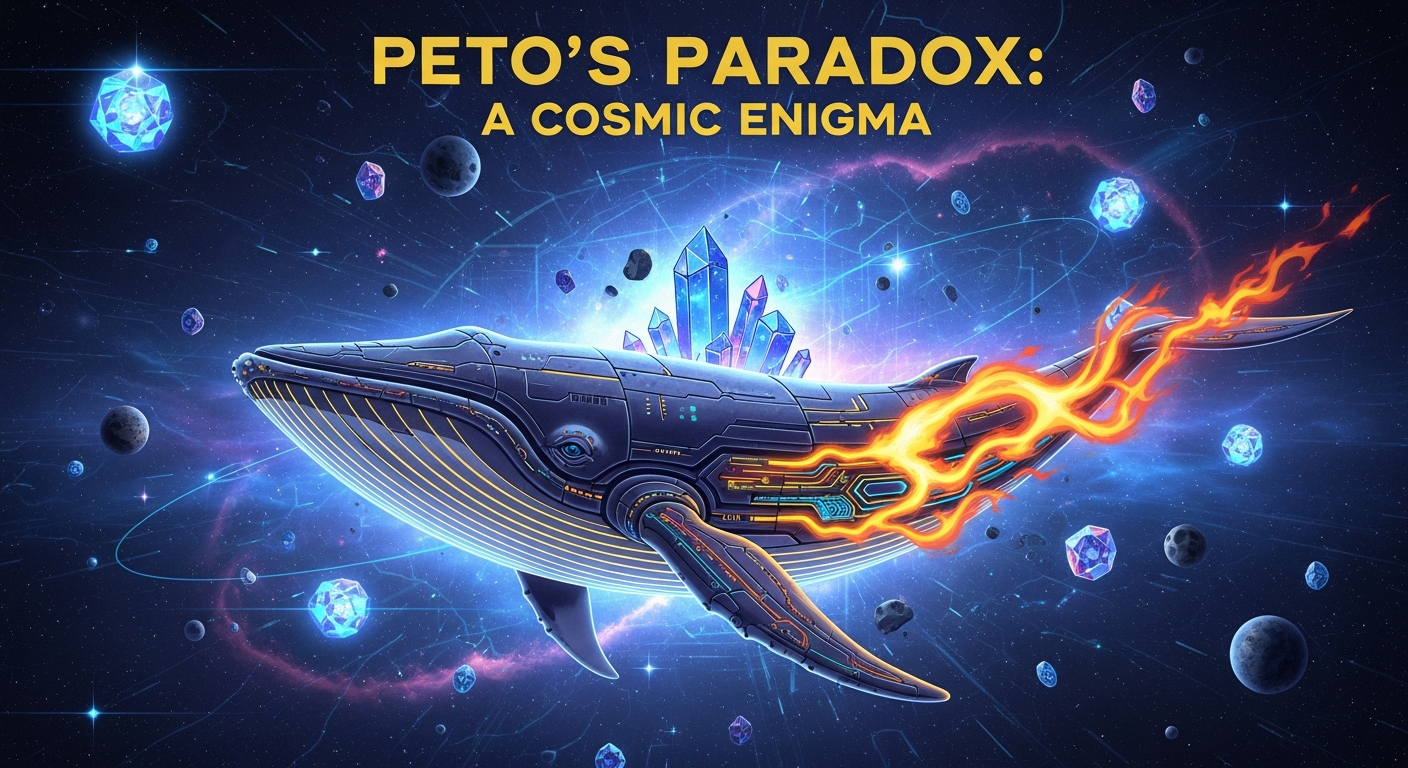
Why Do Whales Rarely Get Cancer? Unraveling the Biological Mystery of Peto’s Paradox

Why Do Whales Rarely Get Cancer? Unraveling the Biological Mystery of Peto's Paradox Introduction: The Enigma of Size, Lifespan, and Cancer Cancer is fundamentally a disease of cellular mutation. Every time a cell divides, there is a minuscule chance that a spontaneous error in DNA replication will occur. Statistically, it stands to reason that organisms with more cells, and those that live longer, should have a proportionately higher risk of accumulating the genetic mutations that lead to cancer. Yet, when we look at the giants of the animal kingdom—specifically whales—this mathematical logic collapses. This perplexing biological phenomenon is known as Peto's Paradox. First articulated by English epidemiologist Richard Peto in the 1970s, Peto's Paradox highlights the absence of a correlation between body size, lifespan, and cancer incidence across different species. A blue whale, which can weigh up to 150 tons and possesses roughly a thousand times more cells than a human, should theoretically develop cancer continuously. However, whales rarely get cancer, and many species live incredibly long, healthy lives. As an expert science writer, I invite you to dive deep into the genomic architecture of cetaceans to uncover how evolution has engineered one of nature's most effective cancer-suppression systems. Detailed Scientific Explanation: The Evolutionary Toolkit of Cetaceans The Core Mechanics of Peto's Paradox To understand why whales defy the odds, we must first look at how cancer initiates. A human body consists of approximately 37 trillion cells. Over a lifespan of 80 years, these cells undergo trillions of divisions. If we were to scale human cancer rates up to the size of a whale, these massive marine mammals would not survive past their juvenile years. Yet, evolutionary biology has provided large animals with robust compensatory mechanisms. Unlike mice, which have a high cellular turnover and short lifespans, large mammals have faced intense evolutionary pressure to suppress oncogenesis (the formation of cancer) in order to reach reproductive age and sustain large body masses. Genomic Guardians: Tumor Suppressor Genes in Whales The secret to the whale's extraordinary cancer resistance lies hidden within its DNA. Recent advances in comparative genomics have allowed scientists to sequence and analyze the genomes of various cetacean species. The findings reveal a fascinating evolutionary strategy: a dramatic enhancement of tumor suppressor genes (TSGs). While another famous cancer-resistant giant, the elephant, relies on multiplying a specific tumor suppressor gene called TP53 (the "guardian of the genome"), whales have taken a different evolutionary route. Cetacean genomes exhibit positive selection and gene duplication across a wide array of genes responsible for DNA repair, cell cycle regulation, and apoptosis (programmed cell death). Key findings include: Enhanced DNA Repair Mechanisms: Whales possess evolved variants of genes that are highly efficient at detecting and fixing double-strand breaks and other DNA damages before they can become permanent oncogenic mutations. Rapid Apoptotic Responses: When a whale's cell detects irreparable DNA damage, it undergoes apoptosis much more readily than a human cell. By swiftly eliminating precancerous cells, whales stop tumors before they even begin. Positive Selection in Immune System Genes: Genes like CXCR2, which play a critical role in immune surveillance and the regulation of tumor microenvironments, have been positively selected in the cetacean lineage, allowing their immune systems to actively hunt down malfunctioning cells. The Bowhead Whale: A Masterclass in Longevity When discussing Peto's Paradox, the bowhead whale (Balaena mysticetus) is a subject of intense scientific interest. Known to live for over 200 years, it is one of the longest-living mammals on Earth. Genomic sequencing of the bowhead whale has revealed unique mutations in genes linked to aging and cancer, most notably ERCC1 and PCNA. These genes are heavily involved in DNA excision repair and cell growth. The bowhead's specific genetic adaptations allow it to maintain genomic stability over two centuries of life in the harsh Arctic environment. Their cells do not accumulate the senescent (aging) damage that human cells do, effectively uncoupling the aging process from cancer development. Metabolic Rates and Cellular Microenvironments Beyond genetics, the physiology of whales also contributes to their cancer resistance. Whales possess significantly lower metabolic rates compared to smaller mammals. A lower metabolic rate translates to a reduction in the production of reactive oxygen species (ROS)—unstable molecules that cause oxidative stress and DNA damage. Furthermore, the cellular microenvironment in whales may be intrinsically hostile to tumor vascularization (angiogenesis), making it incredibly difficult for a nascent tumor to secure the blood supply it needs to grow in such a massive organism. Conclusion: What Human Medicine Can Learn from Whales The resolution of Peto's Paradox is not merely a piece of biological trivia; it is a gateway to the future of human oncology. Whales have spent over 50 million years perfecting a multi-layered defense mechanism against cancer. By unraveling the genetic and molecular secrets of how whales rarely get cancer, scientists are uncovering new paradigms for cancer prevention and treatment in humans. The field of evolutionary medicine and biomimicry holds immense promise. If researchers can develop therapeutics that mimic the enhanced DNA repair pathways or the hyper-vigilant apoptotic responses found in cetaceans, we could theoretically enhance the human body's natural tumor-suppression capabilities. Ultimately, the gentle giants of the ocean not only remind us of the boundless ingenuity of evolution, but they may also hold the blueprint for humanity's victory over cancer. 一般

Why Do Whales Rarely Get Cancer? Unraveling the Biological Mystery of Peto’s Paradox

Introduction: The Enigma of Size, Lifespan, and Cancer

Cancer is fundamentally a disease of cellular mutation. Every time a cell divides, there is a minuscule chance that a spontaneous error in DNA replication will occur. Statistically, it stands to reason that organisms with more cells, and those that live longer, should have a proportionately higher risk of accumulating the genetic mutations that lead to cancer. Yet, when we look at the giants of the animal kingdom—specifically whales—this mathematical logic collapses. This perplexing biological phenomenon is known as Peto’s Paradox.

First articulated by English epidemiologist Richard Peto in the 1970s, Peto’s Paradox highlights the absence of a correlation between body size, lifespan, and cancer incidence across different species. A blue whale, which can weigh up to 150 tons and possesses roughly a thousand times more cells than a human, should theoretically develop cancer continuously. However, whales rarely get cancer, and many species live incredibly long, healthy lives. As an expert science writer, I invite you to dive deep into the genomic architecture of cetaceans to uncover how evolution has engineered one of nature’s most effective cancer-suppression systems.

Detailed Scientific Explanation: The Evolutionary Toolkit of Cetaceans

The Core Mechanics of Peto’s Paradox

To understand why whales defy the odds, we must first look at how cancer initiates. A human body consists of approximately 37 trillion cells. Over a lifespan of 80 years, these cells undergo trillions of divisions. If we were to scale human cancer rates up to the size of a whale, these massive marine mammals would not survive past their juvenile years. Yet, evolutionary biology has provided large animals with robust compensatory mechanisms. Unlike mice, which have a high cellular turnover and short lifespans, large mammals have faced intense evolutionary pressure to suppress oncogenesis (the formation of cancer) in order to reach reproductive age and sustain large body masses.

Genomic Guardians: Tumor Suppressor Genes in Whales

The secret to the whale’s extraordinary cancer resistance lies hidden within its DNA. Recent advances in comparative genomics have allowed scientists to sequence and analyze the genomes of various cetacean species. The findings reveal a fascinating evolutionary strategy: a dramatic enhancement of tumor suppressor genes (TSGs).

While another famous cancer-resistant giant, the elephant, relies on multiplying a specific tumor suppressor gene called TP53 (the “guardian of the genome”), whales have taken a different evolutionary route. Cetacean genomes exhibit positive selection and gene duplication across a wide array of genes responsible for DNA repair, cell cycle regulation, and apoptosis (programmed cell death). Key findings include:

  • Enhanced DNA Repair Mechanisms: Whales possess evolved variants of genes that are highly efficient at detecting and fixing double-strand breaks and other DNA damages before they can become permanent oncogenic mutations.
  • Rapid Apoptotic Responses: When a whale’s cell detects irreparable DNA damage, it undergoes apoptosis much more readily than a human cell. By swiftly eliminating precancerous cells, whales stop tumors before they even begin.
  • Positive Selection in Immune System Genes: Genes like CXCR2, which play a critical role in immune surveillance and the regulation of tumor microenvironments, have been positively selected in the cetacean lineage, allowing their immune systems to actively hunt down malfunctioning cells.

The Bowhead Whale: A Masterclass in Longevity

When discussing Peto’s Paradox, the bowhead whale (Balaena mysticetus) is a subject of intense scientific interest. Known to live for over 200 years, it is one of the longest-living mammals on Earth. Genomic sequencing of the bowhead whale has revealed unique mutations in genes linked to aging and cancer, most notably ERCC1 and PCNA.

These genes are heavily involved in DNA excision repair and cell growth. The bowhead’s specific genetic adaptations allow it to maintain genomic stability over two centuries of life in the harsh Arctic environment. Their cells do not accumulate the senescent (aging) damage that human cells do, effectively uncoupling the aging process from cancer development.

Metabolic Rates and Cellular Microenvironments

Beyond genetics, the physiology of whales also contributes to their cancer resistance. Whales possess significantly lower metabolic rates compared to smaller mammals. A lower metabolic rate translates to a reduction in the production of reactive oxygen species (ROS)—unstable molecules that cause oxidative stress and DNA damage. Furthermore, the cellular microenvironment in whales may be intrinsically hostile to tumor vascularization (angiogenesis), making it incredibly difficult for a nascent tumor to secure the blood supply it needs to grow in such a massive organism.

Conclusion: What Human Medicine Can Learn from Whales

The resolution of Peto’s Paradox is not merely a piece of biological trivia; it is a gateway to the future of human oncology. Whales have spent over 50 million years perfecting a multi-layered defense mechanism against cancer. By unraveling the genetic and molecular secrets of how whales rarely get cancer, scientists are uncovering new paradigms for cancer prevention and treatment in humans.

The field of evolutionary medicine and biomimicry holds immense promise. If researchers can develop therapeutics that mimic the enhanced DNA repair pathways or the hyper-vigilant apoptotic responses found in cetaceans, we could theoretically enhance the human body’s natural tumor-suppression capabilities. Ultimately, the gentle giants of the ocean not only remind us of the boundless ingenuity of evolution, but they may also hold the blueprint for humanity’s victory over cancer.

Reader Comments

タイトルとURLをコピーしました