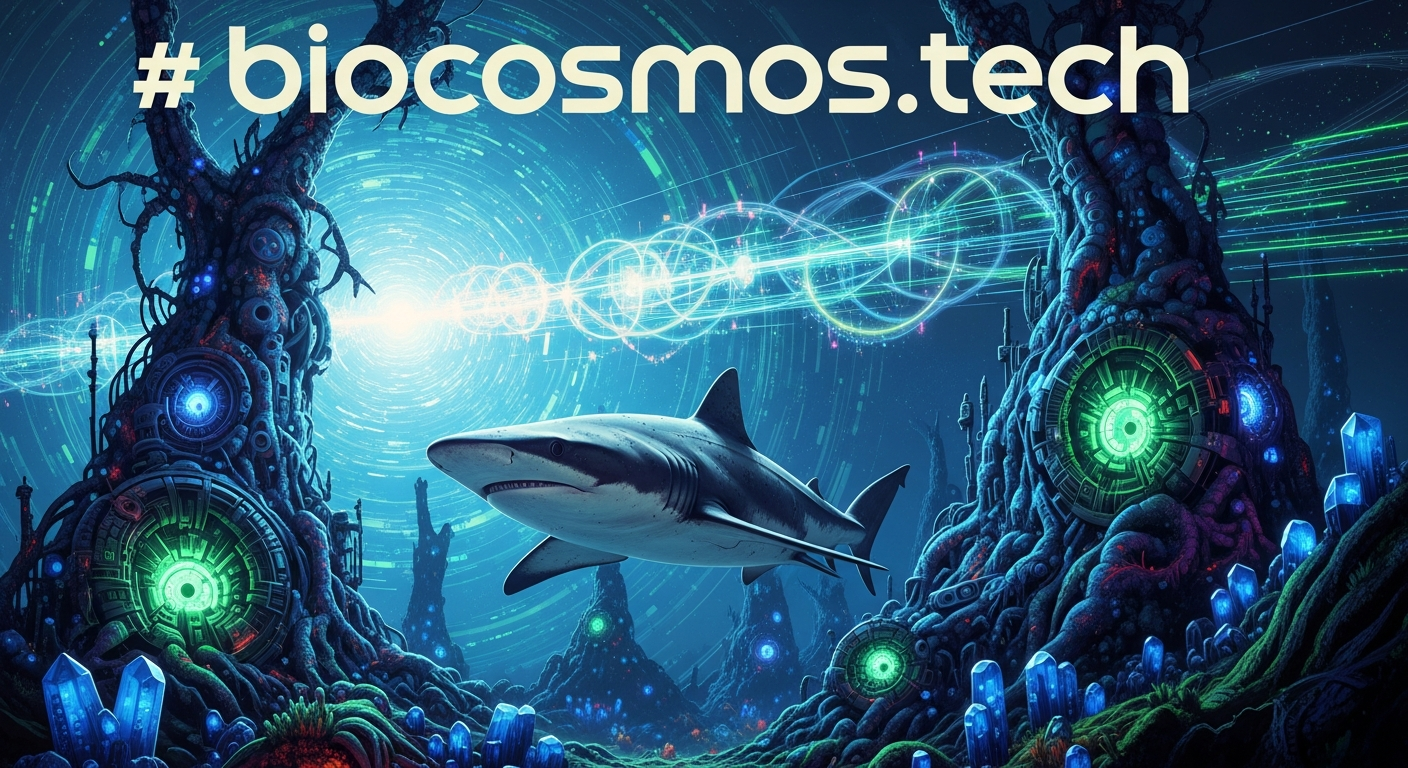
How the Greenland Shark Survives for 500 Years: Unlocking the Mystery of Extreme Longevity
Introduction: The Ancient Mariners of the Deep
Imagine a living creature that was swimming in the freezing depths of the ocean before William Shakespeare wrote his first play, before the Mayflower set sail, and before the invention of the telescope. Deep beneath the ice-covered waters of the North Atlantic and Arctic Oceans lives such a creature: the Greenland shark (Somniosus microcephalus). Known as the longest-living vertebrate on Earth, this enigmatic apex predator boasts an astonishing lifespan that can reach up to 500 years.
For centuries, the extreme longevity of the Greenland shark remained a hidden secret of the abyss. It wasn’t until recent advancements in molecular biology and radiocarbon dating that scientists finally began to unravel the physiological and genetic mysteries behind this animal’s extraordinary lifespan. As researchers delve deeper into the biology of the Greenland shark, they are not only uncovering how this species defies the traditional rules of aging, but they are also discovering insights that could revolutionize our understanding of human longevity and age-related diseases.
Decoding the Mystery: The Science of Extreme Longevity
1. The Eye Lens Clock: Radiocarbon Dating the Longest-Living Vertebrate
Unlike bony fish, sharks lack otoliths (ear bones) that display annual growth rings, making age determination incredibly difficult. To solve this, a groundbreaking 2016 study utilized a unique method: radiocarbon dating of the eye lens nucleus. The proteins in the center of the Greenland shark’s eye are formed before birth and remain metabolically inert throughout the animal’s life.
By measuring the levels of Carbon-14—specifically looking for the “bomb pulse” created by atmospheric nuclear weapons testing in the mid-20th century—researchers could accurately anchor the ages of several specimens. The data revealed that the largest females, measuring over 5 meters (16 feet) in length, were estimated to be around 392 years old, with an upper margin of error reaching 512 years. Furthermore, the study concluded that females do not even reach sexual maturity until they are roughly 150 years old, highlighting an incredibly stretched developmental timeline.
2. The “Live Slow, Die Old” Strategy: Extreme Metabolic Efficiency
One of the primary drivers of the Greenland shark’s extreme longevity is its habitat. Living at depths of up to 2,200 meters (7,200 feet) where water temperatures hover between -1°C and 10°C (30°F to 50°F), the shark exhibits a profoundly slow metabolic rate. In biological terms, this is often referred to as the “rate of living” theory.
The cold environment drastically slows down enzymatic and cellular chemical reactions. A Greenland shark’s cruising speed is a sluggish 0.3 meters per second (about 0.7 mph), and its heart is estimated to beat only once every 10 to 12 seconds. Because their metabolism is operating at a fraction of the speed of warm-blooded animals, they generate significantly lower levels of Reactive Oxygen Species (ROS). ROS are unstable molecules that damage DNA, proteins, and cell membranes over time, driving the cellular aging process. By naturally minimizing oxidative stress, the Greenland shark preserves its cellular integrity for centuries.
3. Genomic Stability and Exceptional DNA Repair
While a cold environment and slow metabolism are crucial, they are not enough to guarantee a 500-year lifespan. Extreme longevity requires a remarkably resilient genome. Recent sequencing of the Greenland shark’s massive genome (which is roughly 6.5 billion base pairs long, twice the size of the human genome) has revealed highly specialized adaptations.
Scientists have identified an expanded array of genes dedicated to DNA repair and tumor suppression. Over a lifespan of five centuries, genetic mutations are inevitable. However, the Greenland shark possesses highly efficient molecular machinery that constantly monitors and repairs DNA double-strand breaks and transcription errors. Furthermore, specialized tumor suppressor genes, similar to the mammalian p53 gene but uniquely adapted, prevent the uncontrolled cellular division that leads to cancer. This exceptional genomic stability ensures that the shark’s tissues remain highly functional across multiple centuries.
4. Chemical Armor: Trimethylamine N-oxide (TMAO) and Protein Folding
To survive in sub-zero waters without freezing or suffering from high hydrostatic pressure, the Greenland shark’s tissues are saturated with Trimethylamine N-oxide (TMAO) and urea. While urea prevents ice crystals from forming in the blood, TMAO plays an even more vital role in longevity: protein stabilization.
As animals age, proteins tend to misfold, clump together, and lose their function—a process that causes neurodegenerative diseases in humans, such as Alzheimer’s. The high concentration of TMAO in the Greenland shark acts as a chemical chaperone. It binds to water molecules and forces proteins to maintain their correct three-dimensional structures, even under extreme pressure and cold. This continuous molecular stabilization prevents the accumulation of toxic protein aggregates, keeping the shark’s muscles and organs functioning perfectly for hundreds of years.
Conclusion: What the Greenland Shark Teaches Us About the Future
The Greenland shark is far more than a biological anomaly; it is a masterclass in survival and resilience. By combining a slow metabolic rate driven by freezing Arctic waters, uniquely adapted DNA repair mechanisms, and chemical chaperones that prevent protein degradation, Somniosus microcephalus has successfully unlocked the mystery of extreme longevity.
For the scientific community, studying these ancient mariners offers invaluable insights. The biological pathways that allow the Greenland shark to avoid cancer, prevent DNA damage, and maintain cardiovascular health for up to 500 years hold immense potential for the future of human medicine. As gerontologists and geneticists map the precise mechanisms of this shark’s longevity, we may one day develop novel therapies to delay human aging and eradicate age-related diseases.
However, this extraordinary lifespan also comes with extreme vulnerability. Because they do not reproduce until they are 150 years old, Greenland shark populations are highly susceptible to overfishing, bycatch, and the rapidly changing climate of the Arctic oceans. Unlocking the secrets of the longest-living vertebrate is a race against time, reminding us of the urgent need to conserve the deep-ocean ecosystems where these magnificent, centuries-old creatures silently roam.

Reader Comments