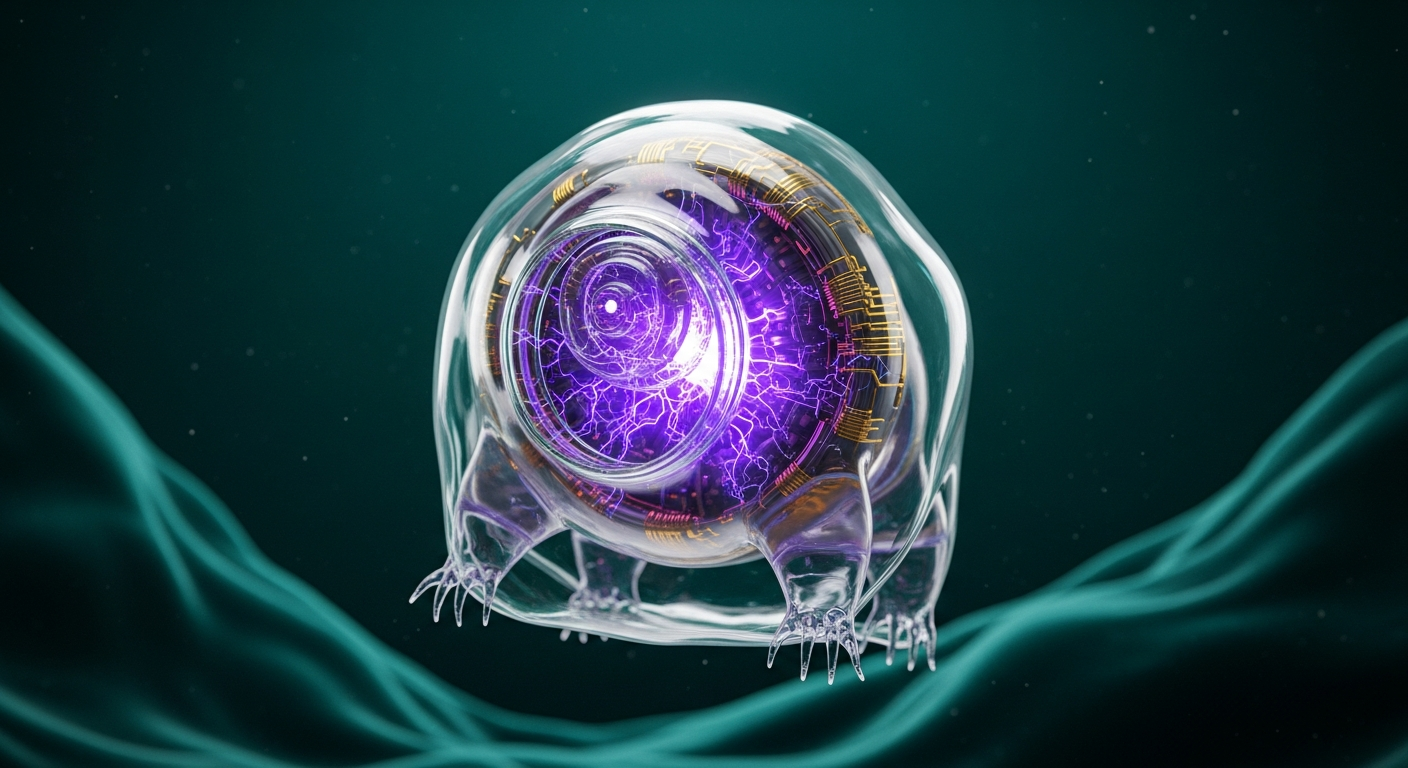
The Tardigrade Enigma: Unlocking the Biological Mysteries of Space Survival
Introduction: The Microscopic Astronauts
When we look to the stars and ponder the resilience of life in the cosmos, the ultimate survivors are not hulking beasts, but microscopic, eight-legged invertebrates known as tardigrades. Affectionately referred to as “water bears” or “moss piglets,” these ubiquitous creatures measure merely half a millimeter in length. Yet, they possess a biological repertoire so astonishing that it defies our conventional understanding of life’s limits. The profound question—how an Earth-bound organism evolved to withstand the unforgiving vacuum, extreme temperatures, and lethal radiation of outer space—has birthed what scientists call the Tardigrade Enigma.
From the deepest oceanic trenches to the frigid peaks of the Himalayas, tardigrades have colonized almost every environment on Earth. However, it is their capacity for space survival that has captivated the fields of astrobiology, genetics, and bioengineering. By unlocking the biological mysteries of tardigrades, researchers are not only rethinking the boundaries of habitable environments but also discovering revolutionary applications for human medicine, spaceflight, and biotechnology.
The Science of Survival: How Tardigrades Defy Death
The secret to the tardigrade’s indestructibility lies not in a robust physical armor, but in a highly sophisticated biochemical defense mechanism. When confronted with lethal environmental stressors, tardigrades do not fight; they pause. This physiological suspension is governed by several extraordinary biological phenomena.
Cryptobiosis: Entering the “Tun” State
At the core of the tardigrade enigma is a state of suspended animation called cryptobiosis. Depending on the threat, this can take the form of cryobiosis (freezing), osmobiosis (high salinity), anoxybiosis (lack of oxygen), or most famously, anhydrobiosis (extreme desiccation).
When a tardigrade’s environment dries up, it retracts its head and legs, curling into a dehydrated, seed-like ball known as a tun. In this state, the creature expels up to 95% of its body water, and its metabolic rate plummets to less than 0.01% of normal. Because most cellular damage caused by freezing or radiation is mediated by water molecules—which form sharp ice crystals or generate destructive reactive oxygen species (ROS) when irradiated—the removal of water essentially removes the medium of death. The tardigrade can remain in this dormant tun state for decades, only to revive within minutes upon rehydration.
Intrinsically Disordered Proteins (TDPs): The Cellular Glass
For decades, scientists believed tardigrades survived desiccation using trehalose, a sugar utilized by other drought-resistant organisms like brine shrimp. However, modern molecular biology revealed a more fascinating truth: tardigrades rely on Tardigrade-specific Intrinsically Disordered Proteins (TDPs).
Unlike standard proteins, which have rigid 3D structures, TDPs are floppy and shape-shifting. As the tardigrade loses water, these proteins undergo a phase transition, turning the interior of the cells into a glass-like state (vitrification). This bio-glass physically physically encases and protects sensitive molecules, preventing cellular membranes from collapsing and stopping proteins from unfolding or clumping together. Once water is reintroduced, the glass simply melts away, leaving the cellular machinery perfectly intact.
Dsup: The Ultimate Radiation Shield
Perhaps the most baffling aspect of tardigrade space survival is their resistance to intense ionizing radiation. In 2016, researchers sequencing the genome of the highly resilient Ramazzottius varieornatus species discovered a unique protein dubbed Dsup (Damage Suppressor).
In the high-radiation environment of space, cosmic rays shatter DNA, leading to fatal mutations. The Dsup protein physically binds to the tardigrade’s nucleosomes, enveloping the DNA strand in a protective molecular cloud. This shielding prevents X-rays and gamma rays from cleaving the genetic code and neutralizes highly reactive oxygen species. Remarkably, when scientists engineered human cells in a petri dish to express the Dsup protein, those cells exhibited nearly a 50% increase in radiation tolerance—a discovery with monumental implications for cancer therapies and long-duration human spaceflight.
Space Missions and Astrobiological Implications
The tardigrade’s hypothetical resilience became an empirical fact in September 2007, during the European Space Agency’s TARDIS (Tardigrades in Space) mission. Aboard the FOTON-M3 spacecraft, desiccated tardigrades were exposed directly to the hard vacuum of low Earth orbit and the blistering bombardment of solar ultraviolet (UV) and cosmic radiation for ten days.
Upon returning to Earth and being rehydrated, a significant percentage of the tardigrades not only revived but went on to reproduce, yielding healthy offspring. This marked the first time a multicellular animal survived exposure to the naked environment of space.
Panspermia and the Search for Extraterrestrial Life
The water bear’s ability to survive the void forces scientists to seriously consider the theory of panspermia—the hypothesis that life can be distributed throughout the universe via meteoroids, asteroids, or planetoids. If an Earth-evolved organism can survive the extreme desiccation, freezing temperatures, and heavy radiation of space, it is plausible that microbial or micro-animal life could survive interplanetary, or even interstellar, transit. Tardigrades stretch the parameters of the “habitable zone,” suggesting that life might persist in the subsurface oceans of Enceladus or the harsh plains of Mars.
Conclusion: What Water Bears Teach Us About the Future
ザ Tardigrade Enigma is far more than a biological curiosity; it is a key to unlocking humanity’s future in an unpredictable universe. The biological mysteries of space survival demonstrated by these microscopic titans are already inspiring real-world innovations.
By mimicking tardigrade vitrification, pharmaceutical companies are researching ways to dry-store vaccines, blood, and stem cells without the need for complex refrigeration supply chains—a breakthrough that could save millions of lives in developing nations. In agriculture, transferring tardigrade resilience genes to crops could yield drought-resistant plants capable of surviving severe climate change. Meanwhile, proteins like Dsup may one day shield astronauts from the deadly cosmic rays encountered on journeys to Mars.
Ultimately, the water bear is a testament to the tenacity of life. By continuing to study how these humble creatures conquer the extremes of outer space, we are learning how to better preserve and protect life right here on Earth.


Reader Comments