Do Trees Have Wi-Fi? The Secret Underground Internet of Plants

Do Trees Have Wi-Fi? The Secret Underground Internet of Plants Introduction: The Forest's Hidden Network Imagine walking through a dense, quiet forest. The towering trees might look like silent, lonely giants standing far apart from one another. But what if I told you that beneath your feet, there is a busy, bustling network of communication happening right now? So, do trees have Wi-Fi? They don't have smartphones or electronic routers, but they do have something incredibly similar: the underground internet of plants. Scientists call this amazing system the "Wood Wide Web." Just like we use the internet to send text messages, share pictures, or help a friend with homework, trees use their secret underground network to talk to each other, share food, and even warn their neighbors about danger. Let us dig into the dirt and uncover the fascinating science behind how trees communicate! The Science: How the Underground Internet Works The "Cables" of the Forest: Meet Mycorrhizal Fungi To understand the Wood Wide Web, we have to look underground. The secret to this plant communication is a special type of living organism called mycorrhizal fungi (pronounced my-co-RYE-zal fun-guy). You might know fungi as mushrooms, but the mushroom is just the "fruit" of the fungus. The real magic happens out of sight. Underground, these fungi grow in massive webs of tiny, white, thread-like structures called mycelium. These threads are so thin that hundreds of them could fit on the head of a pin! The mycelium wraps around and even reaches inside the roots of the trees, linking one tree to another. These fungal threads act exactly like the invisible Wi-Fi signals or fiber-optic cables that connect our computers to the internet. A Perfect Trade: The Science of Symbiosis Why do trees and fungi link up in the first place? It is all about teamwork! In science, when two different species work together to help each other survive, it is called symbiosis. What the tree gives: Trees are excellent at making food. Using sunlight, they turn carbon dioxide and water into sweet sugars in a process called photosynthesis. However, fungi live underground in the dark, so they cannot make their own food. The trees share their extra sugar with the fungi. What the fungi give: Fungi are amazing at exploring the soil. Their tiny threads can reach water and essential minerals (like phosphorus and nitrogen) that the tree's thick roots cannot reach. The fungi absorb these nutrients and send them back to the tree. What Do Trees Text About? Now that the trees are plugged into the underground internet of plants, what kind of information are they sending? Scientists have discovered that trees use this network for three amazing reasons: 1. Sharing Food: If a tree is growing in the dark shade and cannot make enough sugar, a tree in the bright sunlight will actually send extra sugar through the fungal network to feed it! Trees are incredibly generous to their neighbors. 2. Sending Danger Alerts: If a tree is being attacked by hungry bugs, it will send chemical "warning texts" through the roots and fungi. When the neighboring trees receive this signal, they start producing bad-tasting chemicals in their leaves so the bugs won't eat them too. 3. Helping the Babies: The biggest, oldest trees in the forest are called "Hub Trees" or "Mother Trees." Because their roots stretch the farthest, they act like the main Wi-Fi routers of the forest. Mother trees use the fungal network to recognize their own seedlings (baby trees) and send them extra nutrients to help them grow big and strong. Conclusion: A Connected Community So, do trees have Wi-Fi? Yes, in their own natural, biological way! The discovery of mycorrhizal networks has completely changed how scientists view forests. We used to think that trees competed with each other for water and sunlight. Now we know that a forest is not just a group of individual trees; it is a giant, cooperative family. They support each other, feed each other, and protect each other through the Wood Wide Web. Understanding this secret plant communication teaches us an important lesson about nature. When we protect a forest, we are not just saving a bunch of wood and leaves. We are protecting an ancient, living, breathing community that is beautifully connected—from the tallest branch all the way down to the deepest, most delicate underground web. biological

Do Trees Have Wi-Fi? The Secret Underground Internet of Plants

Introduction: The Forest’s Hidden Network

Imagine walking through a dense, quiet forest. The towering trees might look like silent, lonely giants standing far apart from one another. But what if I told you that beneath your feet, there is a busy, bustling network of communication happening right now? So, do trees have Wi-Fi? They don’t have smartphones or electronic routers, but they do have something incredibly similar: the underground internet of plants.

Scientists call this amazing system the “Wood Wide Web.” Just like we use the internet to send text messages, share pictures, or help a friend with homework, trees use their secret underground network to talk to each other, share food, and even warn their neighbors about danger. Let us dig into the dirt and uncover the fascinating science behind how trees communicate!

The Science: How the Underground Internet Works

The “Cables” of the Forest: Meet Mycorrhizal Fungi

To understand the Wood Wide Web, we have to look underground. The secret to this plant communication is a special type of living organism called mycorrhizal fungi (pronounced my-co-RYE-zal fun-guy). You might know fungi as mushrooms, but the mushroom is just the “fruit” of the fungus. The real magic happens out of sight.

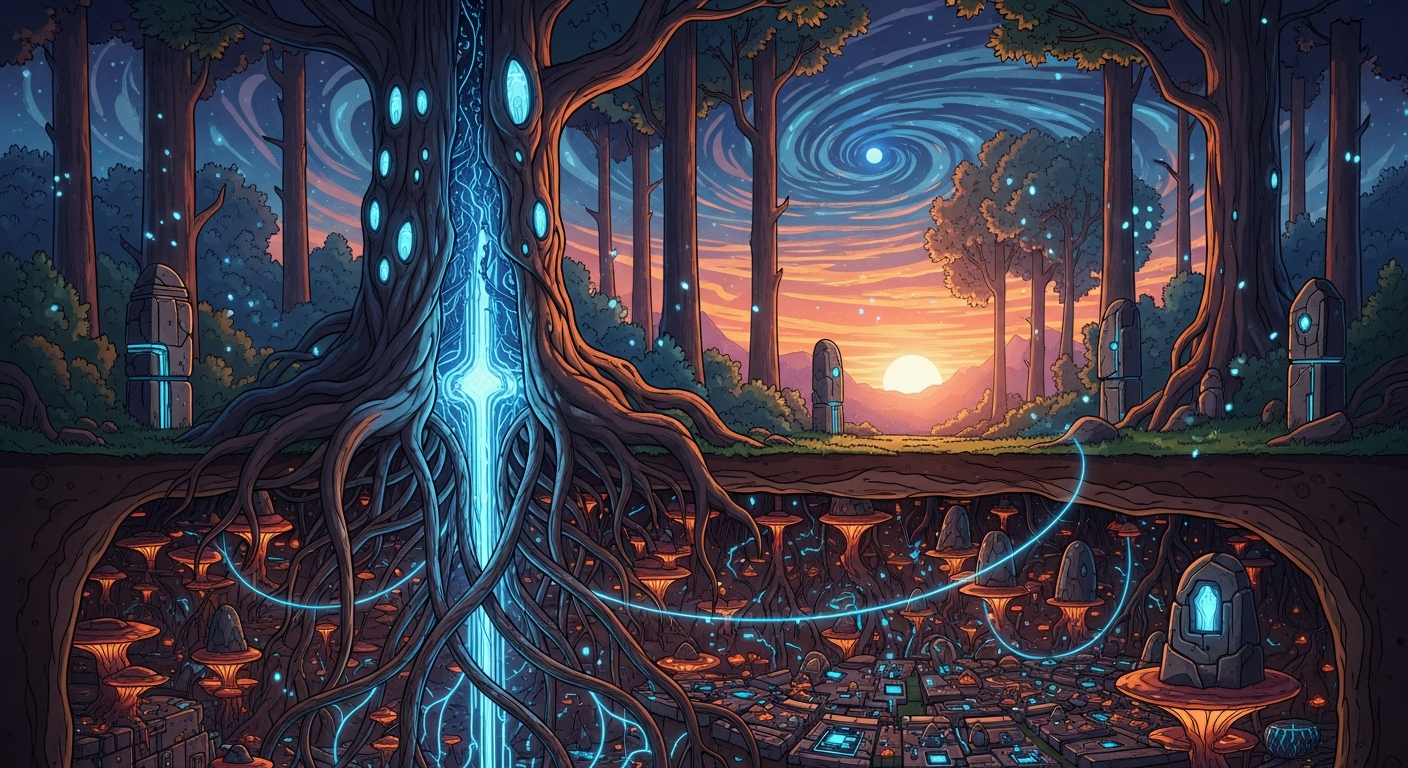
Underground, these fungi grow in massive webs of tiny, white, thread-like structures called mycelium. These threads are so thin that hundreds of them could fit on the head of a pin! The mycelium wraps around and even reaches inside the roots of the trees, linking one tree to another. These fungal threads act exactly like the invisible Wi-Fi signals or fiber-optic cables that connect our computers to the internet.

A Perfect Trade: The Science of Symbiosis

Why do trees and fungi link up in the first place? It is all about teamwork! In science, when two different species work together to help each other survive, it is called symbiosis.

  • What the tree gives: Trees are excellent at making food. Using sunlight, they turn carbon dioxide and water into sweet sugars in a process called photosynthesis. However, fungi live underground in the dark, so they cannot make their own food. The trees share their extra sugar with the fungi.
  • What the fungi give: Fungi are amazing at exploring the soil. Their tiny threads can reach water and essential minerals (like phosphorus and nitrogen) that the tree’s thick roots cannot reach. The fungi absorb these nutrients and send them back to the tree.

What Do Trees Text About?

Now that the trees are plugged into the underground internet of plants, what kind of information are they sending? Scientists have discovered that trees use this network for three amazing reasons:

1. Sharing Food: If a tree is growing in the dark shade and cannot make enough sugar, a tree in the bright sunlight will actually send extra sugar through the fungal network to feed it! Trees are incredibly generous to their neighbors.

2. Sending Danger Alerts: If a tree is being attacked by hungry bugs, it will send chemical “warning texts” through the roots and fungi. When the neighboring trees receive this signal, they start producing bad-tasting chemicals in their leaves so the bugs won’t eat them too.

3. Helping the Babies: The biggest, oldest trees in the forest are called “Hub Trees” or “Mother Trees.” Because their roots stretch the farthest, they act like the main Wi-Fi routers of the forest. Mother trees use the fungal network to recognize their own seedlings (baby trees) and send them extra nutrients to help them grow big and strong.

Conclusion: A Connected Community

So, do trees have Wi-Fi? Yes, in their own natural, biological way! The discovery of mycorrhizal networks has completely changed how scientists view forests. We used to think that trees competed with each other for water and sunlight. Now we know that a forest is not just a group of individual trees; it is a giant, cooperative family. They support each other, feed each other, and protect each other through the Wood Wide Web.

Understanding this secret plant communication teaches us an important lesson about nature. When we protect a forest, we are not just saving a bunch of wood and leaves. We are protecting an ancient, living, breathing community that is beautifully connected—from the tallest branch all the way down to the deepest, most delicate underground web.


Reader Comments

タイトルとURLをコピーしました