Can We Grow Pizza on Mars? The Amazing Biology of Space Farming
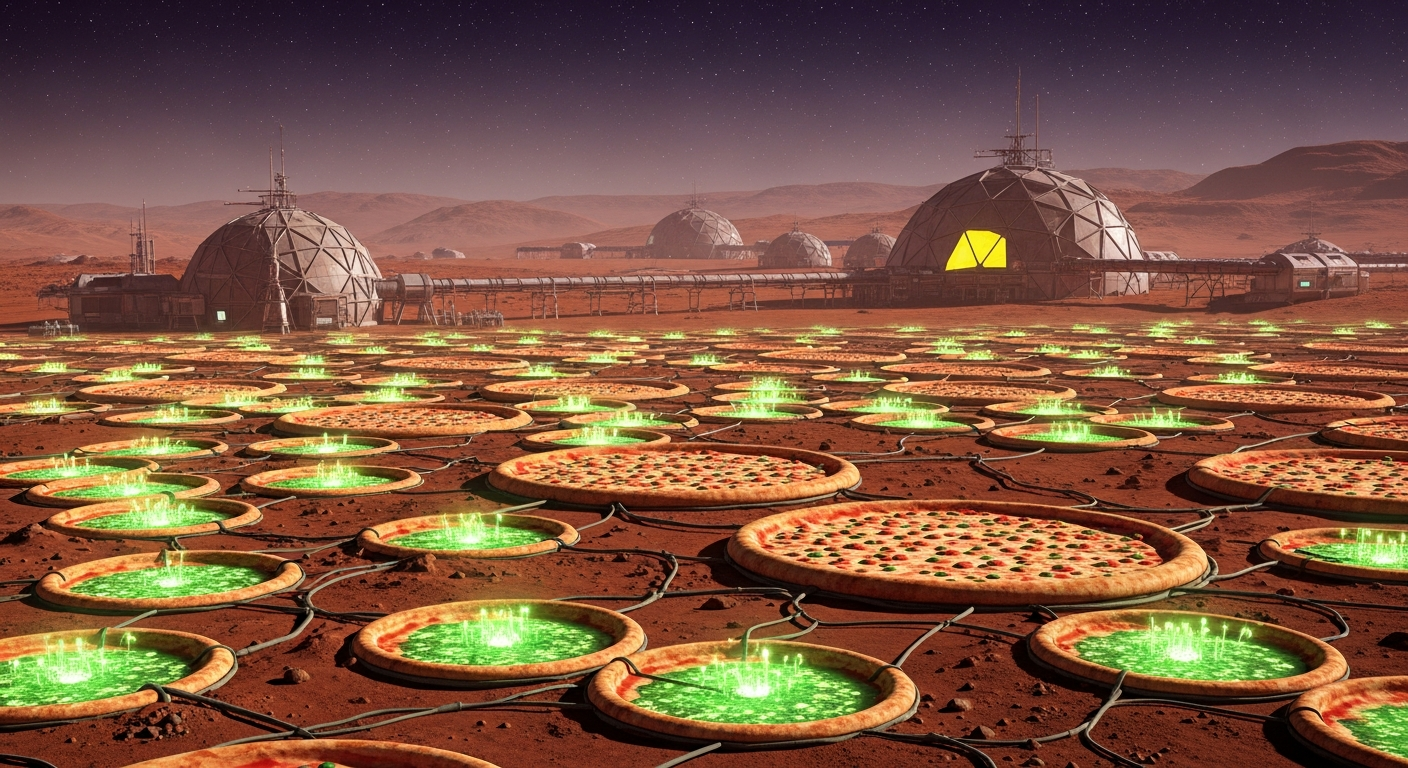
Imagine looking out your window at a freezing, dusty, red landscape, and then turning around to take a big, delicious bite of a hot, freshly baked pizza. Sounds like a scene from a science fiction movie, right? But as humans prepare to travel to Mars, scientists at NASA and around the world are working hard to make this dream a reality.
If we want astronauts to live on Mars for months or even years, they cannot just pack freeze-dried food in their suitcases. They will need fresh, nutritious food to stay healthy and happy. This brings us to a fascinating new field of science called astrobotany—the study of how plants grow in space. So, can we actually grow the ingredients for a pizza on another planet? Let’s dive into the amazing biology of space farming!
Deconstructing the Martian Pizza
To make a pizza, we need three main things: crust, sauce, and cheese. Let’s look at how we might farm these ingredients millions of miles away from Earth.
1. Wheat for the Crust
The crust is made of flour, which comes from wheat. Wheat is a sturdy crop that has been grown on Earth for thousands of years. In space, growing wheat takes up a lot of room, but scientists are breeding special “dwarf” varieties. These miniature wheat plants grow short and fast, producing lots of grain without taking up too much precious space inside a spaceship or a Martian habitat.
2. Tomatoes for the Sauce
Tomatoes are packed with vitamins that astronauts need to protect their bodies from space radiation. The good news? We are already growing them in space! Astronauts on the International Space Station (ISS) have successfully grown and eaten dwarf tomatoes. By using special red and blue LED lights instead of the sun, we can trick tomatoes into growing plump and juicy.
3. What About the Cheese?
Taking a herd of dairy cows to Mars on a rocket is nearly impossible. Cows need too much food, water, and oxygen. Instead, a Martian pizza will likely feature synthetic biology. Scientists can use special microscopic yeast or bacteria, feeding them plant sugars to produce real dairy proteins without the cow! Alternatively, astronauts might use nuts or soy grown in their greenhouses to make delicious plant-based cheese.
The Challenges of Extraterrestrial Agriculture
Growing a garden on Earth is as simple as planting a seed in the dirt, watering it, and letting the sun do the rest. On Mars, every single step is a massive scientific challenge.
The Problem with Martian Soil
Mars doesn’t have rich, dark dirt full of worms and dead leaves. It has regolith—crushed volcanic rock and dust. Worse, Martian regolith contains chemicals called perchlorates, which are toxic to humans.
The Solution: Before we can plant anything, we have to “wash” the toxic chemicals out of the regolith. Alternatively, Martian farmers might skip the soil entirely! Using a method called hydroponics, plants can be grown directly in nutrient-rich water. Another method, aeroponics, involves growing plants in the air and gently misting their dangling roots with water and vitamins.
Confused Roots and Low Gravity
On Earth, plant roots know to grow down into the soil, and stems know to grow up toward the sun. This superpower is called gravitropism. But Mars only has about one-third of Earth’s gravity, and the journey there features zero gravity (microgravity).
The Solution: Without gravity to guide them, plants get confused. To help them, scientists use light. Plants are incredibly smart—they will always reach for the light (a process called phototropism). By placing strong LED lights directly above the plants, astronauts can guide the stems up, while fans blow air to gently stress the plants, making their stems strong just like the wind does on Earth.
A Freezing, Thin Atmosphere
Mars is incredibly cold, and its atmosphere is very thin. It is mostly made of carbon dioxide (CO2). While humans breathe oxygen, plants actually “breathe” CO2.
The Solution: This creates a perfect partnership! Inside a pressurized, heated Martian greenhouse, astronauts will breathe out CO2, which the plants will use to grow. In return, the plants will release fresh oxygen for the astronauts to breathe. It is a beautiful, self-sustaining circle of life.
Conclusion: The Future of Space Farming
Growing a pizza on Mars is not just a fun idea; it is a vital step for the future of human space exploration. Space farming teaches us how to survive on extreme worlds, but it also teaches us how to be better farmers right here on Earth. The same water-saving hydroponic systems and energy-efficient LED lights invented for space are currently being used to grow food in big cities and deserts on our home planet.
While the first Martian settlers will certainly face tough challenges, the science of astrobotany proves that life always finds a way. With a little bit of science, a lot of human ingenuity, and some specialized technology, the first person to step foot on Mars might just celebrate their journey with a fresh, hot slice of homegrown space pizza. And who knows? The next great astronaut might just be a farmer!
This might be more than just growing food; it could be the first step toward enabling humanity to live on Mars. I want to find creative ways to make it possible to eat pizza on Mars.


Reader Comments