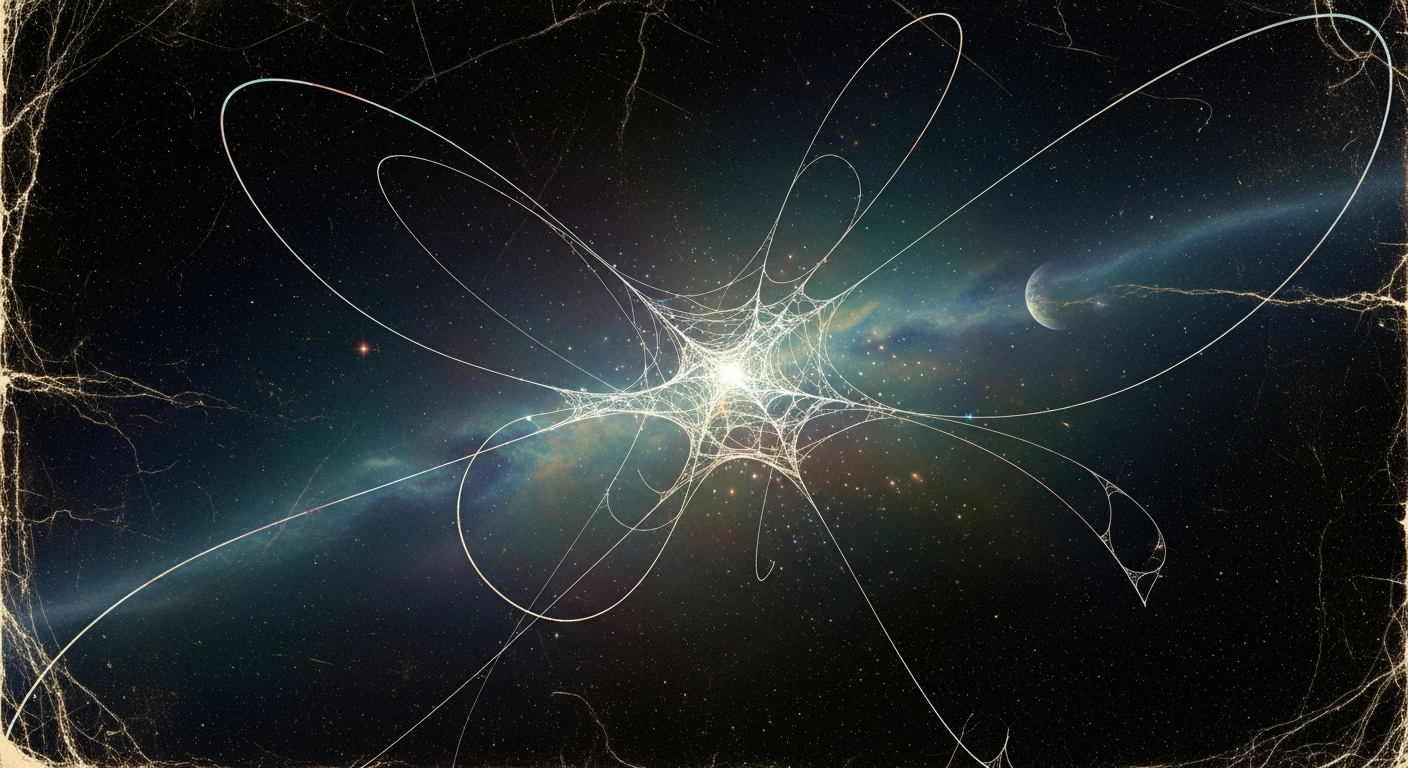
Space Architects: How Do Spiders Spin Webs in Zero Gravity?

Space Architects: How Do Spiders Spin Webs in Zero Gravity? Introduction: The Ultimate Challenge for Eight-Legged Astronauts Have you ever watched a spider build its web in your garden? It is a masterpiece of engineering. Spiders are nature's tiny architects, using a mix of super-strong silk and perfect geometry to catch their dinner. But have you ever wondered what would happen if you took a spider out of its garden and launched it into outer space? How do spiders spin webs in zero gravity? On Earth, spiders rely heavily on gravity to guide them. It tells them which way is "up" and which way is "down." When scientists sent spiders to the International Space Station (ISS) and earlier space stations like Skylab, they wanted to answer a fascinating question: Without gravity to guide them, would spiders get confused, or would they figure out a new way to build their silken traps? The answer surprised everyone and taught us an incredible lesson about how adaptable life can truly be. The Detailed Science: Unlocking the Secrets of Space Webs The Earth Strategy: Using Gravity as a Compass To understand how spiders build webs in space, we first need to look at how they do it on Earth. Most orb-weaver spiders (the ones that make the classic, wheel-shaped webs) build asymmetrical webs. This means the center of the web—called the "hub"—is not perfectly in the middle. Instead, the hub is placed slightly near the top. Why do they do this? It is a clever hunting trick! When a spider sits in its web waiting for a tasty fly, it sits facing downwards. Because of Earth's gravity, it is much faster for a spider to drop down to catch its prey than to climb up. Gravity acts as a built-in compass, telling the spider exactly where to build its hub and how to position its body. Journey to the Stars: The First Spider Astronauts The very first spider astronauts were two cross spiders named Arabella and Anita, who traveled to the Skylab space station in 1973. Scientists expected the spiders to spin messy, tangled webs because they had no gravity to help them drop their silk lines. However, within just a few days, Arabella and Anita adapted to the zero-g (microgravity) environment. They successfully built beautiful, fully functional webs! But the true scientific breakthrough came years later aboard the International Space Station (ISS). The ISS Experiments: A Tale of Two Orb-Weavers In 2008 and 2011, scientists sent golden silk orb-weaver spiders to the ISS. They set up special cameras taking pictures every five minutes to observe exactly how the spiders built their webs in microgravity. Without the pull of gravity, the spiders' webs changed completely. Perfect Symmetry: In total darkness, the spiders built webs that were perfectly symmetrical. The hub was exactly in the center. Because there was no "up" or "down" in space, the spiders didn't need to position the hub near the top! Random Resting Positions: On Earth, spiders almost always rest facing down. In the dark of space, the spiders rested facing in completely random directions. The Amazing Discovery: Light is the New Gravity! Here is where the science gets truly mind-blowing. The scientists noticed something weird. When the lamps inside the spider habitats were turned on, the webs suddenly went back to looking like Earth webs! The hub was moved off-center, and the spiders started resting facing away from the light. The spiders had activated a secret backup system. When gravity was removed, the spiders used light to figure out their orientation. They treated the artificial lamp like the sun, deciding that the direction of the light was "up." This means that spiders don't just rely on gravity to build their webs; they have a secondary system using light that they fall back on when things get confusing. It is like having a backup compass when your GPS stops working! Conclusion: What Space Spiders Teach Us About Life The incredible story of these space architects proves just how smart and adaptable nature can be. Even a creature as small as a spider has a built-in "Plan B" to survive and succeed in an environment it was never meant to experience. By observing how spiders spin webs in zero gravity, scientists learn more than just fun animal facts. These experiments help us understand biology, animal behavior, and how living organisms adapt to the extreme conditions of outer space. As humanity looks forward to long missions to Mars and beyond, understanding how life adapts to microgravity is more important than ever. The next time you see a spider spinning a web, remember: you are looking at a master architect capable of conquering the stars. biological

Space Architects: How Do Spiders Spin Webs in Zero Gravity?

Introduction: The Ultimate Challenge for Eight-Legged Astronauts

Have you ever watched a spider build its web in your garden? It is a masterpiece of engineering. Spiders are nature’s tiny architects, using a mix of super-strong silk and perfect geometry to catch their dinner. But have you ever wondered what would happen if you took a spider out of its garden and launched it into outer space? How do spiders spin webs in zero gravity?

On Earth, spiders rely heavily on gravity to guide them. It tells them which way is “up” and which way is “down.” When scientists sent spiders to the International Space Station (ISS) and earlier space stations like Skylab, they wanted to answer a fascinating question: Without gravity to guide them, would spiders get confused, or would they figure out a new way to build their silken traps? The answer surprised everyone and taught us an incredible lesson about how adaptable life can truly be.

The Detailed Science: Unlocking the Secrets of Space Webs

The Earth Strategy: Using Gravity as a Compass

To understand how spiders build webs in space, we first need to look at how they do it on Earth. Most orb-weaver spiders (the ones that make the classic, wheel-shaped webs) build asymmetrical webs. This means the center of the web—called the “hub”—is not perfectly in the middle. Instead, the hub is placed slightly near the top.

Why do they do this? It is a clever hunting trick! When a spider sits in its web waiting for a tasty fly, it sits facing downwards. Because of Earth’s gravity, it is much faster for a spider to drop down to catch its prey than to climb up. Gravity acts as a built-in compass, telling the spider exactly where to build its hub and how to position its body.

Journey to the Stars: The First Spider Astronauts

The very first spider astronauts were two cross spiders named Arabella and Anita, who traveled to the Skylab space station in 1973. Scientists expected the spiders to spin messy, tangled webs because they had no gravity to help them drop their silk lines. However, within just a few days, Arabella and Anita adapted to the zero-g (microgravity) environment. They successfully built beautiful, fully functional webs! But the true scientific breakthrough came years later aboard the International Space Station (ISS).

The ISS Experiments: A Tale of Two Orb-Weavers

In 2008 and 2011, scientists sent golden silk orb-weaver spiders to the ISS. They set up special cameras taking pictures every five minutes to observe exactly how the spiders built their webs in microgravity. Without the pull of gravity, the spiders’ webs changed completely.

  • Perfect Symmetry: In total darkness, the spiders built webs that were perfectly symmetrical. The hub was exactly in the center. Because there was no “up” or “down” in space, the spiders didn’t need to position the hub near the top!
  • Random Resting Positions: On Earth, spiders almost always rest facing down. In the dark of space, the spiders rested facing in completely random directions.

The Amazing Discovery: Light is the New Gravity!

Here is where the science gets truly mind-blowing. The scientists noticed something weird. When the lamps inside the spider habitats were turned on, the webs suddenly went back to looking like Earth webs! The hub was moved off-center, and the spiders started resting facing away from the light.

The spiders had activated a secret backup system. When gravity was removed, the spiders used light to figure out their orientation. They treated the artificial lamp like the sun, deciding that the direction of the light was “up.” This means that spiders don’t just rely on gravity to build their webs; they have a secondary system using light that they fall back on when things get confusing. It is like having a backup compass when your GPS stops working!

Conclusion: What Space Spiders Teach Us About Life

The incredible story of these space architects proves just how smart and adaptable nature can be. Even a creature as small as a spider has a built-in “Plan B” to survive and succeed in an environment it was never meant to experience.

By observing how spiders spin webs in zero gravity, scientists learn more than just fun animal facts. These experiments help us understand biology, animal behavior, and how living organisms adapt to the extreme conditions of outer space. As humanity looks forward to long missions to Mars and beyond, understanding how life adapts to microgravity is more important than ever. The next time you see a spider spinning a web, remember: you are looking at a master architect capable of conquering the stars.


Reader Comments

  1. Jared3317 says:
  2. Adele1841 says:
Copied title and URL