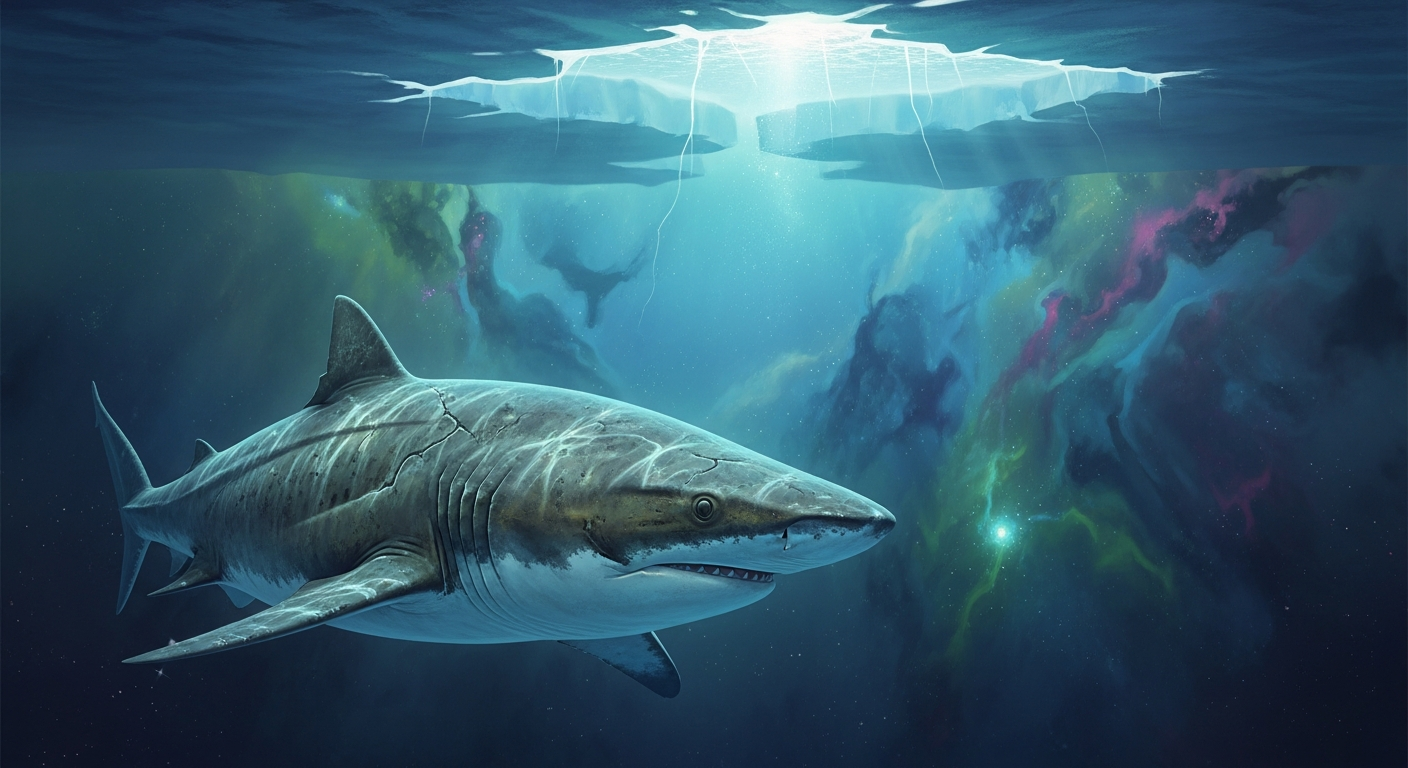
How the Greenland Shark Lives for 500 Years: The Biological Secret of Extreme Longevity
Introduction: The Ancient Mariner of the Deep
Imagine a creature that was already swimming through the icy depths of the North Atlantic when Leonardo da Vinci was painting the Mona Lisa, and is still alive today. The Greenland shark (Somniosus microcephalus) is exactly that—a living relic of the past and the longest-living vertebrate on the planet. With an estimated lifespan that can stretch up to 500 years, this elusive apex predator has captivated the global scientific community. But how does a complex vertebrate survive for half a millennium without succumbing to the natural ravages of aging, disease, or cellular degradation?
For decades, the lifespan of the Greenland shark remained a mystery due to its lack of hard bony tissues, which are traditionally used to determine the age of fish. However, groundbreaking advancements in radiocarbon dating and genomic sequencing have finally begun to peel back the layers of this biological marvel. Unlocking the biological secret of extreme longevity in the Greenland shark is not merely an exercise in marine biology; it holds profound implications for our understanding of the aging process, cellular senescence, and potentially the future of human medicine.
The Detailed Scientific Explanation: Unraveling the Secrets of Extreme Longevity
The extraordinary lifespan of the Greenland shark cannot be attributed to a single biological anomaly. Rather, it is the result of a highly specialized symphony of evolutionary adaptations designed for survival in one of the planet’s most unforgiving environments. Scientists have categorized these survival mechanisms into several key biological and ecological pillars.
1. The “Live Slow, Die Old” Metabolic Paradigm
One of the foundational elements of the Greenland shark’s extreme longevity is its phenomenally slow metabolic rate. Inhabiting the frigid waters of the Arctic and North Atlantic oceans, where temperatures often hover between -1°C and 5°C (30°F to 41°F), the shark’s biological engine operates at a near-glacial pace. This cold environment induces a state of profound metabolic reduction.
In biological terms, metabolism generates energy, but it also produces harmful byproducts known as reactive oxygen species (ROS). These free radicals cause oxidative stress, damaging DNA, proteins, and cell membranes over time—a primary driver of the aging process. By maintaining a highly sluggish metabolism and a swimming speed that rarely exceeds 1.2 miles per hour, the Greenland shark drastically minimizes oxidative damage, allowing its cells to remain healthy and functional for centuries.
2. Radiocarbon Dating the Eye Lens: How We Know Their Age
Because Greenland sharks lack the calcified tissues (like otoliths or fin spines) typically used to age marine species, scientists had to find an innovative alternative. In a landmark 2016 study, researchers turned to the shark’s eyes. The nucleus of the Greenland shark’s eye lens is composed of metabolically inert proteins that are formed before birth and remain unchanged throughout the animal’s life.
By analyzing the carbon-14 isotopes within these eye lens proteins, scientists utilized the “bomb pulse”—a spike in radiocarbon resulting from mid-20th-century atmospheric thermonuclear weapons testing—as a chronological marker. The results were astounding. The largest females, measuring over 5 meters in length, were estimated to be at least 272 years old, with an upper estimate reaching an astonishing 512 years. Because these sharks grow at a glacial rate of approximately 1 centimeter per year, their massive size is a direct testament to their ancient age.
3. Genomic Stability and Superior DNA Repair
Living for 500 years requires an incredibly robust genetic blueprint. Recent efforts to sequence the massive genome of the Greenland shark have revealed extraordinary mechanisms for DNA repair and genomic stability. Over time, all living organisms accumulate genetic mutations that lead to cancer and cellular senescence. However, the Greenland shark exhibits a highly advanced network of tumor-suppressing genes and DNA repair enzymes.
Researchers have identified specialized adaptations in genes such as p53 (often called the “guardian of the genome”), which regulates cell division and prevents tumor growth. Furthermore, the shark’s genome contains a high proportion of repetitive elements and uniquely evolved molecular chaperones that constantly monitor and repair misfolded proteins and damaged DNA strands. This relentless cellular maintenance is crucial for preventing the physiological decay typically associated with old age.
4. Biochemical Antifreeze: The Role of TMAO
Surviving in sub-zero, high-pressure environments requires unique biochemical adaptations. The flesh of the Greenland shark is heavily saturated with trimethylamine N-oxide (TMAO). While primarily serving to counteract the extreme hydrostatic pressure of the deep ocean and acting as a biological antifreeze, TMAO also possesses remarkable protein-stabilizing properties.
TMAO helps maintain the structural integrity of proteins under immense environmental stress, preventing them from denaturing. This biochemical stabilization is thought to play a secondary, yet vital, role in extreme longevity by ensuring that critical enzymes and cellular structures remain viable over hundreds of years, further delaying the biological aging process.
Conclusion: The Future of Anti-Aging Science and Conservation
The Greenland shark is a masterclass in evolutionary endurance. By combining a hyper-slow metabolism dictated by freezing deep-sea environments with unparalleled genomic stability, superior DNA repair mechanisms, and protein-preserving biochemicals, it has successfully conquered the biological limits of time. The revelation of how the Greenland shark lives for 500 years fundamentally challenges our understanding of vertebrate mortality.
As scientists continue to decode the biological secret of extreme longevity hidden within this ancient predator’s DNA, the implications stretch far beyond marine biology. The evolutionary solutions the Greenland shark has developed to prevent cancer, avoid heart disease, and maintain neurological function could one day inform groundbreaking therapies in human anti-aging and regenerative medicine.
However, this remarkable creature’s longevity is also its greatest vulnerability. Because they do not reach sexual maturity until they are around 150 years old, Greenland shark populations are exceptionally susceptible to overfishing, bycatch, and rapid climate change in the Arctic. To learn the secrets of a life unbound by time, we must first ensure that the oceans’ most ancient mariners are protected for centuries to come.

Reader Comments