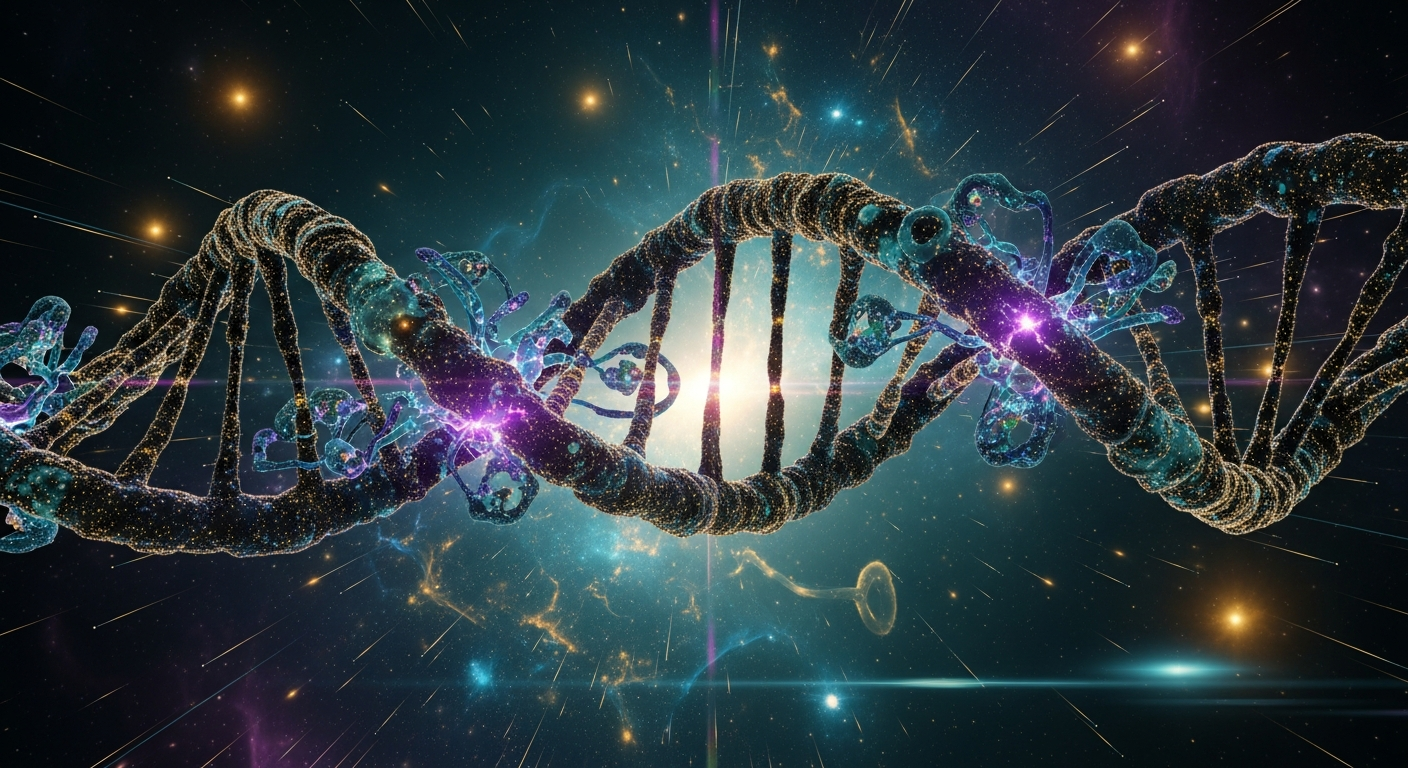
The Quantum Origins of DNA: How Cosmic Stardust Shaped the Mysteries of Life

The Quantum Origins of DNA: How Cosmic Stardust Shaped the Mysteries of Life Introduction: Bridging the Cosmos and the Quantum Realm When astrophysicist Carl Sagan famously declared that "we are made of star-stuff," it was not merely a poetic metaphor, but a profound scientific truth. For decades, biologists and chemists have sought the origins of life in primordial soups and hydrothermal vents on ancient Earth. However, modern science is revealing a far more expansive and intricate narrative. To truly understand the origins of DNA, we must look upward to the interstellar medium and inward to the subatomic world. The emerging synthesis of quantum biology and astrochemistry suggests that the fundamental building blocks of life were not entirely forged on Earth. Instead, they were synthesized in the deep freeze of space, catalyzed by ancient cosmic stardust, and driven by the bizarre, counterintuitive rules of quantum mechanics. This article delves into the microscopic and macroscopic forces that shaped the mysteries of life, exploring how the universe's ultimate instruction manual—DNA—has deeply quantum and cosmic roots. Detailed Scientific Explanation: From Supernovae to the Double Helix Stellar Nucleosynthesis: Forging the Elements of Life The story of our genetic code begins in the fiery crucibles of dying stars. The structural integrity of a DNA molecule relies on a specific sequence of elements: carbon, hydrogen, nitrogen, oxygen, and phosphorus (often remembered by the acronym CHNOP). With the exception of hydrogen, which was born in the Big Bang, all of these elements are the products of stellar nucleosynthesis. Massive stars act as cosmic foundries. Through the process of nuclear fusion, they crush lighter elements into heavier ones. When these stars reach the end of their lifecycles, they explode in spectacular supernovae, violently scattering these newly forged elements across the galaxy. As this stellar debris cools, it condenses into microscopic silicate and carbonaceous grains—what we commonly refer to as cosmic stardust. The Interstellar Medium: A Quantum Chemical Laboratory Once expelled into the interstellar medium, these dust grains enter vast, freezing molecular clouds where temperatures hover near absolute zero (-263°C or 10 Kelvin). According to classical thermodynamics, chemical reactions should grind to an absolute halt in such an extreme environment, as atoms lack the thermal energy required to overcome activation barriers. Yet, spectroscopic observations of these molecular clouds reveal a rich inventory of complex organic molecules (COMs), including the direct precursors to amino acids and DNA nucleobases. How is this possible? The answer lies in quantum tunneling. The Quantum Bypass: In the quantum realm, particles like electrons and hydrogen atoms behave as both particles and waves. This wave-like nature allows them to "tunnel" through energy barriers that they classically do not have the energy to climb over. Catalytic Ice Mantles: Cosmic stardust grains act as microscopic scaffolding. They accumulate thin mantles of ice (water, ammonia, and carbon monoxide) where atoms can meet. Thanks to quantum tunneling, hydrogen atoms can rapidly react with carbon and oxygen on these icy surfaces, forming complex molecules like formaldehyde and methanol, which eventually react to form sugars (like ribose) and nucleobases. Meteoritic Delivery: Seeding the Primordial Earth As solar systems form from these molecular clouds, a significant portion of this organic material survives the turbulent birth of stars and planets. Comets and asteroids act as cosmic transport vehicles. The analysis of carbonaceous chondrites, such as the famous Murchison meteorite, has revealed a treasure trove of extraterrestrial organic matter, including purines and pyrimidines—the very letters of the DNA alphabet. This evidence strongly suggests a theory of pseudo-panspermia: the early Earth was heavily bombarded by these stardust-enriched meteorites, effectively seeding our young planet with the quantum-forged precursors required for the origins of DNA. Quantum Biology: The Architecture of the Double Helix Even after these cosmic molecules arrived on Earth and assembled into the first self-replicating polymers, quantum mechanics continued to govern their destiny. The stability and functionality of the DNA double helix are deeply rooted in quantum phenomena: 1. Quantum Coherence and Van der Waals Forces: The characteristic twist of the DNA molecule is maintained by the "stacking" of base pairs. This stacking relies on van der Waals forces, which arise from fleeting, quantum-mechanical fluctuations in electron clouds. These quantum interactions provide the exact amount of structural stability required to protect our genetic code while allowing it to be unzipped for replication. 2. Proton Tunneling and Evolution: Swedish physicist Per-Olov Löwdin proposed that quantum tunneling could directly influence genetic mutation. The two strands of DNA are held together by hydrogen bonds, which are essentially shared protons. Occasionally, a proton can quantum-tunnel across the bond to the opposite base. If the DNA strands separate for replication while the proton is in this anomalous position, it can result in a spontaneous mutation. Therefore, the very engine of biological evolution may be driven by quantum probability. Conclusion: We Are Quantum Cosmic Phenomena The quest to unravel the mysteries of life has led us far beyond the boundaries of traditional biology. The origins of DNA represent a magnificent tapestry woven from the grandest astrophysical events and the most minuscule subatomic anomalies. Without the explosive death of ancient stars, there would be no carbon or phosphorus to build our genetic backbone. Without quantum tunneling in the freezing expanse of interstellar space, cosmic stardust could never have catalyzed the complex organic precursors of life. And without the delicate quantum forces holding the double helix together, biological evolution as we know it would be impossible. Ultimately, DNA is not merely a terrestrial molecule; it is a cosmic record. When we study our genetic code, we are not just looking at the history of our species—we are reading the biochemical diary of the universe itself, written by the stars and edited by the laws of quantum mechanics. General

The Quantum Origins of DNA: How Cosmic Stardust Shaped the Mysteries of Life

Introduction: Bridging the Cosmos and the Quantum Realm

When astrophysicist Carl Sagan famously declared that “we are made of star-stuff,” it was not merely a poetic metaphor, but a profound scientific truth. For decades, biologists and chemists have sought the origins of life in primordial soups and hydrothermal vents on ancient Earth. However, modern science is revealing a far more expansive and intricate narrative. To truly understand the origins of DNA, we must look upward to the interstellar medium and inward to the subatomic world.

The emerging synthesis of quantum biology and astrochemistry suggests that the fundamental building blocks of life were not entirely forged on Earth. Instead, they were synthesized in the deep freeze of space, catalyzed by ancient cosmic stardust, and driven by the bizarre, counterintuitive rules of quantum mechanics. This article delves into the microscopic and macroscopic forces that shaped the mysteries of life, exploring how the universe’s ultimate instruction manual—DNA—has deeply quantum and cosmic roots.

Detailed Scientific Explanation: From Supernovae to the Double Helix

Stellar Nucleosynthesis: Forging the Elements of Life

The story of our genetic code begins in the fiery crucibles of dying stars. The structural integrity of a DNA molecule relies on a specific sequence of elements: carbon, hydrogen, nitrogen, oxygen, and phosphorus (often remembered by the acronym CHNOP). With the exception of hydrogen, which was born in the Big Bang, all of these elements are the products of stellar nucleosynthesis.

Massive stars act as cosmic foundries. Through the process of nuclear fusion, they crush lighter elements into heavier ones. When these stars reach the end of their lifecycles, they explode in spectacular supernovae, violently scattering these newly forged elements across the galaxy. As this stellar debris cools, it condenses into microscopic silicate and carbonaceous grains—what we commonly refer to as cosmic stardust.

The Interstellar Medium: A Quantum Chemical Laboratory

Once expelled into the interstellar medium, these dust grains enter vast, freezing molecular clouds where temperatures hover near absolute zero (-263°C or 10 Kelvin). According to classical thermodynamics, chemical reactions should grind to an absolute halt in such an extreme environment, as atoms lack the thermal energy required to overcome activation barriers.

Yet, spectroscopic observations of these molecular clouds reveal a rich inventory of complex organic molecules (COMs), including the direct precursors to amino acids and DNA nucleobases. How is this possible? The answer lies in quantum tunneling.

  • The Quantum Bypass: In the quantum realm, particles like electrons and hydrogen atoms behave as both particles and waves. This wave-like nature allows them to “tunnel” through energy barriers that they classically do not have the energy to climb over.
  • Catalytic Ice Mantles: Cosmic stardust grains act as microscopic scaffolding. They accumulate thin mantles of ice (water, ammonia, and carbon monoxide) where atoms can meet. Thanks to quantum tunneling, hydrogen atoms can rapidly react with carbon and oxygen on these icy surfaces, forming complex molecules like formaldehyde and methanol, which eventually react to form sugars (like ribose) and nucleobases.

Meteoritic Delivery: Seeding the Primordial Earth

As solar systems form from these molecular clouds, a significant portion of this organic material survives the turbulent birth of stars and planets. Comets and asteroids act as cosmic transport vehicles. The analysis of carbonaceous chondrites, such as the famous Murchison meteorite, has revealed a treasure trove of extraterrestrial organic matter, including purines and pyrimidines—the very letters of the DNA alphabet.

This evidence strongly suggests a theory of pseudo-panspermia: the early Earth was heavily bombarded by these stardust-enriched meteorites, effectively seeding our young planet with the quantum-forged precursors required for the origins of DNA.

Quantum Biology: The Architecture of the Double Helix

Even after these cosmic molecules arrived on Earth and assembled into the first self-replicating polymers, quantum mechanics continued to govern their destiny. The stability and functionality of the DNA double helix are deeply rooted in quantum phenomena:

1. Quantum Coherence and Van der Waals Forces: The characteristic twist of the DNA molecule is maintained by the “stacking” of base pairs. This stacking relies on van der Waals forces, which arise from fleeting, quantum-mechanical fluctuations in electron clouds. These quantum interactions provide the exact amount of structural stability required to protect our genetic code while allowing it to be unzipped for replication.

2. Proton Tunneling and Evolution: Swedish physicist Per-Olov Löwdin proposed that quantum tunneling could directly influence genetic mutation. The two strands of DNA are held together by hydrogen bonds, which are essentially shared protons. Occasionally, a proton can quantum-tunnel across the bond to the opposite base. If the DNA strands separate for replication while the proton is in this anomalous position, it can result in a spontaneous mutation. Therefore, the very engine of biological evolution may be driven by quantum probability.

Conclusion: We Are Quantum Cosmic Phenomena

The quest to unravel the mysteries of life has led us far beyond the boundaries of traditional biology. The origins of DNA represent a magnificent tapestry woven from the grandest astrophysical events and the most minuscule subatomic anomalies.

Without the explosive death of ancient stars, there would be no carbon or phosphorus to build our genetic backbone. Without quantum tunneling in the freezing expanse of interstellar space, cosmic stardust could never have catalyzed the complex organic precursors of life. And without the delicate quantum forces holding the double helix together, biological evolution as we know it would be impossible.

Ultimately, DNA is not merely a terrestrial molecule; it is a cosmic record. When we study our genetic code, we are not just looking at the history of our species—we are reading the biochemical diary of the universe itself, written by the stars and edited by the laws of quantum mechanics.
Reader Comments

Copied title and URL