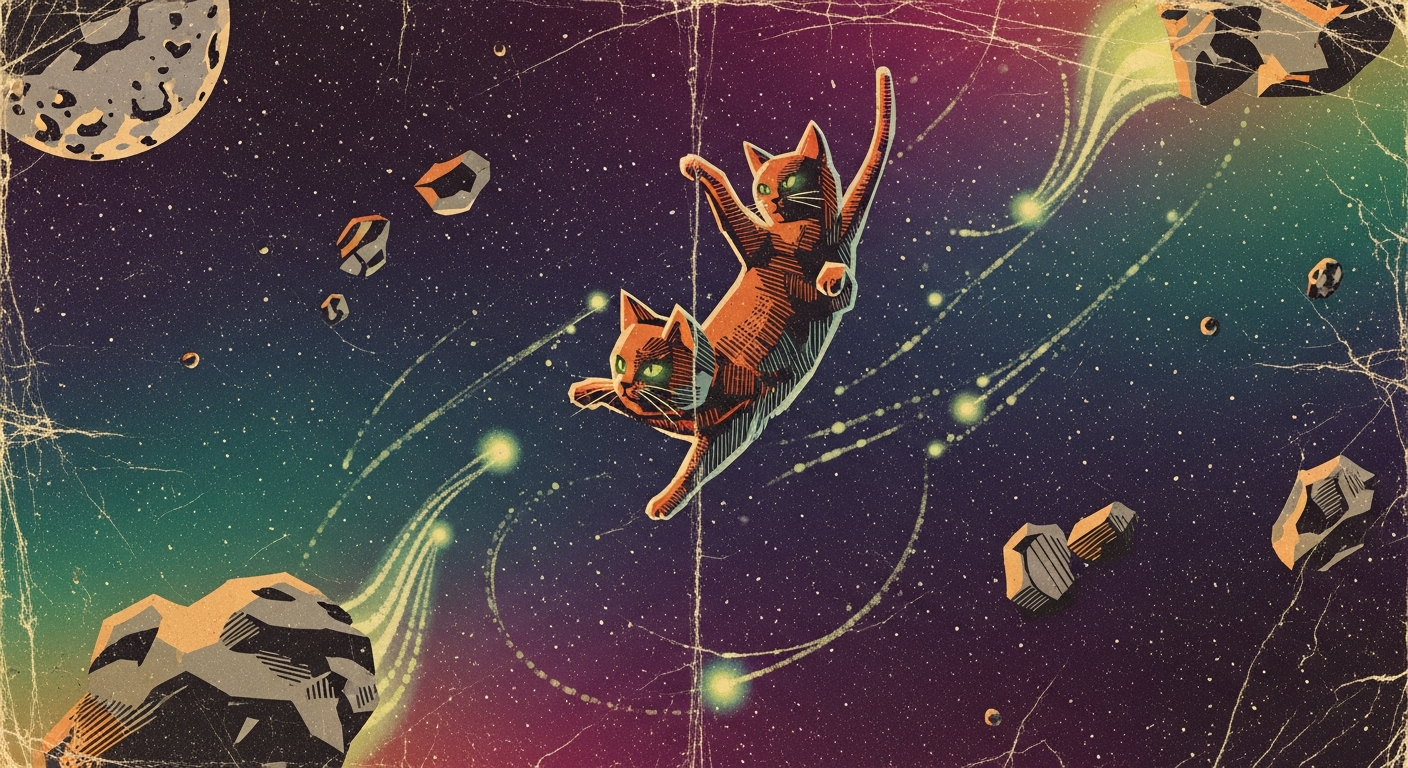
Could a Cat Land on Its Feet in Space? The Weird Physics of Zero-Gravity Pets

Could a Cat Land on Its Feet in Space? The Weird Physics of Zero-Gravity Pets Introduction: The Ultimate Feline Mystery If you have ever watched a cat leap from a high fence or slip off a living room sofa, you know their famous superpower: cats almost always land on their feet. It looks like pure magic. In the blink of an eye, a tumbling tabby twists mid-air, extends its paws, and touches down as gracefully as an Olympic gymnast. But this got us wondering about a mind-bending question: What would happen if you took a cat into outer space? Could a cat land on its feet in zero-gravity? To answer this question, we have to put on our scientist hats and dive into the weird, wild world of space physics. Get ready to explore the fascinating mechanics behind the "cat righting reflex," how gravity shapes our pets' behavior, and what happens when you introduce a furry friend to a microgravity environment like the International Space Station (ISS). Detailed Scientific Explanation: The Physics of Floating Felines The Earthly Superpower: The Cat Righting Reflex Before we launch our imaginary cat into orbit, we need to understand how they perform this acrobatic trick here on Earth. Scientists call this the cat righting reflex. It is a natural instinct that kittens develop when they are just three weeks old! Here is a simple breakdown of how it works: The Sensors: Inside a cat's inner ear is a tiny, fluid-filled system called the vestibular apparatus. This acts like a biological compass that tells the cat exactly which way is "down." The Twist: If a cat falls upside down, its brain instantly sends an emergency signal to its muscles. The cat bends its incredibly flexible spine in half. The Spin: It turns its front paws toward the ground first, and then snaps its back legs around to follow. The Science of the Spin: Angular Momentum (Made Easy!) How does a cat twist in mid-air without pushing off of anything? That sounds like a violation of the laws of physics! According to a rule called the conservation of angular momentum, an object in motion cannot just spin by itself without an outside force. But cats are brilliant biological physicists. They cheat this rule by acting like two different objects connected in the middle. Have you ever watched an ice skater spinning? When they pull their arms in tight, they spin incredibly fast. When they stretch their arms out, they slow down. A falling cat does exactly the same thing! The cat pulls its front legs in tight and stretches its back legs out. This allows the front half of its body to spin very fast to face the ground. Then, the cat does the exact reverse: it stretches its front legs out and pulls its back legs in, allowing its back half to whip around and catch up. All of this happens in less than a second! Houston, We Have a Cat: What Happens in Zero-Gravity? Now, let’s blast off into space. In a spacecraft orbiting the Earth, astronauts experience microgravity, commonly called zero-gravity. In this environment, objects do not fall. They just float. So, could a cat land on its feet in space? The short answer is no, because in space, there is no "ground" to land on! Without gravity pulling them down, the fluid in a cat's inner ear would simply float around. The cat's biological compass would break. It would not know which way was "up" or "down." Believe it or not, scientists actually tested this! In 1947, aerospace researchers took a couple of cats on a special airplane that flew in giant roller-coaster loops to create temporary zero-gravity. What happened? The poor cats got very confused. Without a "down" to lock onto, they frantically twisted and kicked in the air, trying to use their righting reflex over and over again, but they just kept doing clumsy somersaults in mid-air. However, if an astronaut gently pushed a floating space-cat toward a wall, the cat's eyes would see the wall approaching. Even without gravity, the cat would use its amazing "ice skater" physics trick to twist its body and point its paws at the wall, absorbing the impact perfectly. So while they can't "fall" on their feet, they can still orient themselves to land paws-first on a surface! Conclusion: A Purr-fect Space Future? The physics of zero-gravity pets are a wonderful reminder of how perfectly animals are adapted to life on Earth. A cat’s ability to land on its feet is an incredible mix of biology and physics—a delicate dance of flexible spines, inner-ear compasses, and angular momentum. In outer space, the rules change entirely. Without gravity to give them a sense of direction, a cat's amazing righting reflex just leaves them doing endless, floating gymnastics. While it might be a long time before astronauts bring their pet cats to live on a space station, studying how animals move in zero-gravity helps scientists understand more about biology, motion, and how life adapts to the great unknown of the cosmos. Until then, the next time your cat leaps off the kitchen counter and lands perfectly on its paws, you can look at them and appreciate the absolute master of physics living right in your own home! biological

Could a Cat Land on Its Feet in Space? The Weird Physics of Zero-Gravity Pets

Introduction: The Ultimate Feline Mystery

If you have ever watched a cat leap from a high fence or slip off a living room sofa, you know their famous superpower: cats almost always land on their feet. It looks like pure magic. In the blink of an eye, a tumbling tabby twists mid-air, extends its paws, and touches down as gracefully as an Olympic gymnast.

But this got us wondering about a mind-bending question: What would happen if you took a cat into outer space? Could a cat land on its feet in zero-gravity?

To answer this question, we have to put on our scientist hats and dive into the weird, wild world of space physics. Get ready to explore the fascinating mechanics behind the “cat righting reflex,” how gravity shapes our pets’ behavior, and what happens when you introduce a furry friend to a microgravity environment like the International Space Station (ISS).

Detailed Scientific Explanation: The Physics of Floating Felines

The Earthly Superpower: The Cat Righting Reflex

Before we launch our imaginary cat into orbit, we need to understand how they perform this acrobatic trick here on Earth. Scientists call this the cat righting reflex. It is a natural instinct that kittens develop when they are just three weeks old!

Here is a simple breakdown of how it works:

  • The Sensors: Inside a cat’s inner ear is a tiny, fluid-filled system called the vestibular apparatus. This acts like a biological compass that tells the cat exactly which way is “down.”
  • The Twist: If a cat falls upside down, its brain instantly sends an emergency signal to its muscles. The cat bends its incredibly flexible spine in half.
  • The Spin: It turns its front paws toward the ground first, and then snaps its back legs around to follow.

The Science of the Spin: Angular Momentum (Made Easy!)

How does a cat twist in mid-air without pushing off of anything? That sounds like a violation of the laws of physics! According to a rule called the conservation of angular momentum, an object in motion cannot just spin by itself without an outside force.

But cats are brilliant biological physicists. They cheat this rule by acting like two different objects connected in the middle.

Have you ever watched an ice skater spinning? When they pull their arms in tight, they spin incredibly fast. When they stretch their arms out, they slow down. A falling cat does exactly the same thing!

The cat pulls its front legs in tight and stretches its back legs out. This allows the front half of its body to spin very fast to face the ground. Then, the cat does the exact reverse: it stretches its front legs out and pulls its back legs in, allowing its back half to whip around and catch up. All of this happens in less than a second!

Houston, We Have a Cat: What Happens in Zero-Gravity?

Now, let’s blast off into space. In a spacecraft orbiting the Earth, astronauts experience microgravity, commonly called zero-gravity. In this environment, objects do not fall. They just float.

So, could a cat land on its feet in space? The short answer is no, because in space, there is no “ground” to land on!

Without gravity pulling them down, the fluid in a cat’s inner ear would simply float around. The cat’s biological compass would break. It would not know which way was “up” or “down.”

Believe it or not, scientists actually tested this! In 1947, aerospace researchers took a couple of cats on a special airplane that flew in giant roller-coaster loops to create temporary zero-gravity. What happened? The poor cats got very confused. Without a “down” to lock onto, they frantically twisted and kicked in the air, trying to use their righting reflex over and over again, but they just kept doing clumsy somersaults in mid-air.

However, if an astronaut gently pushed a floating space-cat toward a wall, the cat’s eyes would see the wall approaching. Even without gravity, the cat would use its amazing “ice skater” physics trick to twist its body and point its paws at the wall, absorbing the impact perfectly. So while they can’t “fall” on their feet, they can still orient themselves to land paws-first on a surface!

Conclusion: A Purr-fect Space Future?

The physics of zero-gravity pets are a wonderful reminder of how perfectly animals are adapted to life on Earth. A cat’s ability to land on its feet is an incredible mix of biology and physics—a delicate dance of flexible spines, inner-ear compasses, and angular momentum.

In outer space, the rules change entirely. Without gravity to give them a sense of direction, a cat’s amazing righting reflex just leaves them doing endless, floating gymnastics. While it might be a long time before astronauts bring their pet cats to live on a space station, studying how animals move in zero-gravity helps scientists understand more about biology, motion, and how life adapts to the great unknown of the cosmos.

Until then, the next time your cat leaps off the kitchen counter and lands perfectly on its paws, you can look at them and appreciate the absolute master of physics living right in your own home!


Reader Comments

Copied title and URL