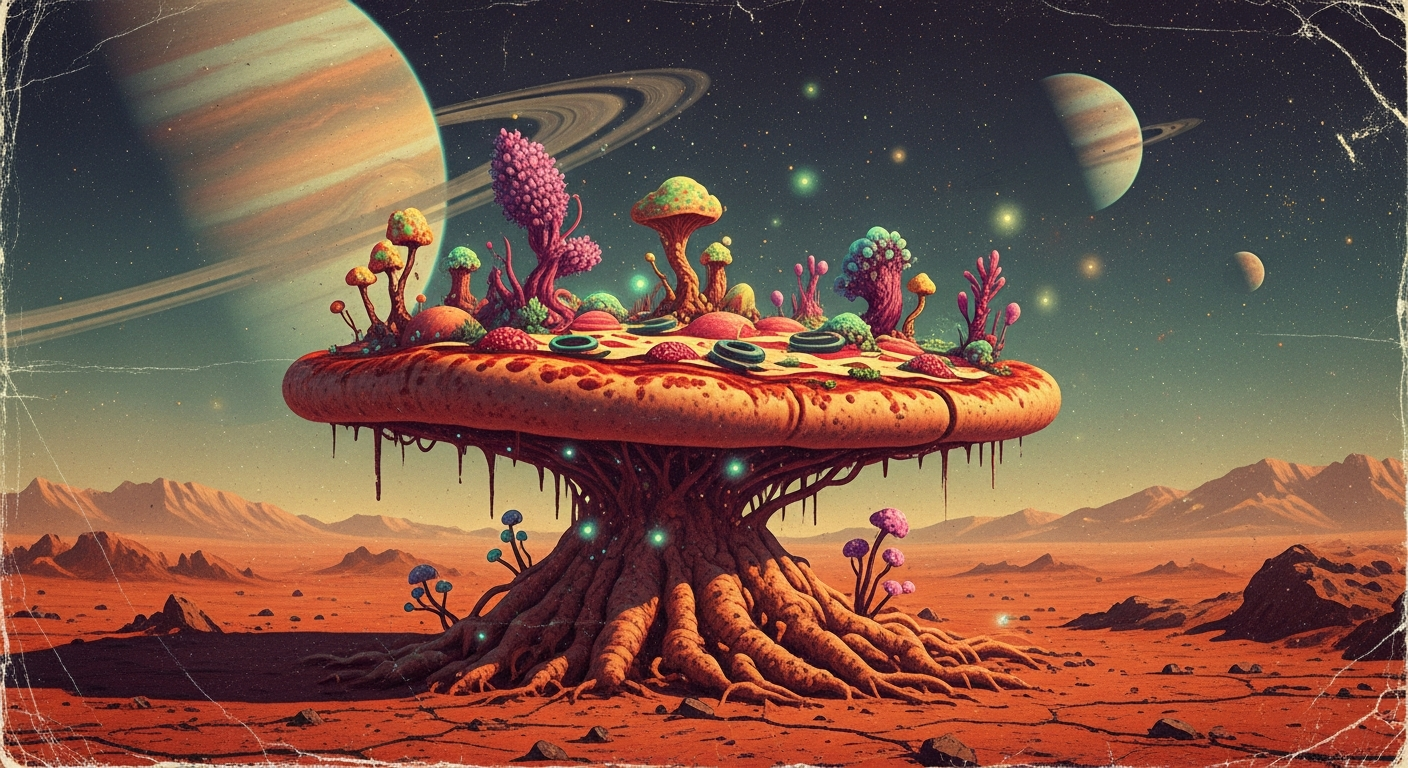
Can We Grow a Pizza on Mars? The Amazing Biology of Space Farming
Introduction: A Slice of Space History
Imagine this: You have just traveled millions of miles through outer space. You step out of your spaceship in your shiny astronaut suit, look out over the dusty red landscape of Mars, and suddenly, your stomach starts to grumble. What is for dinner? Squeezed food from a silver tube? Dried powder mixed with water? Or… could it be a hot, fresh, cheesy pizza?
It might sound like a science fiction movie, but scientists at NASA and around the world are working hard to make sure future astronauts can eat fresh food in space. This amazing science is called astrobotany—the study of how plants interact with a space environment. But growing the ingredients for a pizza on a planet that is freezing cold, covered in toxic dust, and has barely any air is a huge challenge. Let us dive into the fascinating biology of space farming and find out if a Martian pizza is truly possible!
The Detailed Science of Space Farming: How Do Plants Grow on Mars?
1. The Dirt Dilemma: Soil vs. Regolith
On Earth, we plant seeds in “soil.” Soil is alive! It is packed with helpful bugs, earthworms, water, and microscopic bacteria that help plants grow. Mars does not have soil. Instead, it is covered in something called regolith.
Regolith is basically crushed-up volcanic rock. It has no living things in it, and worse, it contains toxic chemicals called perchlorates. If we want to grow wheat for our pizza crust or tomatoes for our sauce in Martian dirt, astrobotanists must first figure out how to “wash” the toxic chemicals out of the regolith and add special fertilizers to make it act like Earth soil.
2. The Magic of Hydroponics: Farming Without Dirt!
Because Martian regolith is so tricky, scientists have a backup plan: growing plants without any dirt at all! This incredible method is called hydroponics.
Instead of burying plant roots in the ground, astronauts place the roots in flowing streams of water mixed with the perfect recipe of nutrients (plant food). There is also a method called aeroponics, where roots hang in the air and get sprayed with a nutrient-rich mist. Both methods save water—which is super rare on Mars—and allow plants to grow much faster. So, our Martian pizza tomatoes will probably be grown in high-tech water baths!
3. Defying Gravity: How Do Plants Know Which Way is Up?
Here on Earth, plants are very smart. They use Earth’s gravity to know that their roots should grow down into the soil to find water, and their stems should grow up toward the sun. This is called gravitropism.
Mars has much weaker gravity than Earth (only about 38% as strong!). Inside a spaceship traveling to Mars, there is almost zero gravity (microgravity). Without strong gravity, plants can get confused. Their roots might grow in circles! To fix this, scientists use special LED lights. Plants naturally grow toward the light (a superpower called phototropism). By putting bright red and blue LED lights directly above the plants, astronauts can trick the plants into growing in the right direction, even when gravity is weak.
4. Assembling the Mars Pizza: Ingredient by Ingredient
Now that we know how to farm in space, let us look at our pizza checklist:
- The Crust (Wheat): Wheat grows very well in controlled environments. Astronauts could grow wheat hydroponically, harvest the seeds, grind them into flour, and bake a fresh crust.
- The Sauce (Tomatoes): Good news! NASA has already successfully grown small tomatoes on the International Space Station (ISS). They use special space greenhouses with purple LED lights.
- The Cheese (Dairy): This is the hardest part! We cannot easily bring cows to Mars—they are too heavy, eat too much, and space suits for cows do not exist! Instead of regular cheese, scientists are looking at cellular agriculture. They might use special yeasts or plants like soybeans to create delicious, melty, dairy-free cheese right in the science lab.
Conclusion: The Future is Delicious
Growing a pizza on Mars is not just a fun idea; it is a vital step in human space exploration. The amazing biology of space farming teaches us how plants adapt to extreme environments, how to recycle our precious water, and how to create closed-loop ecosystems where nothing is wasted. The lessons we learn from astrobotany will not only feed future astronauts, but they can also teach us how to grow food more efficiently in deserts and cities right here on Earth.
So, can we grow a pizza on Mars? The answer is a massive, scientifically-proven YES! It will take a lot of clever engineering, a bit of chemistry, and some amazing biology. By the time you are old enough to travel to space, you just might be able to visit a Martian greenhouse, pick a fresh space-tomato, and enjoy the best slice of pizza in the solar system.


Reader Comments