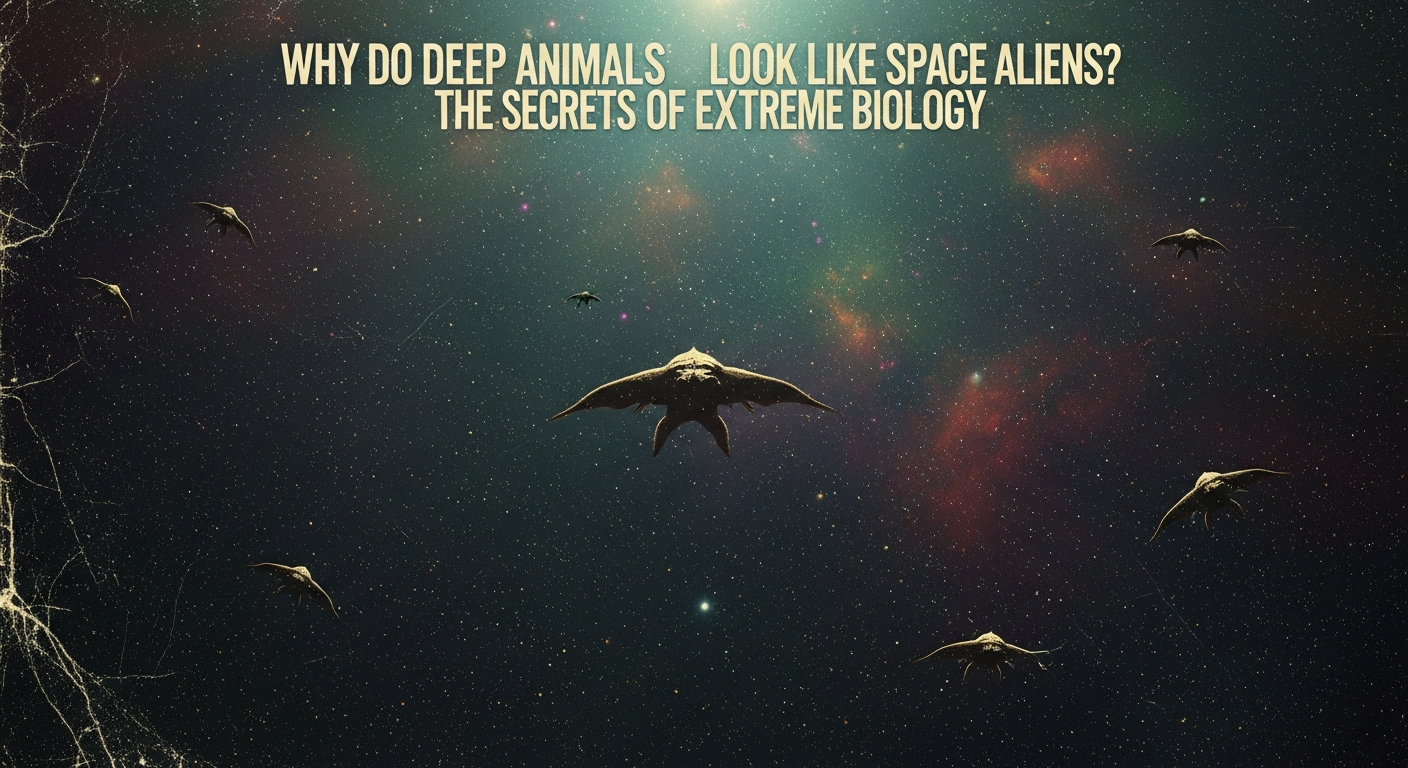
Why Do Deep Sea Animals Look Like Space Aliens? The Secrets of Extreme Biology

Why Do Deep Sea Animals Look Like Space Aliens? The Secrets of Extreme Biology Introduction: An Alien World Right Beneath Our Feet When you think of a space alien, what comes to mind? Maybe a creature with glowing body parts, see-through skin, or giant, unblinking eyes? Believe it or not, you don't need a spaceship to find weird and wonderful beings like this. You just need a submarine! Down in the deepest, darkest parts of the ocean, deep sea animals look exactly like creatures from another planet. But why do they look so strange? The answer lies in extreme biology. The deep ocean is one of the harshest environments on Earth. It is a place with no sunlight, freezing temperatures, and enough water pressure to crush a car. To survive in such an extreme world, these animals had to develop special "superpowers" over millions of years. Let's dive into the fascinating science behind why deep sea creatures look like aliens! Detailed Scientific Explanation: The Superpowers of Deep Sea Survival 1. The Crushing Pressure: Why Squishy is Better Imagine balancing a heavy school bus on your big toe. That is what the water pressure feels like at the bottom of the ocean! This is called hydrostatic pressure. If a normal fish from near the surface swam down too deep, its swim bladder (a balloon-like organ filled with gas that helps fish float) would pop, and its bones would break. So, how do deep sea animals survive? They evolved to be "squishy." Many deep-sea creatures, like the famous blobfish, do not have heavy bones or hard skeletons. Instead, their bodies are made of soft, jelly-like materials that water can easily flow through. Because water cannot be compressed (squished together), a body filled with water does not get crushed by the ocean's weight. They also have special chemicals in their cells called piezolytes, which act like tiny shields to stop their proteins and DNA from getting ruined by the pressure. 2. The Pitch-Black Darkness: Living Flashlights (Bioluminescence) Once you dive deeper than 1,000 meters (about 3,300 feet), sunlight completely disappears. Welcome to the "Midnight Zone." Because it is pitch-black, regular eyes are not very useful. Instead, deep sea animals evolved an amazing trick called bioluminescence—the ability to make their own light! Bioluminescence is a chemical reaction inside the animal's body that glows, much like a glow stick. But they don't glow just for fun; it's a matter of life and death: Hunting: The terrifying Anglerfish has a glowing "fishing lure" attached to its head. Curious fish swim toward the light in the dark, only to be snapped up by the Anglerfish's giant teeth! Hiding: Some squids use light to match the faint glow of the water above them, making their shadows disappear so predators looking up from below can't see them. Calling for Help: When attacked, the Atolla jellyfish lights up like a flashing police siren. This attracts an even bigger predator to come and eat the animal that was trying to eat the jellyfish! 3. Freezing Cold and Hungry Bellies: Giant Mouths and "Marine Snow" Down in the deep, the water is near freezing, and food is very hard to find. There are no plants because there is no sunlight. Instead, animals rely on marine snow—tiny flakes of dead plants, animal poop, and leftover food that slowly drift down from the surface like a snowy winter day. Because meals are so rare, deep sea animals can't be picky eaters. They have to eat whatever comes their way, even if it is bigger than they are! This is why creatures like the Gulper Eel and the Viperfish look so alien. They have enormous, unhinged jaws and stomachs that can stretch like rubber balloons. They also move very slowly to save energy, waiting quietly in the dark for a meal to drift by. 4. The Power of Invisibility: Transparent Bodies In a world where predators use giant eyes and glowing lights to hunt, the best defense is to be invisible. That is why many deep-sea creatures, like the Glass Squid or the Sea Sapphire, are completely transparent. Their bodies are made of special tissues that let light pass right through them. If you look at them, you can see their beating hearts and digestive systems! By being see-through, they become invisible ghosts of the ocean, hiding perfectly in plain sight. Conclusion: The Alien World That Helps Us Look at the Stars Deep sea animals look like space aliens because they are perfectly designed, or adapted, to survive in an alien-like world right here on Earth. Their squishy bodies beat the crushing pressure, their giant mouths solve the problem of scarce food, and their glowing, transparent bodies help them navigate the pitch-black darkness. The secrets of extreme biology don't just teach us about our oceans; they also help scientists with real space exploration! By studying how these creatures survive in freezing, dark, and high-pressure places, scientists can figure out what kind of alien life might exist on icy moons in our solar system, like Jupiter's moon Europa. So, the next time you look at a picture of a bizarre deep-sea creature, remember: you are looking at nature's ultimate survival expert, and a true pioneer of extreme biology. biological

Why Do Deep Sea Animals Look Like Space Aliens? The Secrets of Extreme Biology

Introduction: An Alien World Right Beneath Our Feet

When you think of a space alien, what comes to mind? Maybe a creature with glowing body parts, see-through skin, or giant, unblinking eyes? Believe it or not, you don’t need a spaceship to find weird and wonderful beings like this. You just need a submarine! Down in the deepest, darkest parts of the ocean, deep sea animals look exactly like creatures from another planet.

But why do they look so strange? The answer lies in extreme biology. The deep ocean is one of the harshest environments on Earth. It is a place with no sunlight, freezing temperatures, and enough water pressure to crush a car. To survive in such an extreme world, these animals had to develop special “superpowers” over millions of years. Let’s dive into the fascinating science behind why deep sea creatures look like aliens!

Detailed Scientific Explanation: The Superpowers of Deep Sea Survival

1. The Crushing Pressure: Why Squishy is Better

Imagine balancing a heavy school bus on your big toe. That is what the water pressure feels like at the bottom of the ocean! This is called hydrostatic pressure. If a normal fish from near the surface swam down too deep, its swim bladder (a balloon-like organ filled with gas that helps fish float) would pop, and its bones would break.

So, how do deep sea animals survive? They evolved to be “squishy.” Many deep-sea creatures, like the famous blobfish, do not have heavy bones or hard skeletons. Instead, their bodies are made of soft, jelly-like materials that water can easily flow through. Because water cannot be compressed (squished together), a body filled with water does not get crushed by the ocean’s weight. They also have special chemicals in their cells called piezolytes, which act like tiny shields to stop their proteins and DNA from getting ruined by the pressure.

2. The Pitch-Black Darkness: Living Flashlights (Bioluminescence)

Once you dive deeper than 1,000 meters (about 3,300 feet), sunlight completely disappears. Welcome to the “Midnight Zone.” Because it is pitch-black, regular eyes are not very useful. Instead, deep sea animals evolved an amazing trick called bioluminescence—the ability to make their own light!

Bioluminescence is a chemical reaction inside the animal’s body that glows, much like a glow stick. But they don’t glow just for fun; it’s a matter of life and death:

  • Hunting: The terrifying Anglerfish has a glowing “fishing lure” attached to its head. Curious fish swim toward the light in the dark, only to be snapped up by the Anglerfish’s giant teeth!
  • Hiding: Some squids use light to match the faint glow of the water above them, making their shadows disappear so predators looking up from below can’t see them.
  • Calling for Help: When attacked, the Atolla jellyfish lights up like a flashing police siren. This attracts an even bigger predator to come and eat the animal that was trying to eat the jellyfish!

3. Freezing Cold and Hungry Bellies: Giant Mouths and “Marine Snow”

Down in the deep, the water is near freezing, and food is very hard to find. There are no plants because there is no sunlight. Instead, animals rely on marine snow—tiny flakes of dead plants, animal poop, and leftover food that slowly drift down from the surface like a snowy winter day.

Because meals are so rare, deep sea animals can’t be picky eaters. They have to eat whatever comes their way, even if it is bigger than they are! This is why creatures like the Gulper Eel and the Viperfish look so alien. They have enormous, unhinged jaws and stomachs that can stretch like rubber balloons. They also move very slowly to save energy, waiting quietly in the dark for a meal to drift by.

4. The Power of Invisibility: Transparent Bodies

In a world where predators use giant eyes and glowing lights to hunt, the best defense is to be invisible. That is why many deep-sea creatures, like the Glass Squid or the Sea Sapphire, are completely transparent. Their bodies are made of special tissues that let light pass right through them. If you look at them, you can see their beating hearts and digestive systems! By being see-through, they become invisible ghosts of the ocean, hiding perfectly in plain sight.

Conclusion: The Alien World That Helps Us Look at the Stars

Deep sea animals look like space aliens because they are perfectly designed, or adapted, to survive in an alien-like world right here on Earth. Their squishy bodies beat the crushing pressure, their giant mouths solve the problem of scarce food, and their glowing, transparent bodies help them navigate the pitch-black darkness.

The secrets of extreme biology don’t just teach us about our oceans; they also help scientists with real space exploration! By studying how these creatures survive in freezing, dark, and high-pressure places, scientists can figure out what kind of alien life might exist on icy moons in our solar system, like Jupiter’s moon Europa. So, the next time you look at a picture of a bizarre deep-sea creature, remember: you are looking at nature’s ultimate survival expert, and a true pioneer of extreme biology.


Reader Comments

タイトルとURLをコピーしました