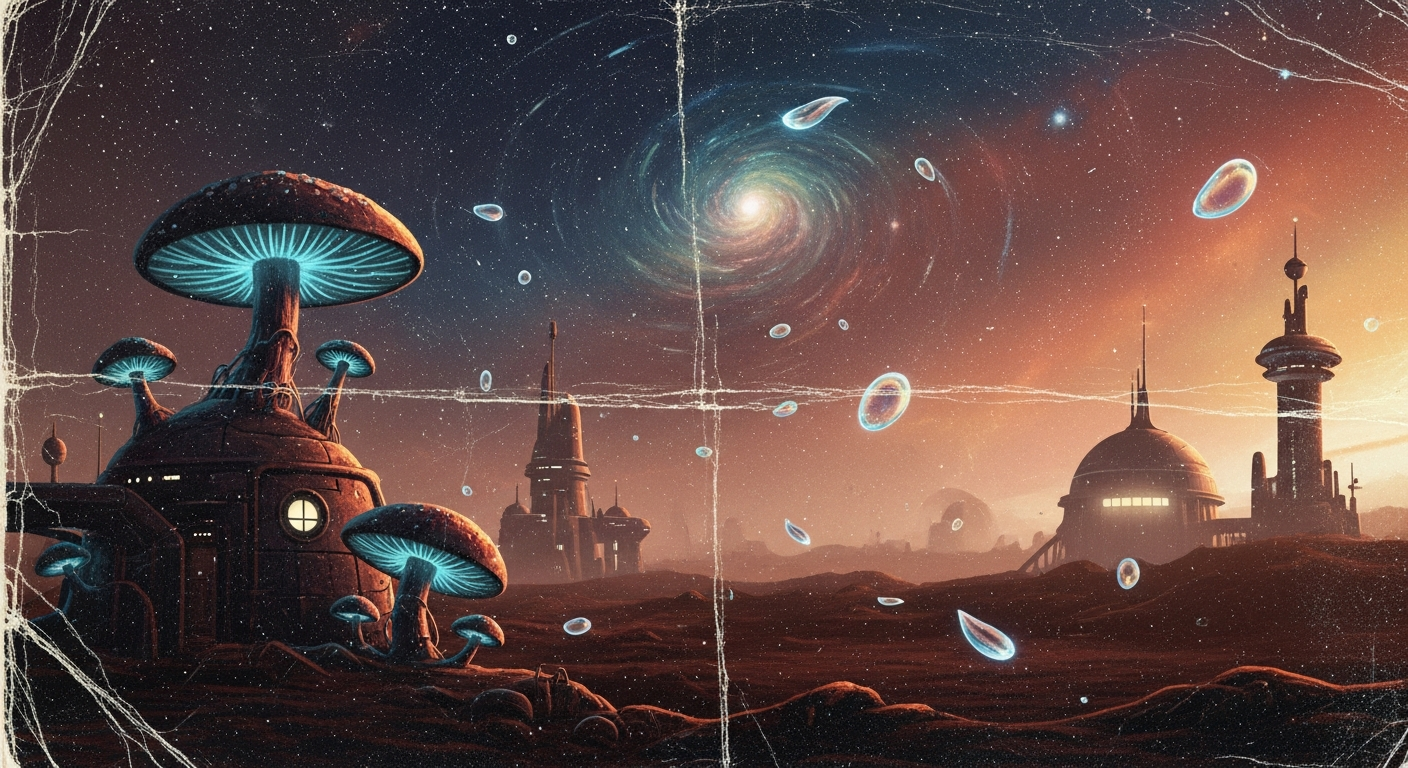
Can We Build Houses on Mars with Mushrooms? The Amazing Science of Space Fungi
Imagine packing your bags for a trip to Mars. You would need clothes, food, and scientific tools. But wait—where are you going to live once you get there? You cannot exactly pack a brick house into a spaceship. Rockets have strict weight limits, and carrying heavy building materials millions of miles through space is far too expensive. So, how will future astronauts survive the freezing temperatures and dangerous radiation of the Red Planet?
NASA scientists have come up with a brilliant and surprising solution: we might not build our houses on Mars. Instead, we might grow them using mushrooms! This incredible idea is known as “mycotecture” (a mix of myco, meaning fungus, and architecture). Let’s dive into the amazing science of space fungi and discover how mushrooms could be the key to our future in space.
The Secret Ingredient: What is Mycelium?
When you think of a mushroom, you probably picture the umbrella-shaped part that pops up above the dirt. But that is only a tiny piece of the whole living thing, much like an apple is just the fruit of a much larger tree. The real magic happens underground.
Hidden in the soil is a vast, invisible network of tiny, white, thread-like roots called mycelium. Mycelium acts like natural glue. As it grows, it branches out and eats dead leaves and wood, binding everything together tightly. When dried, mycelium can become stronger than concrete, lighter than wood, and completely fireproof! This makes it the perfect natural building material.
How to Grow a Martian Mushroom Mansion
You might be wondering, “Are astronauts going to live inside a giant, squishy mushroom?” Not quite! The homes on Mars will look more like sturdy domes or igloos. Here is the step-by-step scientific recipe NASA scientists, led by researcher Lynn Rothschild, are working on to grow a house on another planet.
Step 1: The Lightweight Delivery
Instead of launching heavy bricks, NASA will send a lightweight, folded-up bag made of a special plastic. Inside this bag are dormant (sleeping) fungi spores and some dried nutrients. Because it is light and flat, it costs very little fuel to send to Mars.
Step 2: Just Add Water (and Algae!)
Once the bag arrives on Mars, robots will unfold it and pump in water found under the Martian surface. But the mycelium needs food to grow. To solve this, scientists plan to use a three-layer system:
- The Outside Layer: Frozen ice, which protects the house from space radiation.
- The Middle Layer: A tiny green microbe called cyanobacteria (like algae). It uses sunshine and water to produce oxygen and sugar.
- The Inside Layer: The mycelium! It eats the sugar made by the cyanobacteria and breathes the oxygen.
Step 3: Watch It Grow
Feasting on the sugar, the mycelium wakes up and grows rapidly. Within just a few weeks, the fuzzy white threads expand to fill the inside of the plastic bag, weaving tightly together into a thick, solid wall. It takes the exact shape of the dome!
Step 4: Bake It to Be Safe
Once the house is fully grown and rock-solid, we have to make sure the mushrooms do not spread and contaminate the natural environment of Mars. To prevent this, the habitat is heated up (baked). This safely stops the fungi from growing any further, leaving behind a clean, strong, and dry shell for astronauts to move into.
Why Mushrooms? The Superpowers of Space Fungi
Using mycelium for space homes is not just a wild guess; fungi have incredible superpowers that make them perfect for survival on harsh planets.
- Super Shields Against Radiation: Space is full of harmful solar rays. Fungi contain melanin—the same pigment that gives human skin its color. In fungi, melanin acts as a natural sunscreen, blocking dangerous space radiation and keeping astronauts safe.
- Excellent Insulation: Mars is freezing, with temperatures dropping to -225°F (-153°C). Mycelium traps millions of tiny air bubbles inside its structure, making it a fantastic blanket to keep the habitat warm.
- Self-Healing Walls: In some future designs, if a small meteor hits the house and cracks the wall, adding a little water could “wake up” the mycelium just enough to grow back and fix the hole on its own!
- Eco-Friendly: It is 100% natural. At the end of a mission, a mushroom house can safely break down, leaving no toxic trash behind.
Conclusion: A Greener Future in Space and on Earth
The idea of building houses on Mars with mushrooms shows us that sometimes the most advanced technologies in the universe are not made of metal and wires, but are found right beneath our feet in nature. By understanding the biology of fungi, we are unlocking the door to human colonization of the solar system.
The best part? This incredible space science is already helping us back home. The same mycelium technology being tested for Mars is now being used on Earth to create sustainable building blocks, eco-friendly packaging, and even furniture. So, the next time you see a tiny mushroom popping up in your garden, give it a little nod of respect. You might just be looking at the foundation of the very first Martian city!


Reader Comments